


My usual routine when starting a day here at Retro Dodo is getting up and looking through news posts with a cup of tea, before writing articles on exciting achievements and new releases in the Retro Gaming world. But I've seen something this morning that I'm not sure I fully agree with, and I wanted to do a larger piece to explain to you my thoughts and feelings on the subject rather than just putting it all in a news post.
I've come across SuperAstra this morning, a programme created by Scott Stevenson which runs adjacent to the BizHawk emulator, an emulator used a lot by speedrunners. SuperAstra allows gamers to reverse engineer code and change levels/abilities using AI by typing in commands while playing. Essentially, you can type in 'give Mario 50 fireballs,' or 'change the level to have no enemies and give me tonnes of stars', and it will change the game in real time, keeping the modifications you've made.
I want to make this clear before I go on - I'm sure Scott is very happy with this project, and I'm not casting shade on him as a gamer or a creator. I am, however, going to respectfully give my honest opinions on SuperAstra as a tool and what it could potentially mean for the Retro Gaming scene.
Erasing The Spirit Of A Game
I love retro games - it's why I do this job, and it would be a bit weird if I didn't enjoy playing them, in all honesty. For me, retro titles like games for the SNES, which is what SuperAstra is currently designed for, are the framework for the games we play today. Titles for the Atari 2600 and the Sega Master System paved the way for the PS5s and Nintendo Switches of the world - they're bona fide pieces of Retro Gaming history.
Many of those early games are hard as nails. I can remember going back to play the Shinobi games when we worked with Sega to do a piece on the History of Shinobi for their newest release and re-discovering how insanely difficult some of those early games are. You get to a point in your life when you think, 'I've just completed God of War: Ragnarok, I can complete Shinobi for the Master System in seconds', and then you realise how wrong you were.
Introducing SuperAstra: Edit Super Nintendo games live with GPT-6
— Scott Stevenson (@scottastevenson) September 7, 2026
One of my favorite ways to test new models has been reverse engineering classic games. This is hard because it's raw machine code. Astra is way better than anything I've seen.
Download and examples below 👇 pic.twitter.com/O39Vx0DqDT
A programme like SuperAstra, for me, immediately threatens the history of these games. I know it's for SNES games currently, but if it expanded, and you could load up Shinobi, for example, and say 'make all enemies move slower, and change the background into a slope where Joe can run over the top of them all', then what's the point? It changes the core feel of the game that the original developers wanted to create back when i was released. It changes the nature of the title completely and risks creating a world filled with AI levels that make little sense. If you took The Lion King and said, 'replace all giraffes with snails I can jump over,' then it would be a completely different game that has no challenge to it whatsoever.
The same goes for classics like Yoshi's Island, which is the first example shown by Scott in the video in his post on X. Making Mario fire fireballs whenever he gets a coin is a fun idea for a couple of seconds, but then it changes the way you play completely. There's not as much skill involved with dispatching enemies if you're firing fireballs whenever you hit a coin, or you can magically bring stars down to help you out whenever you want. It's like one step further from the GameShark giving you some fun cheat codes, and a kind of over the top version of Super Mario Maker.
I get the thought of making weird and wonderful levels in the likes of Super Mario Maker - the premise is in the title. But to me, SuperAstra is designed more as a tool for ROM hackers, and it could threaten the traditional method of game making as we know it.
The Death Of Traditional ROM Hacking
Look, I know things move on, and processes change. But when it comes to development, I like it the old-fashioned way. I love ROM hacks; they're the lifeblood of the Retro Gaming scene and help us to have alternative adventures for old games that are no longer being reproduced. I personally don't enjoy the newer Pokémon games as much as I did the Game Boy DMG to Game Boy Advance era, so I love getting new ROM hacks for Gold and Silver, Emerald and Fire Red, that allow me to step back into that time.
But to me, ROM hacking requires skill and finesse. It's the same old argument about whether you should be allowed to get AI to help you make a song when you can't play guitar, or to make a picture for a book if you can't draw. People have trained their whole lives to learn how to play instruments or paint pictures, just like they have to develop games. If you listen to our podcasts with the likes of Jordan Mechner and Simon Phipps, you discover how they figured things out on the fly and worked with real tech to make extraordinary things happen. It was an art form, and for many ROM hackers, it still is.
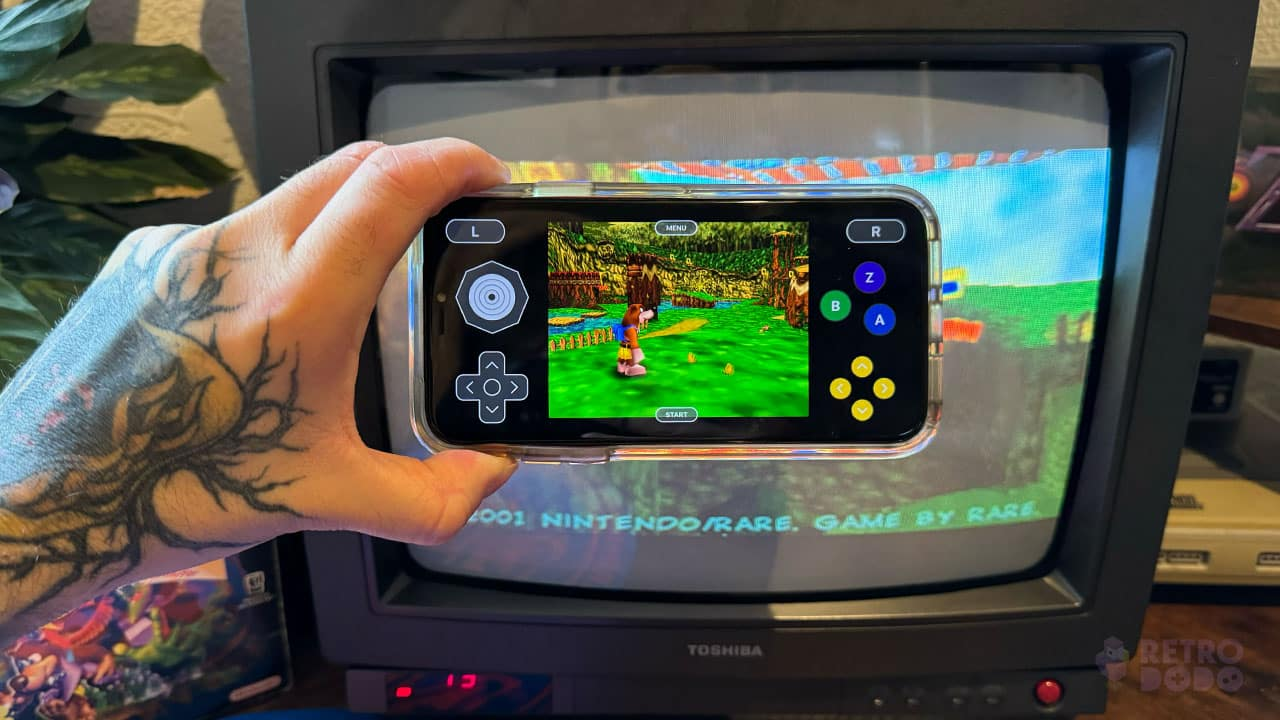
People like Mark Kurko of KurkoMods have painstakingly made new games by fusing assets and creating completely new textures for titles like Jiggies of Time, one of my favourite ROM hacks of all time. And then there are all the Zelda ROM hacks that I've played over the years too, all alternative adventures with new ideas from genuine fans of the series.
These ROM hacks are much more than just manipulated versions of old games; they have new storylines, new adventures, new assets, new easter eggs - they pay homage to the old games in subtle, carefully thought-out ways. Ok, you'll also get Kaizo ROM hacks that make things harder, but the point is they're done with care and pride, not just an AI programme saying 'make that ten times harder and stick in eight hundred robots' to make things more difficult. There's still skill involved with the process.
I worry that, rather than carefully curated ROM hacks, we're going to just get slop that we have to sift through to find the gems, just like a lot of the books I come up against on Amazon when publishing my own which have been written by a computer to earn someone a quick buck.
Confusion For The Speedrunning Community
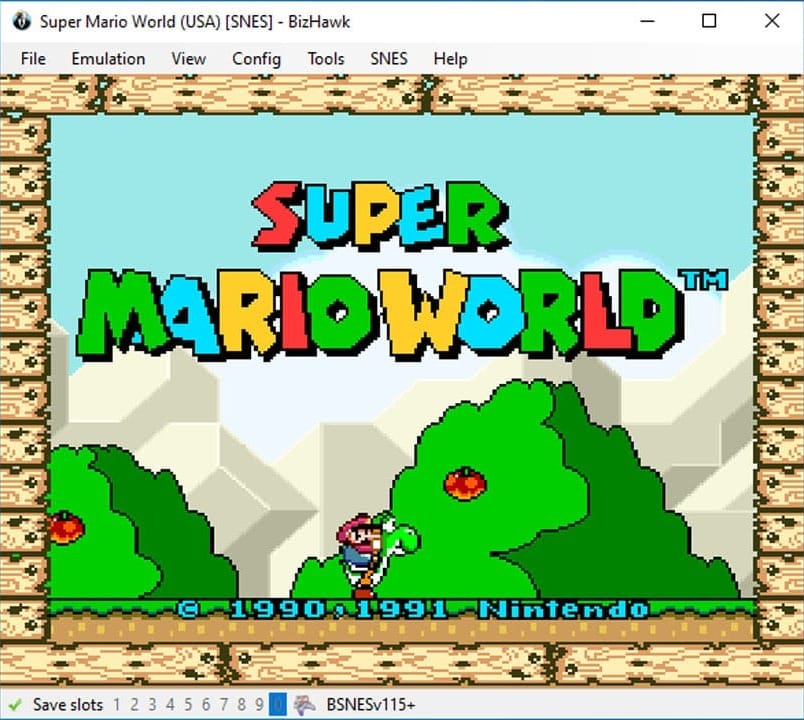
BizHawk is an emulator that promotes accuracy, especially when it comes to speedrunning. I love the fact that gamers utilise glitches in games that have been there since they were created, possible oversights from developers that have been used to speedrunners' advantage and often require some incredibly precise moves and death-defying jumps. They take practice, hours and hours of practice to get them right, and runs like those make me sit with my jaw wide open.
Would something Like SuperAstra get rid of the need for this? Would it not be too easy to just add in some code super fast so that you can get a bridge up to where you need to go or to create an invulnerability mode so that you don't need to have as much skill to pass a certain level or part of a Kaizo hack? Would Nuzlocke rules still exist, or is that something that would fall by the wayside in favour of creating a Scribblenauts-style experience?
I mention Scribblenauts, because that's exactly what this makes me think of. I loved that game, but it was its own entity. Sure, I like being able to just create a tractor out of nothing, but that's the premise of the game. I don't suddenly want to be driving through Super Mario World in a Dodge Ram because it cheapens the game (this isn't something that I've seen, I'm just exaggerating to prove a point). I don't want to play Star Fox and replace the Arwing with a Fiat Punto, because while it would be funny for a few minutes, it cheapens the storyline, a little like how videos of America's Got Talent contestants turning into Lions and zebras cheapen social media.
I want to see Speedrunners tackling the games as they are, without any help from AI. I'm not specifically saying that's going to be the case, but if a programme like SuperAstra is running alongisde an emulator known for speedrunning, then it's highly likely it might happen.
AI In The Retro Gaming Space

I think you know my thoughts on this already, and it's a notion that Brandon and I both share. I don't think AI should have a place in the retro space, and it shouldn't be used to create vibe-coded games or when making ports to different games. Developers like Falco Girgis who have given so much to the Dreamcast modding community, and creators like WeskMods and Clyde Shaffer, the maker of the GameTank, have spent countless hours learning, creating, coding, building, and putting their blood, sweat, and tears into projects just like the makers and devs of old. It's retro for a reason, and I think there needs to be some respect around the medium.
Brandon recently wrote an in-depth and heartfelt piece about theft and confusion in the emulation and Retro Gaming scene which I urge you to check out, and a quote from the beginning feels pretty prevalent here:
'Back then, things were simpler; builders would build, independent developers were transparent, and launching a product and service was a remarkable skill that required human effort, knowledge, and marketing genius'
Games were games that had been created by another person with skill. Take books, for example; you wouldn't open up a book, get bored halfway through, and say 'make this romance book into a monster book where the protagonist dies and the antagonist becomes a dragon who eats everyone'. It's not physically possible, and if it were, you would ruin the original message the creator was trying to put accross. If you don't like it, you can always read a different book, create some fan fiction of your own, or write your own book.
Final Thoughts
If you can create something yourself, you should do it, but in my opinion, having a programme that can change levels of existing games without any knowledge is a no go. You wouldn't change a book halfway through; you wouldn't change the outcome of a film halfway through; and you shouldn't be changing assets of a game on the fly either, because what is the point of the original developer putting all of that hard work into something?
ROM hacks pay homage to creators work, just like fan fiction pays homage to an original writers work. You can make artwork of your favourite band, or a song in the style of your favourite singer to show how much they've inspired you. I just have an issue with writing in something and a game changing in real time. It doesn't sit right with me, and I wanted to take this opportunity to share my thoughts.
There will be some of you who think that SuperAstra is an awesome idea and one that will revolutionise the gaming world, allowing for infinite possibilities. I'm not here to stop you, and I'm certainly not here to tell you what to do. If you want to check it out, you can head over to GitHub to give it a whirl. My job, as always, is to inform and give my opinions on the Retro Gaming scene.
Thanks for reading, and let me know your thoughts in the comments below!


