


We've been writing about retro gaming news since 2019, independently crafting a unique space that offers a range of enjoyable, entertaining stories and coverage, and although it's not been easy, there's something that's now poisoning this space which has not gone unnoticed. And the scary part is that it's accelerating at a rate that has forced us to write this article you are reading today.
I've been wanting to write this article for a few months now, but video production and keeping you all updated with industry news on here is a time-consuming process, so I apologise for the delay on this. I also want to apologise to the creators and builders that I have spoken with and interviewed recently, promising to write a piece quickly. It's a really busy time for Seb and me.
Let's cut to the chase - when we first founded Retro Dodo in 2019, our goal was to put a spotlight on great human inventions, products, and services in the retro gaming space. Back then, things were simpler; builders would build, independent developers were transparent, and launching a product and service was a remarkable skill that required human effort, knowledge, and marketing genius. That's not the case anymore, thanks to a certain piece of technology wreaking havoc in the space – AI.
"Oh, here we go, another complaint about AI". Hear me out, because we're not against all AI use. It is now nearly impossible for us as an independent publisher to know if something is created by AI or has been heavily assisted by "vibe coding", a word used by many to identify that most of the work has been done by a robot using simple prompts. Many who use AI to build things don't disclaim it, and some even deny using it entirely, which again, makes it difficult for us to clarify if something has been built by AI when the creators say they haven't used it.
Now, we're not against that as a publisher; sometimes this can enhance and excel a developer's creation, or assist a product maker with cumbersome tasks that don't require creativity, but this year, there has been an overwhelming amount of low-quality, vibe-coded services, emulators, and creations that have poisoned the industry, and I want to share with you a few examples. These are all examples that are affecting the incredible minds who have helped to build this space, examples that are pushing away genuine talent, and examples that are straight up stealing from individuals.
Endless Recompiles, Littered With Bugs
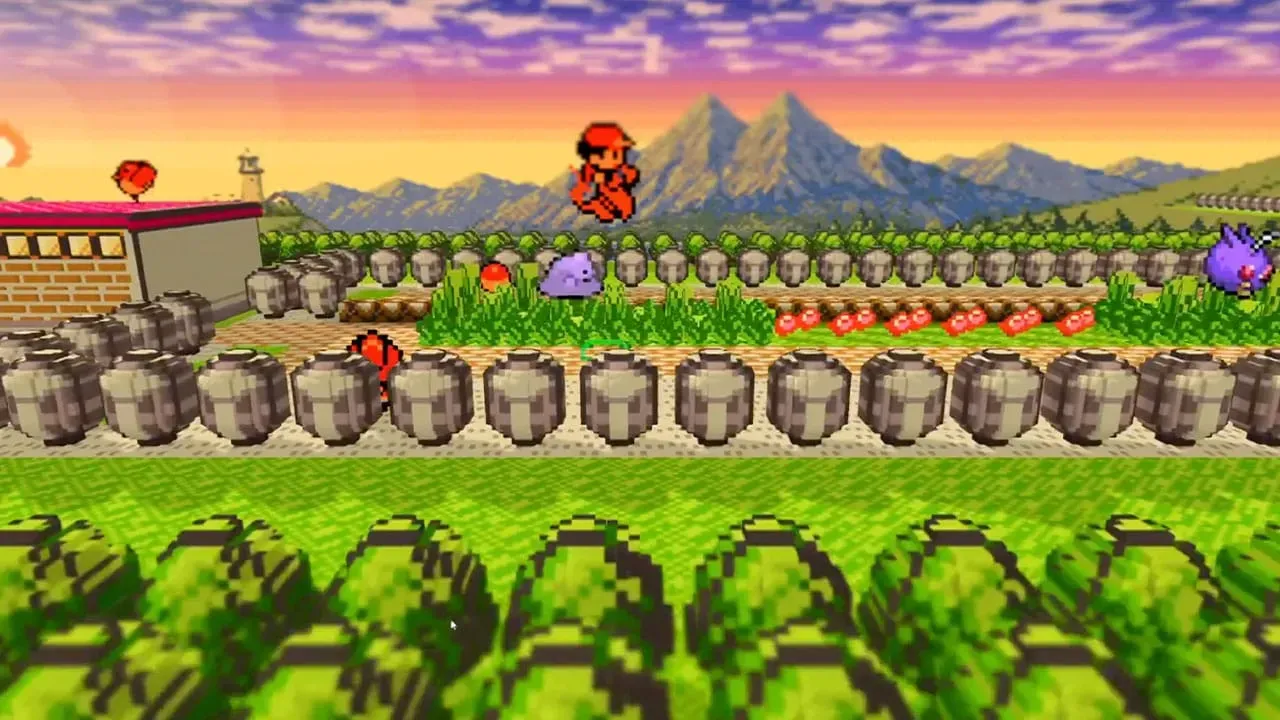
The most popular newcomer in the retro gaming space this year is recompiles and ports of retro games to new platforms, mostly done by AI. These ports and recompiles allow you to play games natively on platforms they were not released on. Typically, this would take a lot of time and effort to code from scratch, with devs trying, testing, and implementing a port to create an accurate experience that represents the original game as close as possible, all without needing an emulator. The Dreamcast scenes has been a great example of this being done the right way in the past.
Though, as you're likely aware, many of these ports and recompiles get stuck at 90%+ or go as far as launching with a lot of bugs and errors. Heck, sometimes there's misinformation in the GitHub space, and users end up downloading ports, tools, and recompiles that feature malware in them, which seems to be a new trend of how hackers find their way into your personal computers. Because let's face it, the way to get some of this stuff working is cumbersome and maybe complicated for average gamers to understand, therefore making them vulnerable to these attacks. The danger seems to be the distribution layer rather than the recompilation technique itself in most cases.
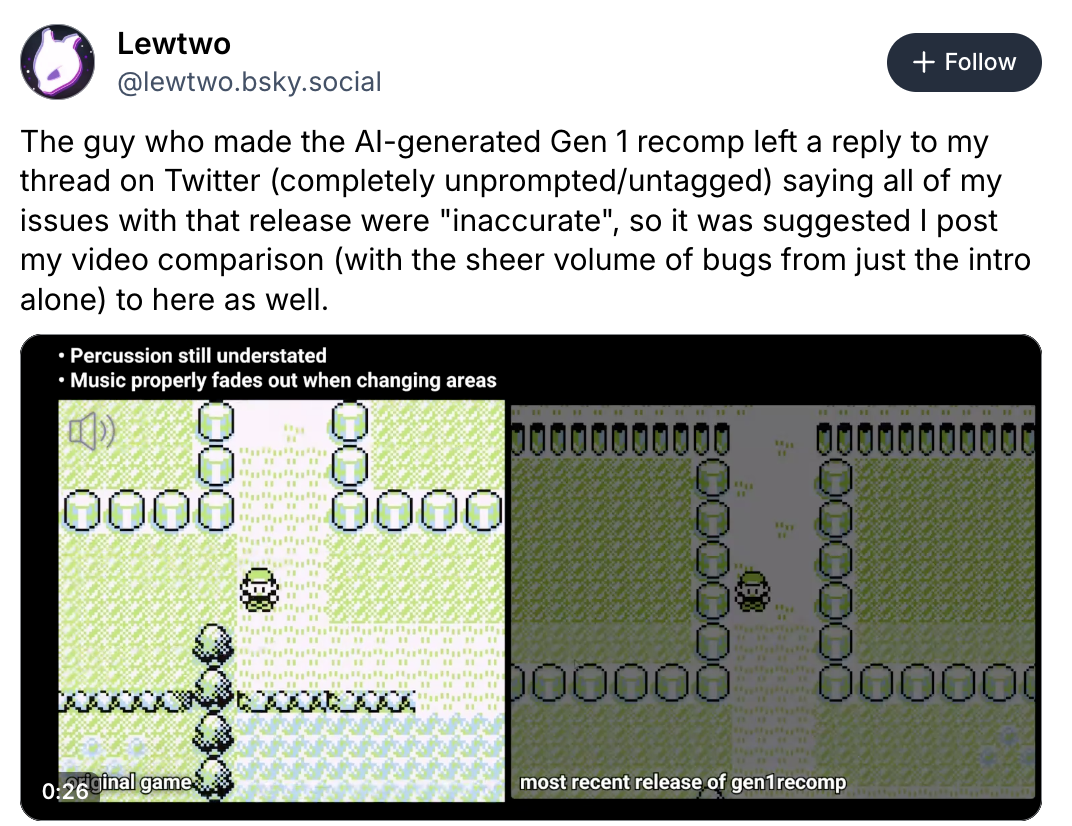
This has created an overwhelming wave of new ports and recompiles littering the scene, and many of them are not finished or resemble their original games. It's disappointing for many gamers and shows yet again that AI cannot do things to the same quality as a passionate human. It may do it quicker, but if you're like me, I'd rather play something fully finished and wait longer while supporting true independent creators with genuine expertise, such as this new Pokemon Emerald fan game that has been human-made and has been in development for almost two years.
This vibe coding wave of low-quality games is now pushing away genuine talent who have been creating projects for a long time, and putting pressure on them to get games launched quickly. A good example is the developer behind GB Bridge, a tool that ports GB games to GBA. He has now felt the need to move his project to be AI-assisted because it's too time-consuming to do it manually. I've got nothing against this, but this onslaught of launches is now forcing others to do the same to "keep up", and some developers even lie about using AI to generate more downloads/sales.
Emulators & Frontends
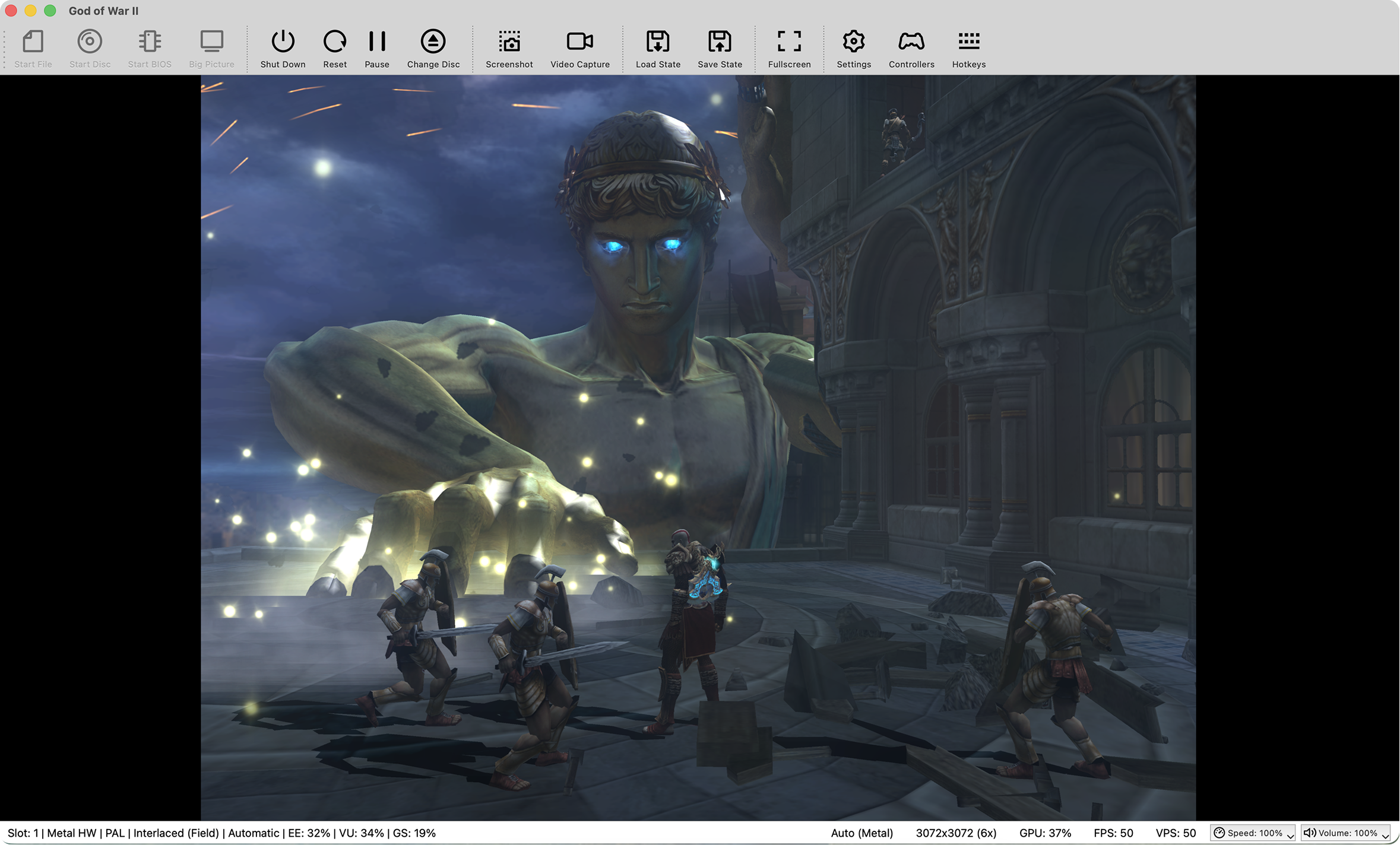
We dabble in a lot of emulation... like, a lot, though my knowledge only goes so deep. The development and usage of AI in this industry is also affecting genuine creators, even going as far as openly stealing people's ideas and code to then wrap their work in a new brand/app/project, all with little to no amendments.
We spoke with the owner behind ARMSX2, a popular open-source PlayStation 2 emulator for Android, iOS, Mac, Windows, and Linux. He's currently under a lot of stress after finding out that users are not only stealing his open-source work to launch other emulators, but also competitors are pretending to be a part of his team to steal donations and talk down on his project.
From the ARMSX2 Founder: Let’s talk
— ARMSX2 (@ARMSX2Emulator) July 18, 2026
Hi guys, I’m jpolo1224, the founder of ARMSX2 and one of the lead developers for Android. I haven’t wanted to say anything until now, but I need help from the community. For months I have been receiving harassment from a user named ColdOpCode,
The emulation scene is a difficult one to fully understand all of its legalities and ethics, as most of the projects legally need to be open-sourced; otherwise, they would break copyright and trademark laws. This makes certain projects like ARMSX2 vulnerable to nasty people wanting to take advantage of its creator's work in more ways than one. It's one of the many challenges of developing emulators and open-source emulation projects.
"We just can't take it anymore. These are the same kinds of people that made the original AetherSX2 developer quit".
Now, you can see the true damage it's having on great-quality projects in the space. The thieves, the AI, and the expectation are what's pushing away true talented individuals, and replacing them with those who take shortcuts, who aren't as passionate, and are often in it for the money, rather than giving back to the community. And this is all happening behind the scenes without anyone knowing.
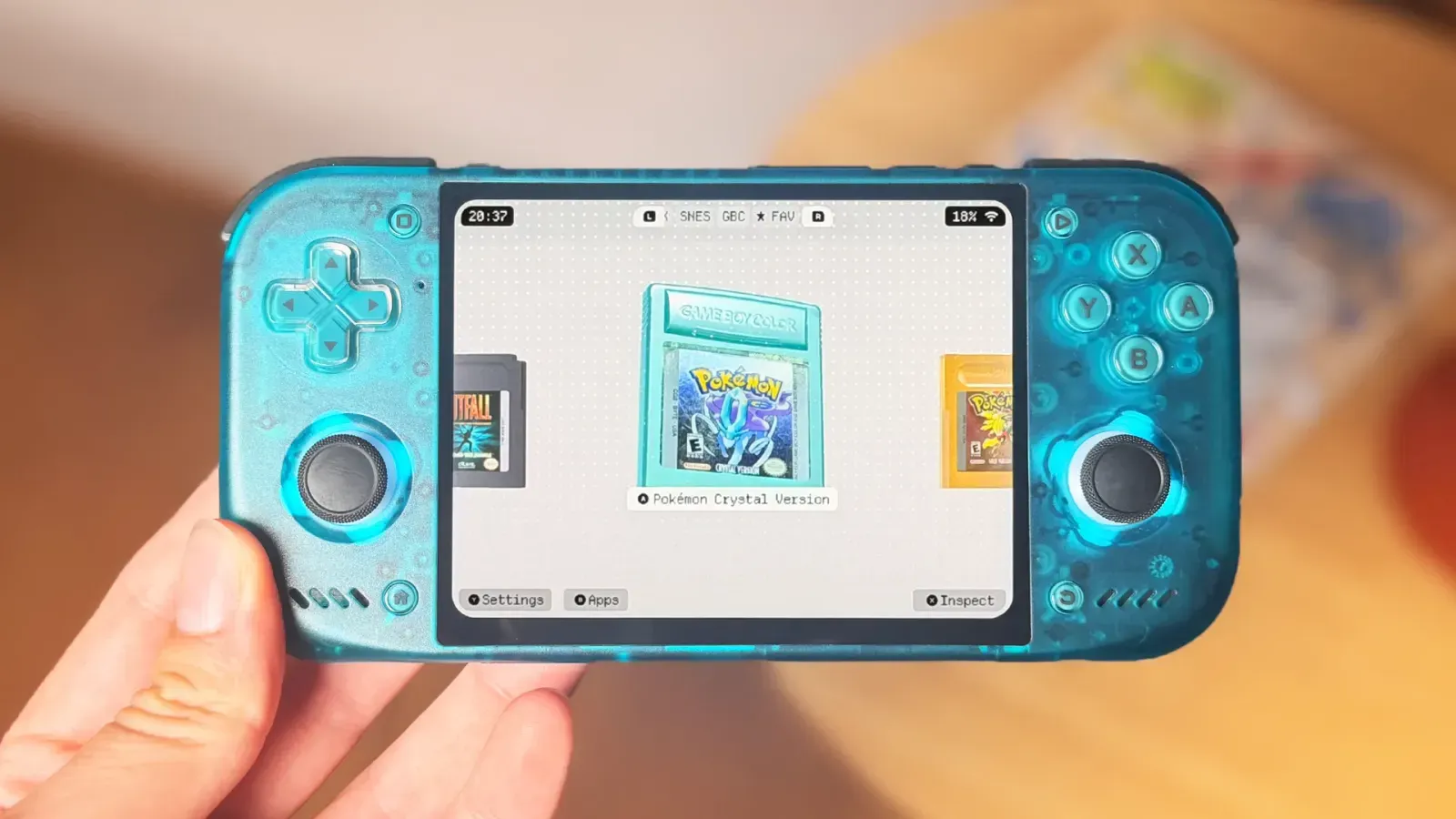
You may have seen us talk about Socket recently; it featured in a couple of our YouTube videos, and we cover their releases on the news section of our website. It's a new Android-based emulation frontend that prioritises cartridge and disc art; it's in Alpha, not yet publicly released, and is locked behind a paywall while the developer, depmots, independently develops it before a public launch.
It's a remarkable project, and a very enjoyable frontend that is incredibly unique; nobody has done this before. Yet, just a few months into development, and even putting it behind a paywall, there are users that are prompting AI to duplicate this project, down to the cartridge art, UI, design, and more. Nobody can build in public anymore, and you can't even build behind a paywall anymore because imbeciles will try to copy and devalue your work. This app isn't even mainstream yet, and vibe coders want a piece of the pie with no credit to depmots.
I know copying projects and thieving has happened in the past, but AI has only lowered the barrier to copy and steal. Anyone can do it for a simple $25 monthly fee with a few prompts, making it harder for developers to stand out amongst the sea of duplicated ideas. It's honestly incredibly sad to see this happen. Publishers were hit by it a year or two ago, and it's still affecting us, but now developers are seeing the pain, face on.
Game Development, ROM Hacks, and Fan-Made Games

This was inevitable, to be honest, and with emulators being easily accessible on browsers, phones, tablets, and more, the ability to quickly download them and try them is what makes these AI-made projects a quick hit of dopamine, without any real care for their overall quality or if they work at all.
One of the larger stories we covered over the last week in this space was the fact that the singer behind the Pokémon Theme Tune, Jason Paige, paid a developer known as Ultra Dolphin Revolution to create a Pokémon-like game. These guys took almost two years to develop it themselves with no AI input, putting in blood, sweat, and tears, just for Jason Paige to use Generative AI to create the box art, the promotional material, and cart art. He's even gone as far as putting a $151 price tag on it.
Ultra Dolphin Revolution informed us that they were incredibly disappointed by this, and no doubt they feel like their hard work has gone underappreciated. Plus, it inevitably gives their work a bad look. It's clear the marketing of this game did not go down well with the community, and Jason Paige's greed has yet again annoyed many.
New Apps & Products Littered With GenAI
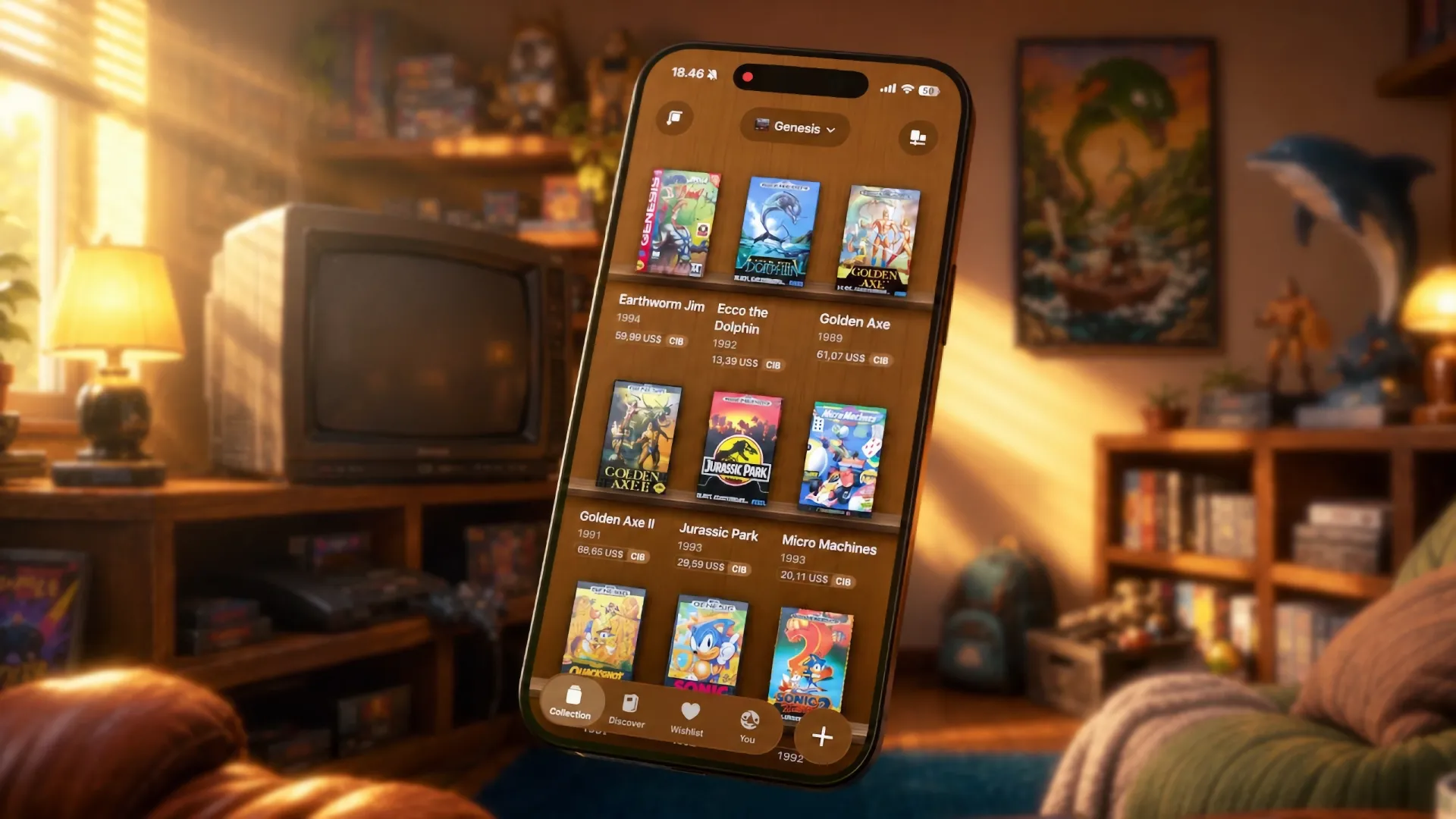
Now this is a personal pet peeve with some projects coming to fruition that are mostly human-developed. They look great and could be a potential pre-viral application. But when you dig a little deeper, you see them riddled with generative AI assets such as images, music, and video. So many of these are popping up, with developers proudly showcasing the obvious thievery.
Some even hand-develop the entire applications themselves over many months to then take a huge shortcut and prompt AI to generate some of the most important, customer-facing assets. A prime example is Cibby, a new app that focuses on being a 3D interactive library of your games, featuring box art and more. It was a great idea and looks well polished, but its promotional material is riddled with GenAI.
The founder replied to my X questions, indeed mentioning he uses GenAI, but in no way did he show his understanding that GenAI is copyright infringement at a global scale, stealing and scanning photographers' work and artists' work to generate something similar, but not too similar that the artists can claim a copyright. Many will state that these new projects we're seeing in the space would only be possible with the use of GenAI. My response would be that ‘just because you can, doesn't mean that you should’. And projects like this get almost to the end of production before they show their true colours.
Please, developers – just invest in artists, photographers, and creatives. It will not only benefit your business in the long run, but the industry as a whole and your customers too.

A new app in development that launched recently, which was 100% human-developed, is Questly. Think of Tinder, but for video games, allowing you to find and discover new games to your specific tastes. It even lets you organise your collection too. It's great, it's human-made, and you know if you want customer support, something changes, or a bug gets reported, that the owner is going to do everything they can to help you instead of asking a robot to do it (which will more than likely fail). Though I will say that, even while this is great, the owner is already sharing his opinions on AI clones and copycats, which is obviously not helping his business at all.
It's clear this is the start of the wave of mass AI-developed tat. It's everywhere, and now it's deep within the retro gaming and emulation space, with the common gamer knowing very little of its existence. I am not against AI-assisted development, but I want this article to show you the damage it's doing when not used ethically or openly. It's damaging the industry's genuine talent and will force lower-quality creations to the top, rather than high-quality, more time-consuming human-made products and projects. Quicker isn't better.
So What Do I Do?
The best thing you can do is follow and support developers, creators, and publishers in the space that you genuinely trust, people who are incredibly transparent with their inventions.
Seb and I will try our best to inform our readers of projects that are AI-assisted or vibe coded when we do cover new projects in the space. There have, unfortunately, been times when developers have straight up lied to us about this, saying that they don't use AI, only to get caught red-handed months down the line. It's an incredibly annoying thing to happen and makes documenting our findings so much harder.
And I'll be honest, it's so hard to know when AI is used and when it's not. How do I, as a publisher, verify that when the developer denies it? I honestly don't know, and I'm open to any advice here, because it's my duty to showcase great human-made stuff here on Retro Dodo, and an even bigger duty to inform you when something is AI-assisted.
Tread carefully, folks, and support your favourite creators. I know this article feels a little bit negative, but I can completely flip that and remind you that we're in a moment of a retro gaming resurgence. It's never been this fun to be a retro gamer; there are so many new products and still a wide number of talented individuals championing the space and blessing us with their inventions. We've just got to focus our attention on them and block out the other nonsense.
Stay safe out there, and happy gaming! 🫡


