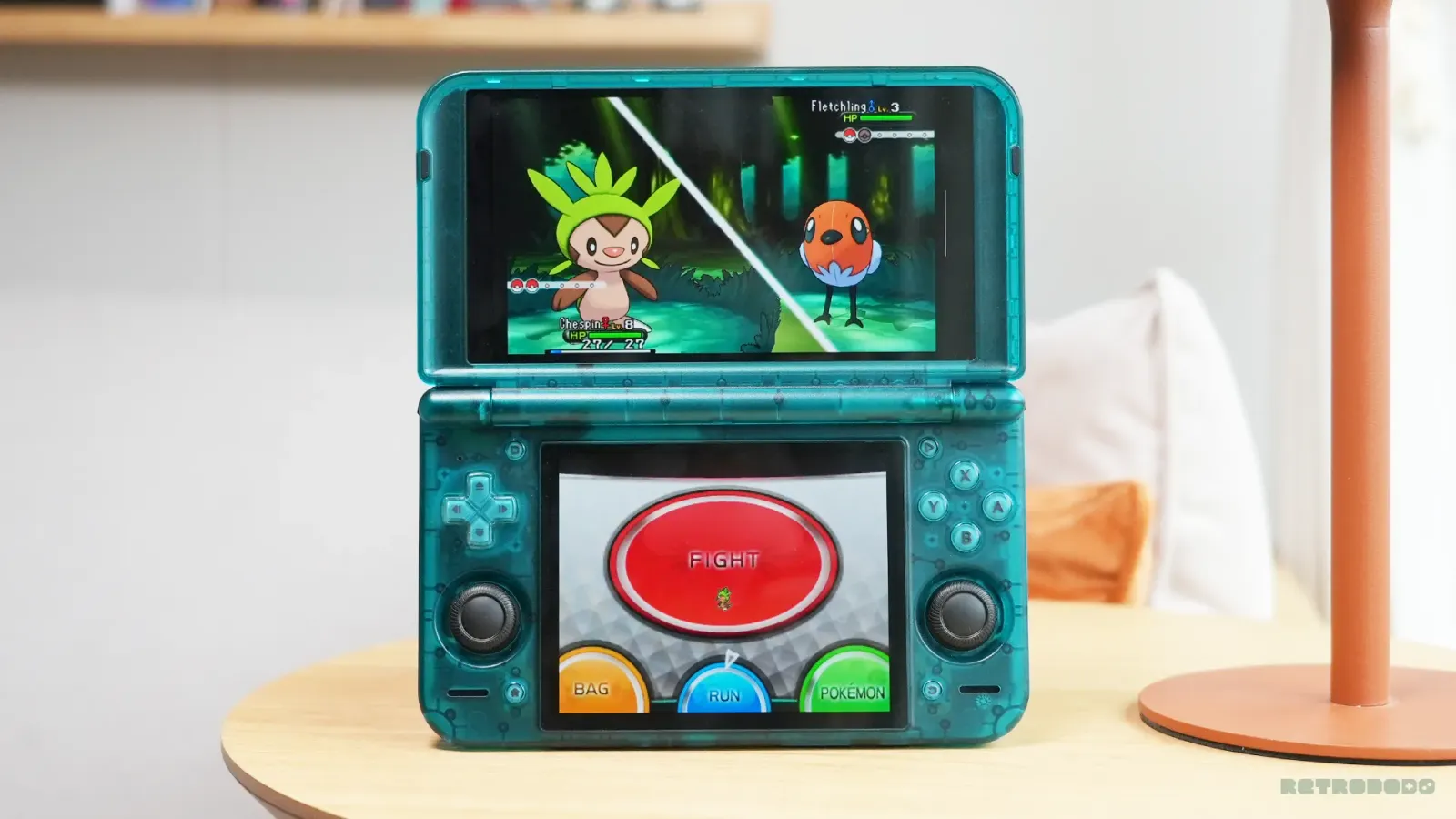
Retroid's new dual-screen handhelds are here in three forms: the Duo, Duo Lite and Duo Lite Plus. Today, I am reviewing the more powerful of the bunch, the Duo with AMOLED displays and better specs, a handheld I was somewhat hoping would turn me away from the AYN Thor, and one that would stop me being teased by ANBERNIC's upcoming RG DDS, but it has failed to do both and leaves me scratching my head a little.
And by that I mean where it sits on the market and who this is actually for now that the market has been somewhat flooded with dual-screen devices this year. Everyone that wanted one already has one, or those who don't aren't serious enough about it to splash $269 on it because they likely have powerful single-screen devices that they're happy with.
So, let me take you around the Retroid Pocket Duo, a mid-tier dual-screen Android handheld with great build quality and beautiful screens, but not as much power as I was hoping for.
- Release Date: October 2026
- Price: $269+
- Where To Buy: Retroid's Official Website
Retroid Pocket Duo Specifications
- Primary Screen: 5.5-inch AMOLED, 1920 × 1080, 120Hz
- Secondary Screen: 4.5-inch AMOLED, 1280 × 960, 120Hz
- Processor: Qualcomm Q-7790
- Process: 4nm
- CPU: 1× A720 @ 2.6GHz + 4× A720 @ 2.4GHz + 3× A520 @ 1.8GHz
- GPU: Adreno 722 @ 1.15GHz
- Memory & Storage: 8GB + 128GB
- Cooling: Active cooling
- Battery: 6000mAh
- Charging: 27W
- Connectivity: Wi-Fi 6E + Bluetooth 5.4
- Interface: USB 3.1 Type-C, 3.5mm audio jack, TF card slot
- Video Output: DisplayPort 4K 60Hz via USB-C
- OS: Android 16
- Dimensions: 162 × 95.5 × 22.4mm (±0.5mm)
- Weight: 350g (±2g)
Build Quality & Handheld Design
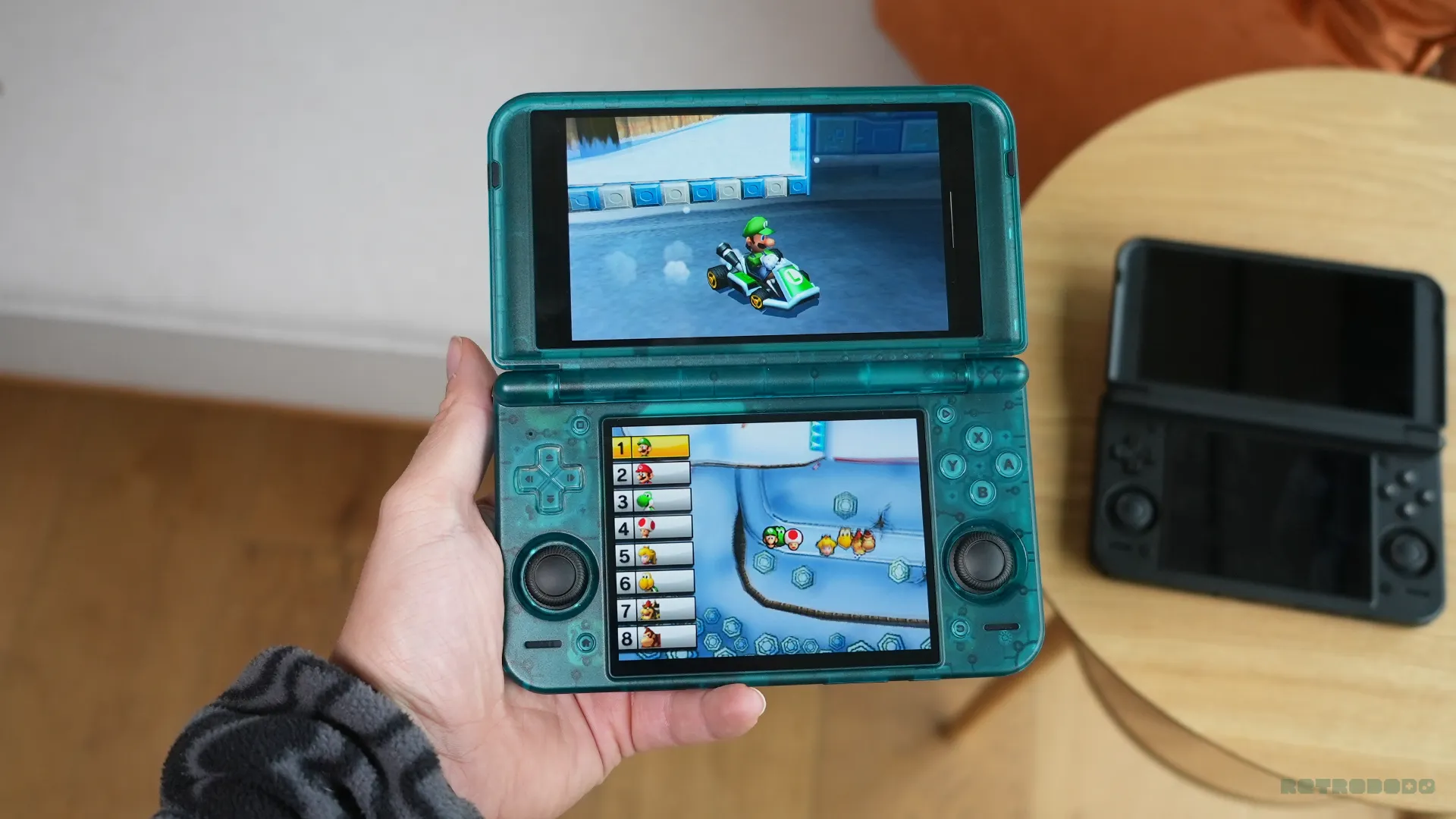
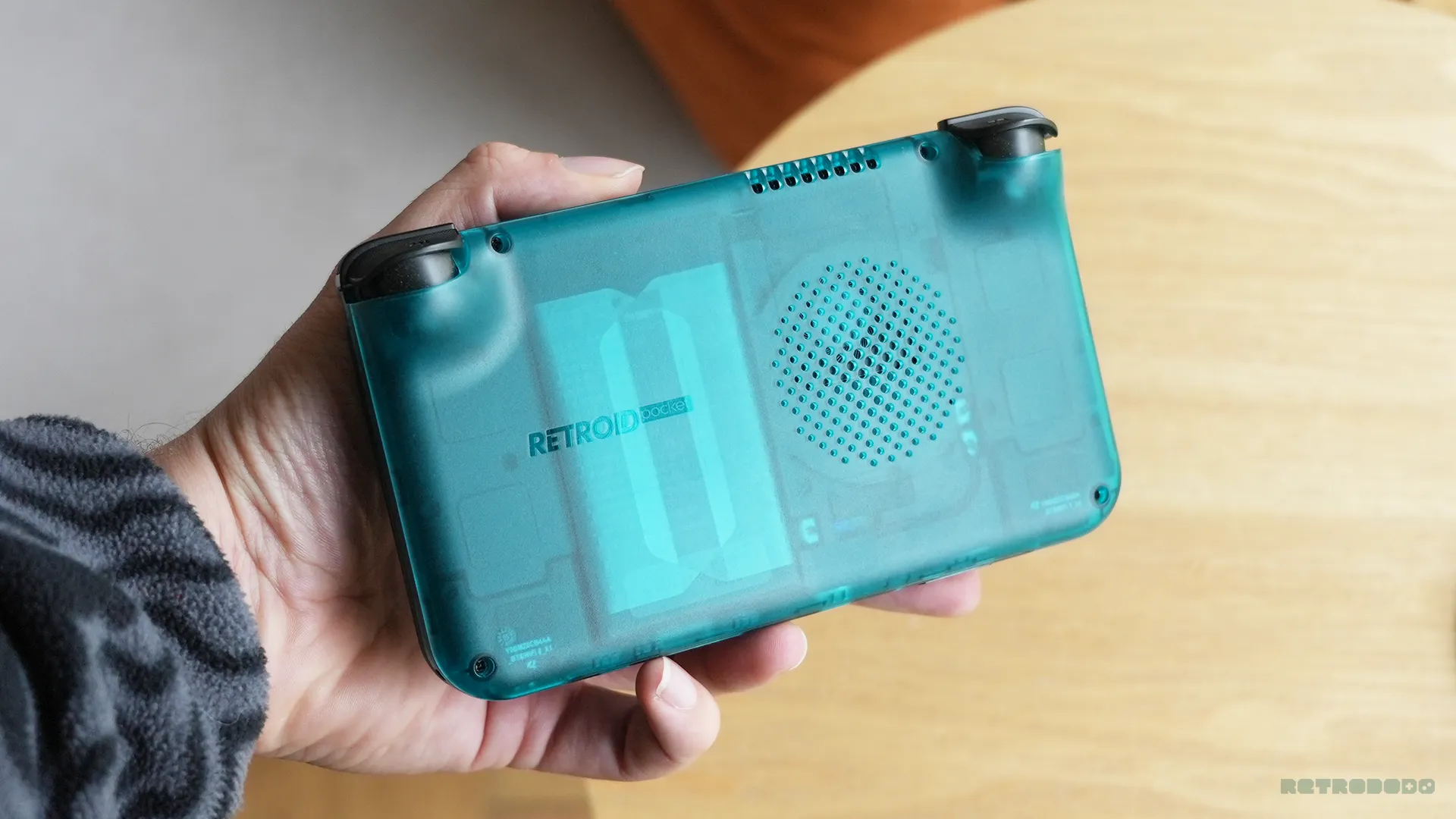
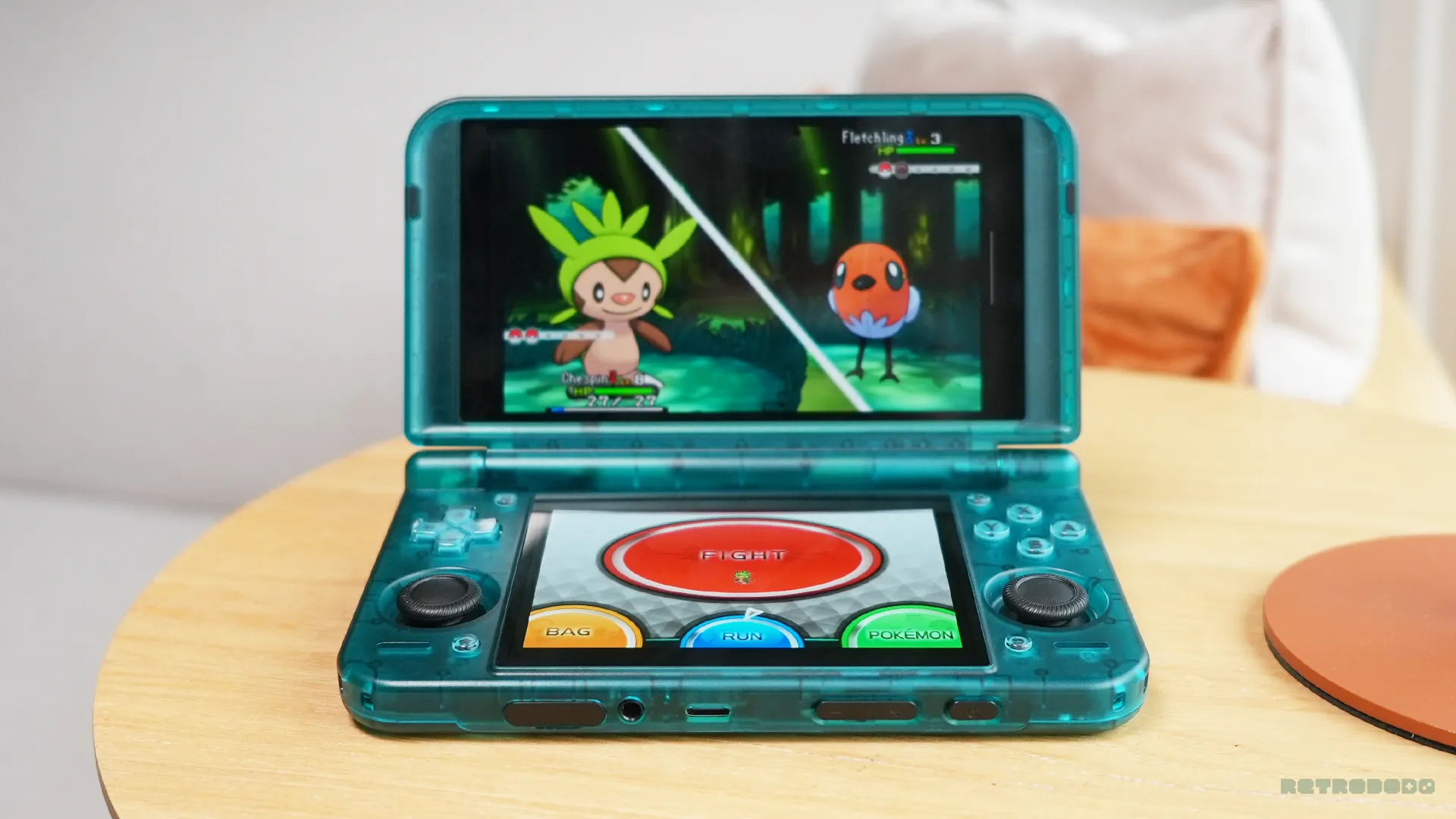
In Retroid fashion, the Pocket Duo is very well built; the transparent shell has a slight frosted translucency to it with no knitlines, which allows you to take a peek at the mould design of the shell and some of its internals. The buttons on the front also follow suit with transparency and a lighter colouring to the back to make them stand out slightly.
The shell itself has a slight matte textured finish to it that doesn't show fingerprints; it also has a curved design on the corners, and it wraps around the flared shoulder buttons nicely to give a comfortable, sturdy feel to it. It comes in at 350g in weight, which isn't heavy at all, but you'll feel it in your hands; 80% of the weight is in the base of the device, offering a good centre of gravity when opening and closing the device.
The hinge itself is strong too, opening up at any angle you want, with zero hinges or stop points from getting in your way; this does mean the hinge is a little stiff and will require a good grip, but the benefit is that you can angle the screen wherever you please and you can't shut it aggressively, so you won't hear any rattling or snapping when shutting it closed. There's even some flexibility when it's fully open to stop it from cracking at the hinge.
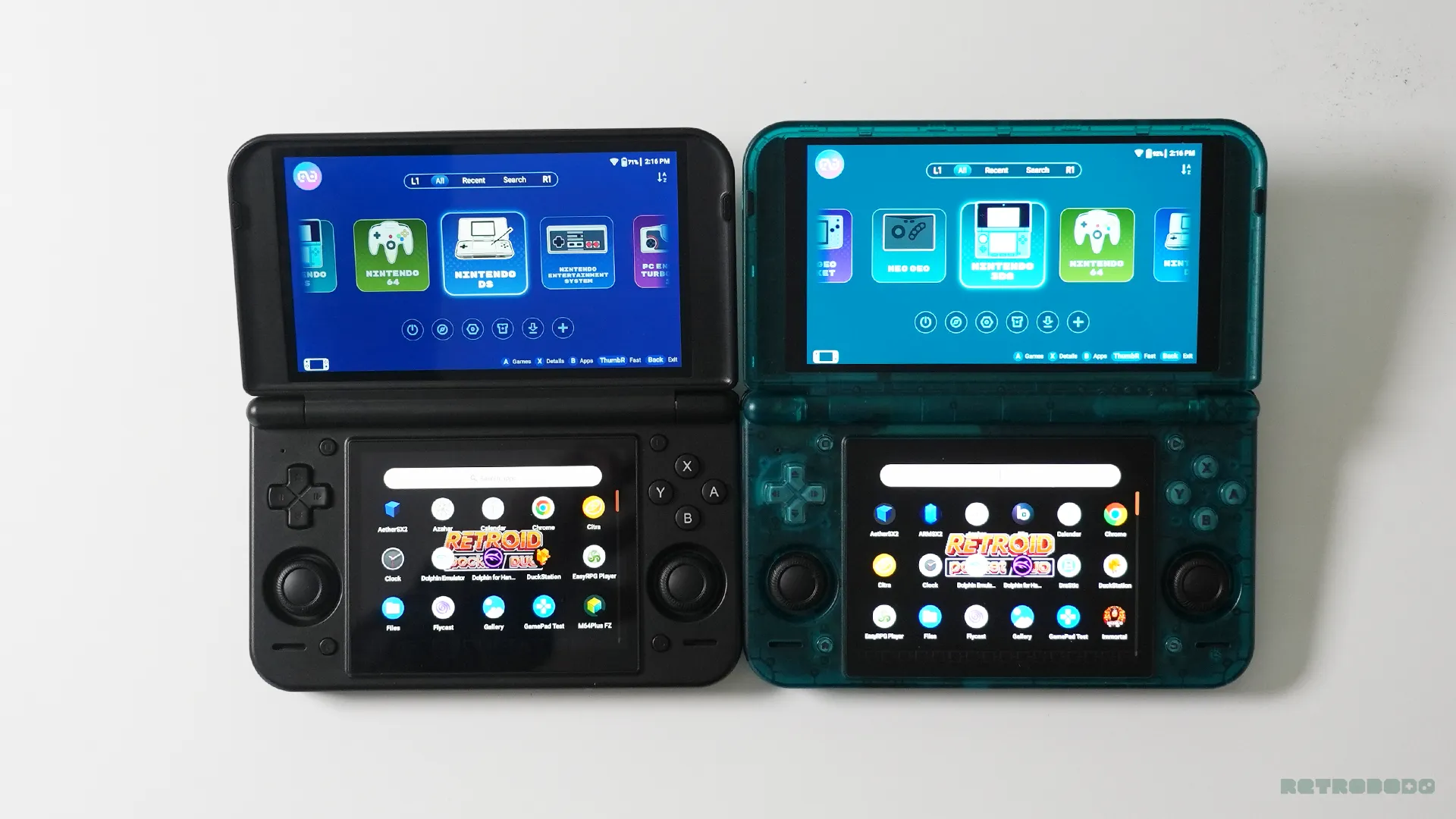
Overall, Retroid has yet again shown us that they have some of the best-built devices in the space; it's comfortable, with mostly well-positioned buttons and soft corners, and although it's wider than some of its competitors such as the AYN Thor, it still feels easy to hold for long periods of time, and that's thanks to great product design. They have multiple colours to choose from if transparency isn't your thing, such as GC, Black, 16Bit, Ice Blue (my unit) and Clear Purple.
Button Quality
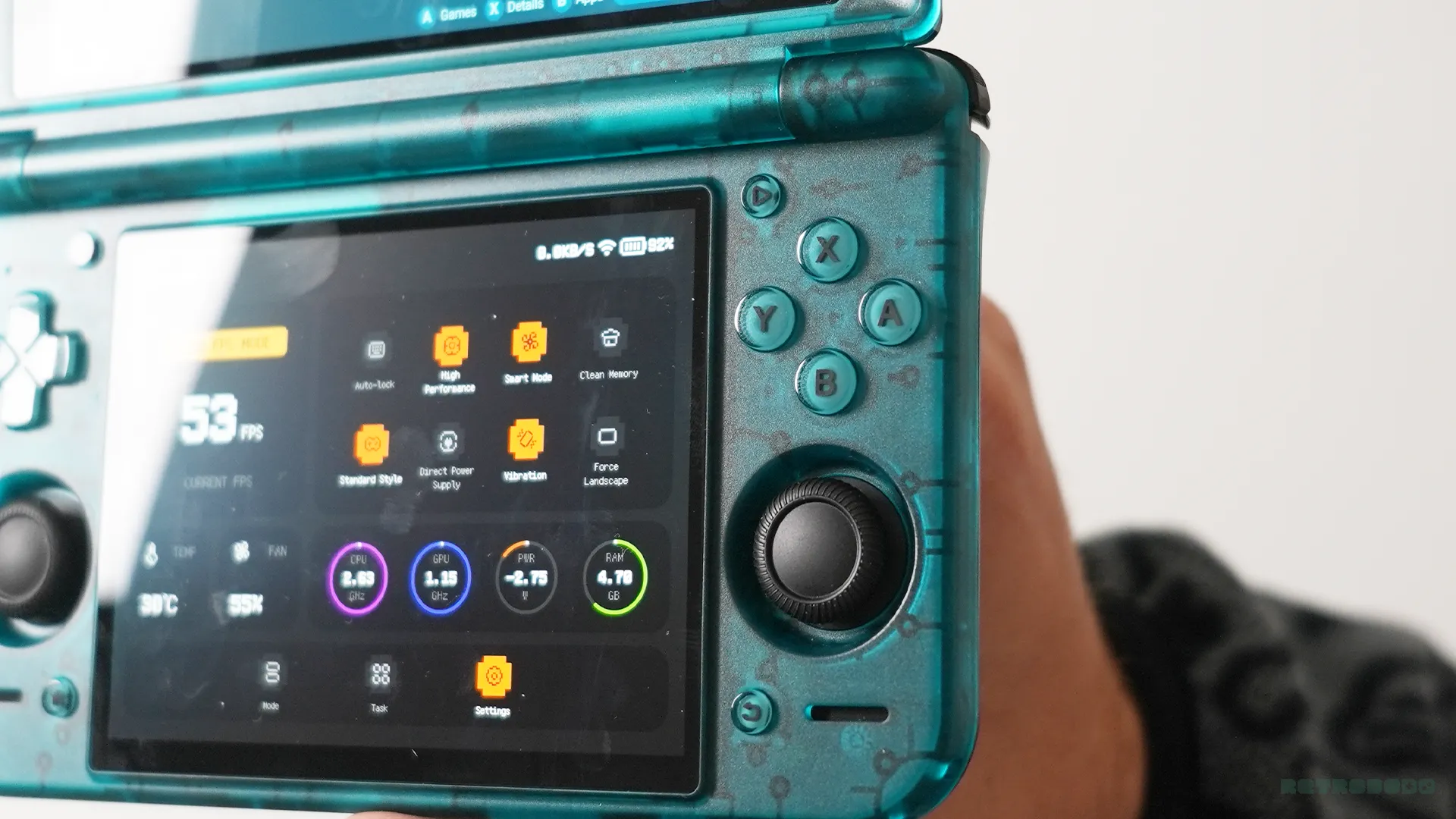
Retroid's button quality matches the build quality; the DPAD is a little on the small side, taking inspiration from the PS Vita, offering minimal travel, good flexibility, light clicks and sharp feedback to your presses. They are glossy like the action buttons, so at times you'll need to give them a clean as they do get slippery, especially if you're snacking. The action buttons need more pressure, have some travel to them to meet the contact underneath and offer the same level of sound from them as the DPAD, i'd even go as far as saying they're on the small side too, but nonetheless great quality.
The dual-joysticks are recessed and sit deep into the shell to allow the device to shut, but come with large rubber tops that are grippy around the edges; again, good travel and solid R3/L3 clicks. Though I did have a thought, and I'd love to see someone manufacture joysticks that you can pop up to offer a little more height to them, especially for dual-screen handhelds that could benefit from ones popping up and down when closing it, because them being dipped does add some slight stress to the thumbs. This may be technically impossible, but it's something I'd love to see someone make. It's also worth noting that there are no LEDs behind these sticks either, which has been on previous Retroid devices for some time.
Around the face you'll find smaller buttons too, next to each corner of the bottom screen, such as start, select, home and back. These are very small, and again, feature some transparency; you'll also find two front-facing speakers, completely obstructed by your thumbs, so the location of these could have been far better in my opinion. This obstruction shines a light on the overwhelming ammount of buttons on the face, there's a lot going on!
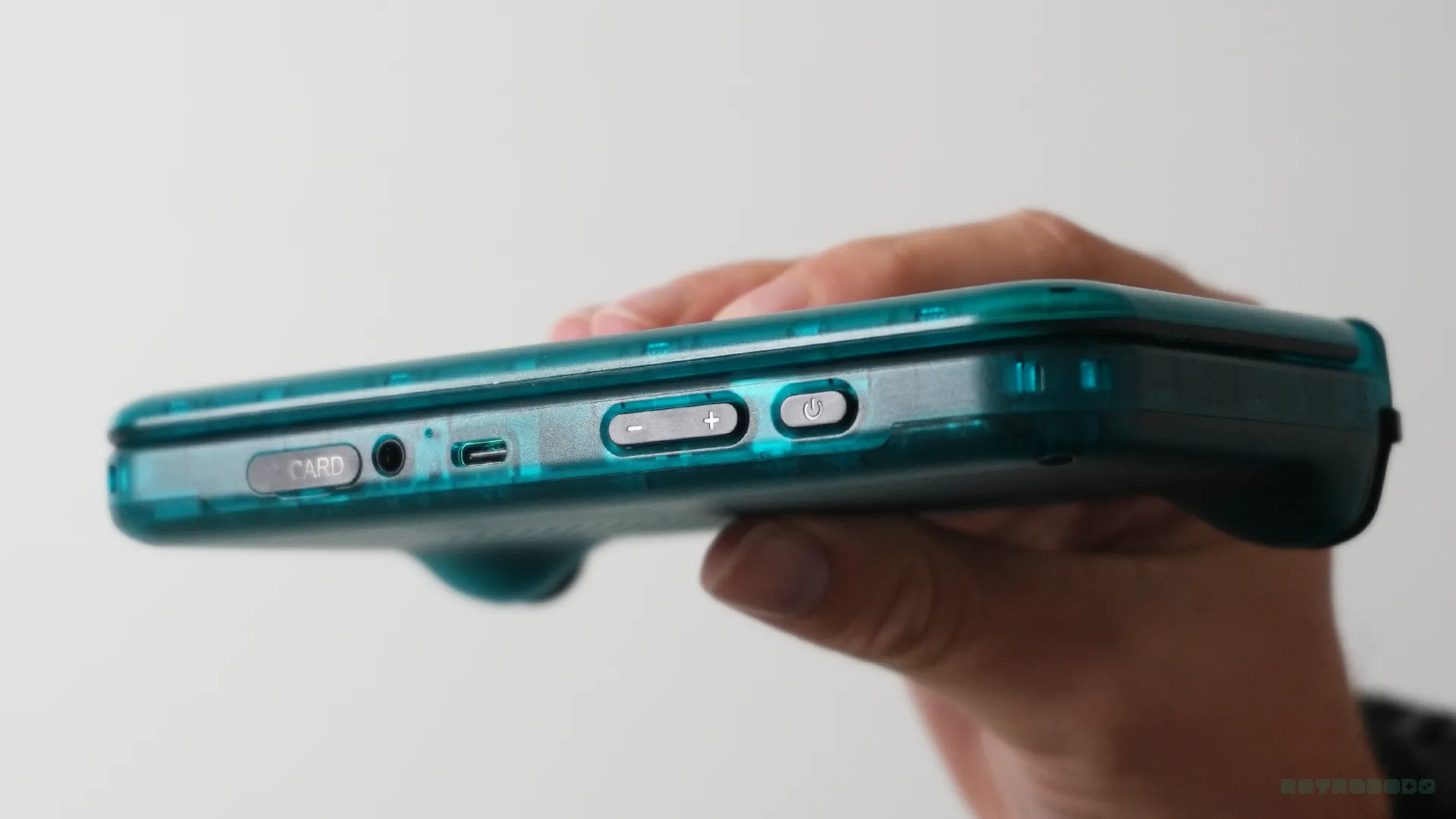
The same goes for the chin too; you'll find your TF-card slot, a headphone jack, an LED light that indicates charging and flashes when low on battery, then a USB-C port, volume buttons and finally the on/off button. This on/off button actually rests on my pinky annoyingly, meaning at times if I'm playing aggressive fighting or racing games it will actually put the device to sleep, which is annoying, even if it happens rarely. I just feel like too much is going on down here; put the on/off switch on the back out of the way, and the volume buttons on the side to make it less chaotic.
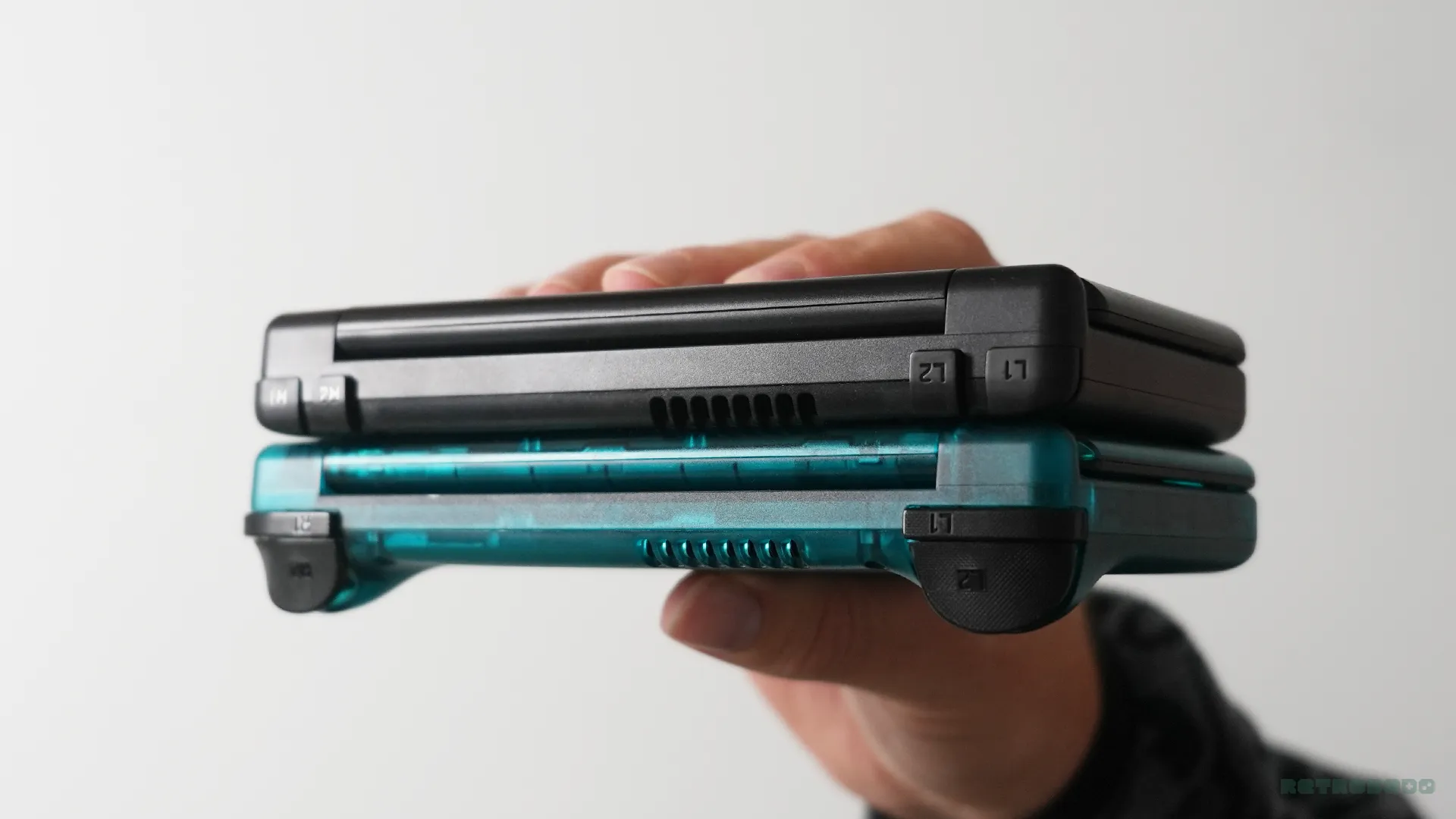
Then finally, the shoulder buttons are flared and are purposefully different to the Lite version, because that was aimed to be slightly slimmer, where this Dup is for those that want something a little more serious, and a little less portable. These back shoulder buttons have a lot of travel to them, zero clicks, no noise and maybe too much gap when pressed, but are large, comfortable, and have a grippy texture to them, whereas the bumper shoulder buttons are light, easy to press, very clicky, and are much thinner. These shoulders raise the backshell slightly too for extra comfort and grip, making it an all-round comfortable device to hold and play on.
Yup, The Screens Are Gorgeous
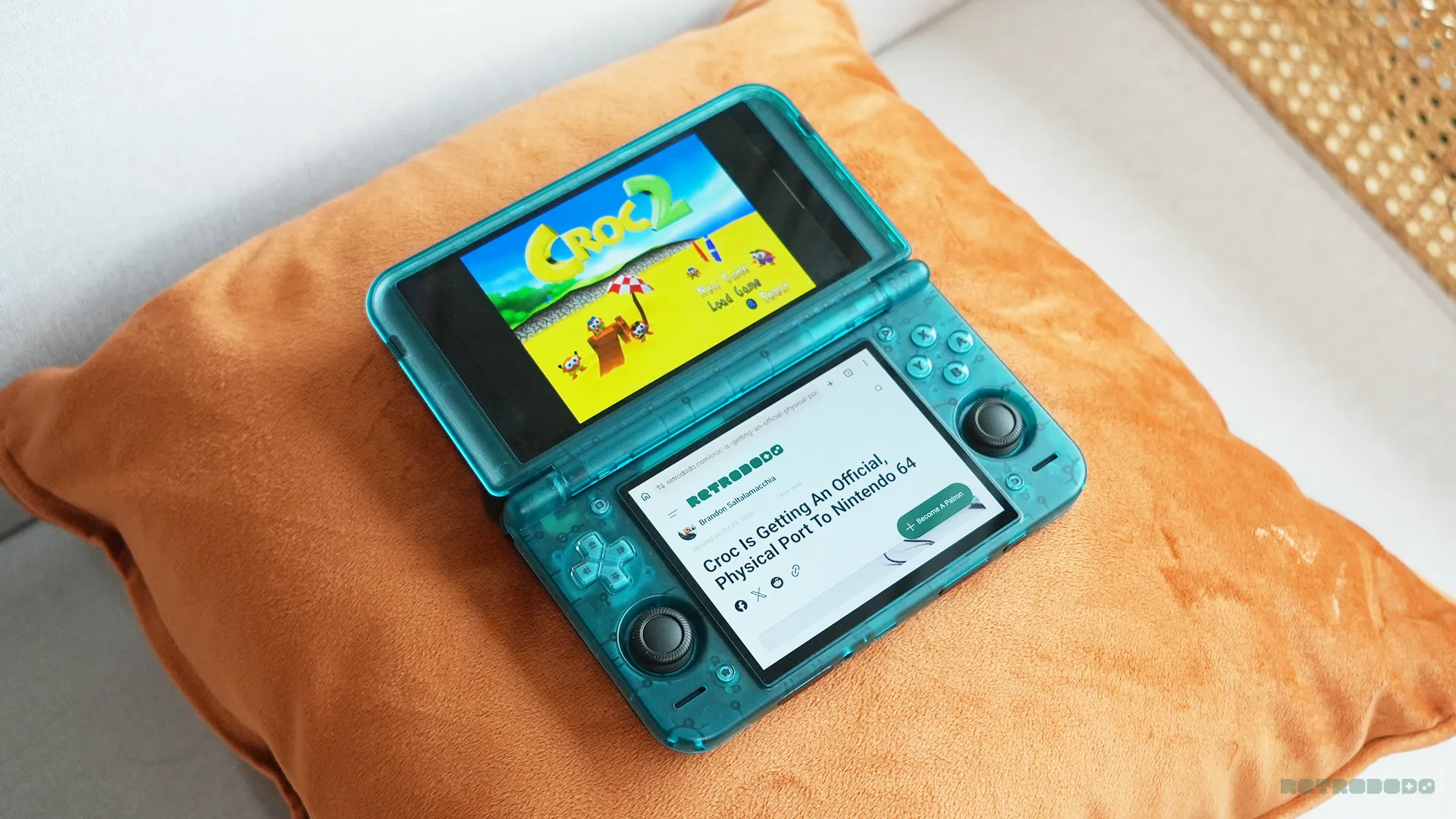
One of the best reasons to buy the Retroid Pocket Duo is the fact that you can get not one, but two stunning AMOLED displays on a retro handheld for $269. The displays used are beautiful and have a remarkable brightness that makes this a device I thoroughly enjoy using out in my garden on a sunny day, knowing full well I am actually going to see what I am playing.
The primary screen is a 5.5" AMOLED 16:9 display with a resolution of 1920 x 1080, whereas the bottom is a little smaller to better replicate the Nintendo 3DS, at 4.5" 4:3 and a resolution of 1280 x 960 (the same used in the Retroid Pocket Nova, both coming in at 120Hz, making not only your retro games look silky smooth, but your Android games too.
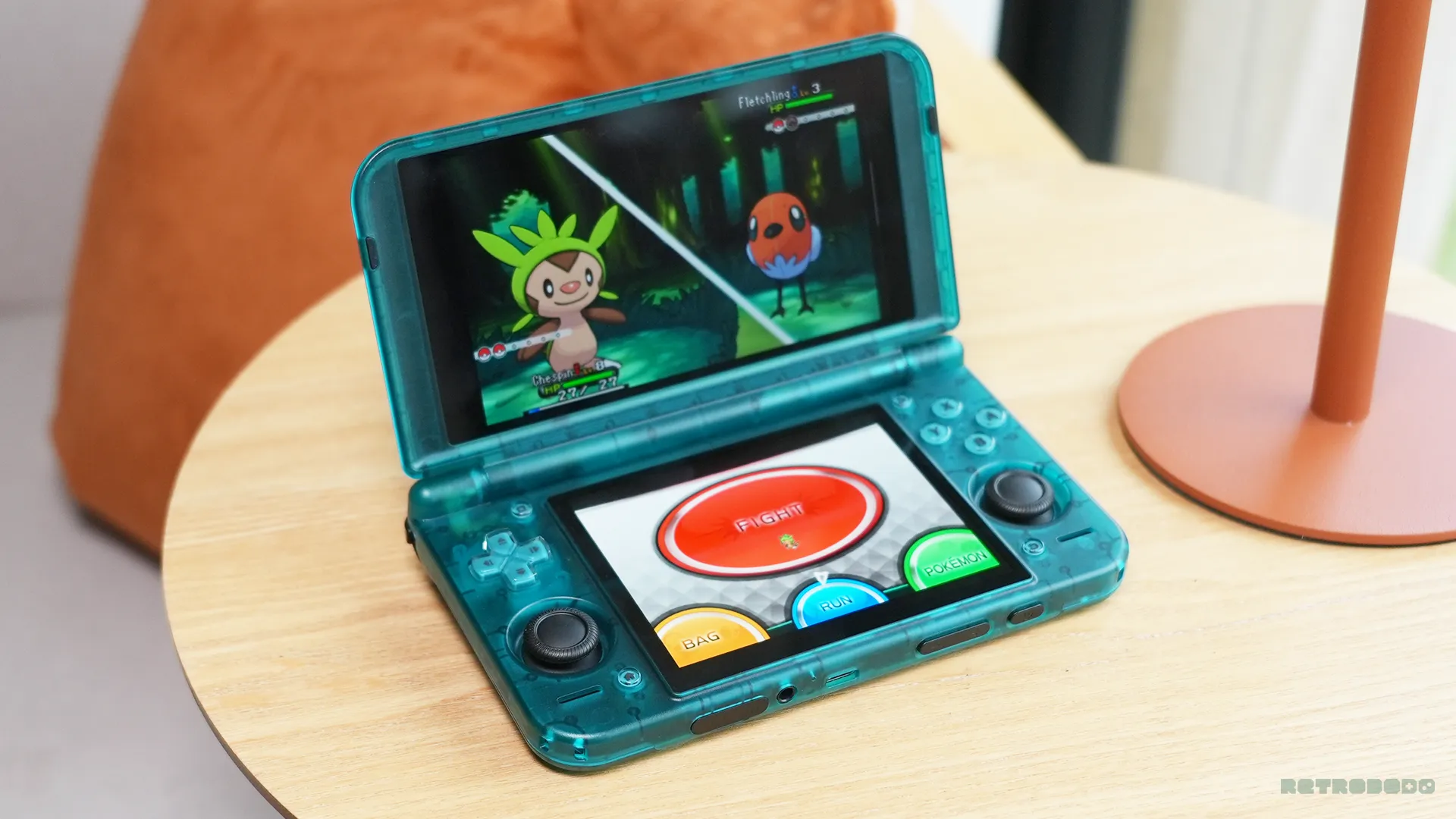
In comparison to the Retroid Pocket Duo's older brother, the AYN Thor (they are owned by the same parent company), the top display is a little smaller, but the Duo's bottom screen is actually bigger compared to the Thor's 3.9" AMOLED bottom display, offering up a little more screen real estate for those that play a lot of NDS/3DS games.
The image is sharp, very colourful, and both look the same, as in the colour grading, the tones and the contrast are near identical, so you won't see any kind of mismatch between the displays. The latency between them is great too, depending on what emulator you use and if you have the 120HZ setting on.
It makes playing 16:9 games impressive to play on, and because it has an extra screen, you can use that to keep an eye on performance or even use it to watch videos, play music, explore websites for guides and more, offering a multitasking approach that single devices just can't do, and should be a serious feature you think about if you're on the market for a dual-screen device. But just remember, with two screens comes more power drain, but we'll get into that later in the review.
Operating System & User Experience
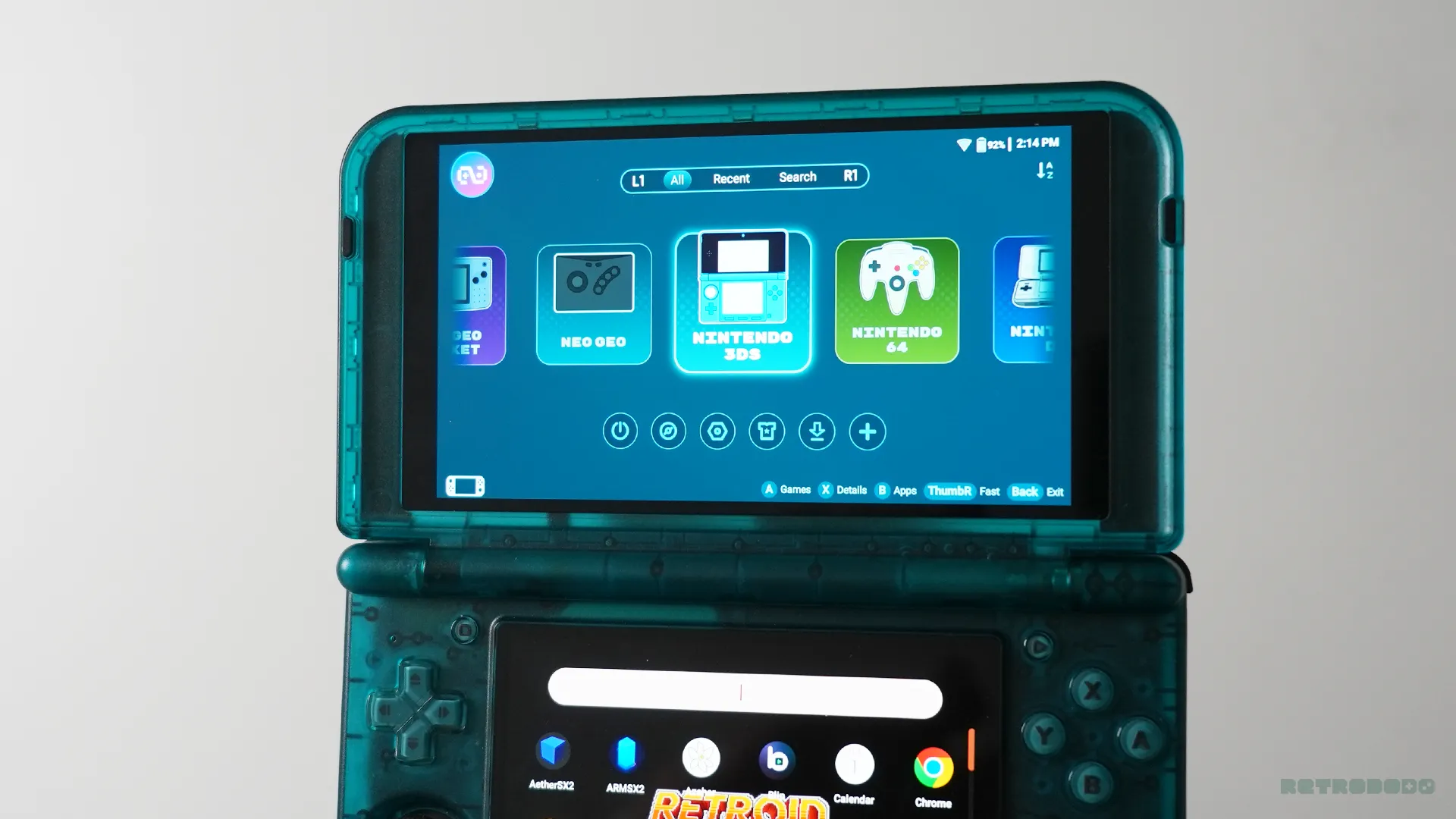
The Retroid Pocket Duo runs on Android 16, and when first turned on, it will hold your hand through the setup process, even going as far as installing over 15 recommended Android emulators for you so you can begin jumping into retro games straight out of the box; all you need is an SD card with your own ROMs. Once setup it asks if you want to use the standard Android homepage or a custom Retroid Launcher.
The custom Retroid Launcher is a way for you to explore your library of retro games in a colourful, simple manner, adding neat icons, box art, screenshots, and a list of all of your Android apps under one roof. It's a little too colourful for me, but nonetheless a great frontend for those wanting to jump into games with a simple look. Though I do reccomend looking at other Frontend launchers via the Google Play Store; there are some great ones out there, such as Beacon, Blip and Socket (not on the App Store yet). Which makes me wonder why Retroid haven't taken advantage of the bottom display in their launcher, because others in the space have given it some awesome features that would have tied well with the Retroid Launcher if they took their time to update and re-develop it, but no, still a one-screen launcher from them so far.
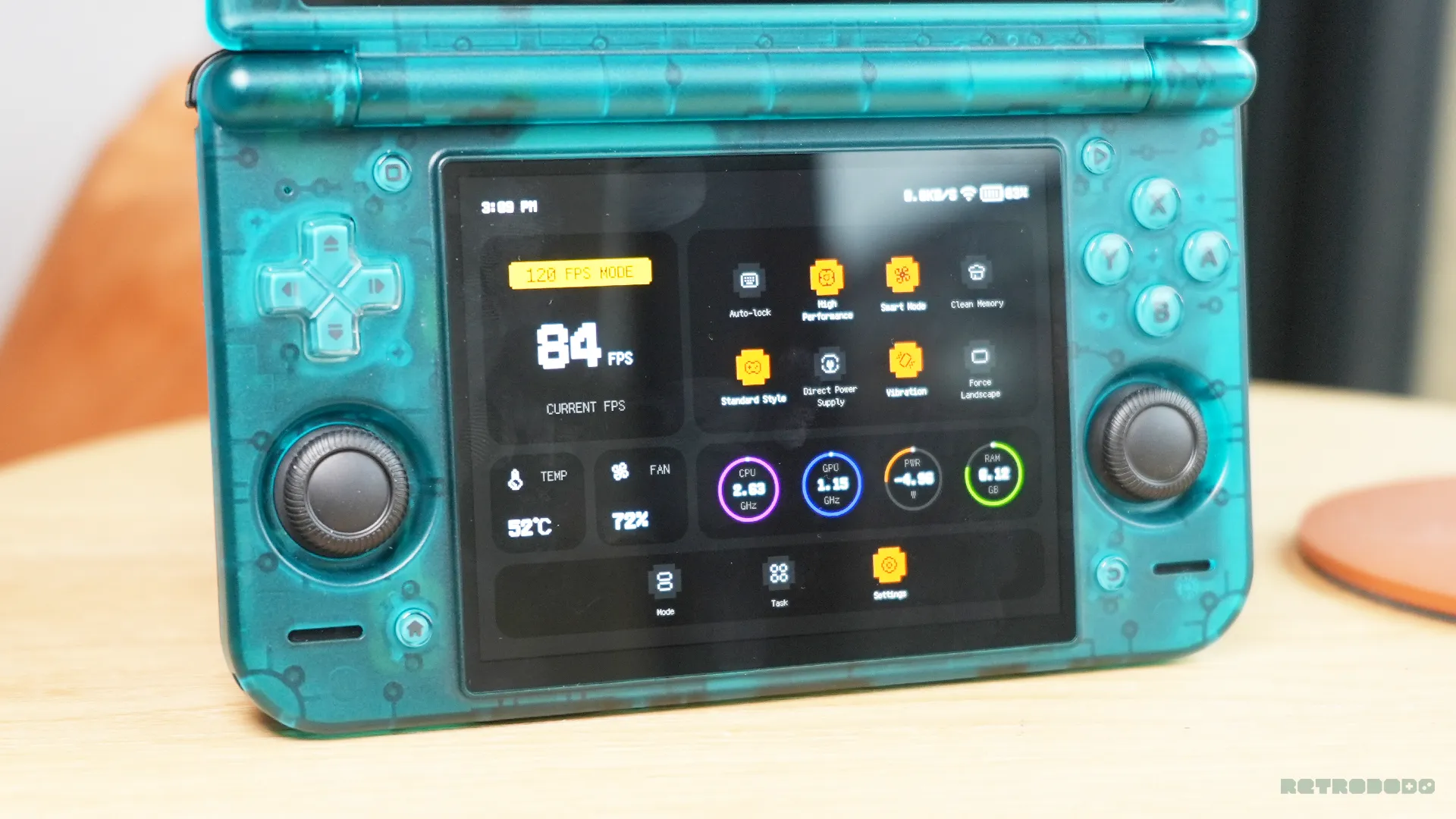
Setup on Android does take some time, but once configured, it's a great way to create a retro handheld games system that has everything at an arm's length, including your favourite apps. Retroid has even added a slight refresh to the settings page that pops up on the bottom screen; it now features a more pixelated look, and this allows you to see your FPA, temperature, fan speeds, controller layout and more, all on the bottom display. It's the mode I use most, in all honesty. All round, it's a pleasant Android experience on the Duo, like most of Retroid's devices.
Emulation & Gaming Performance
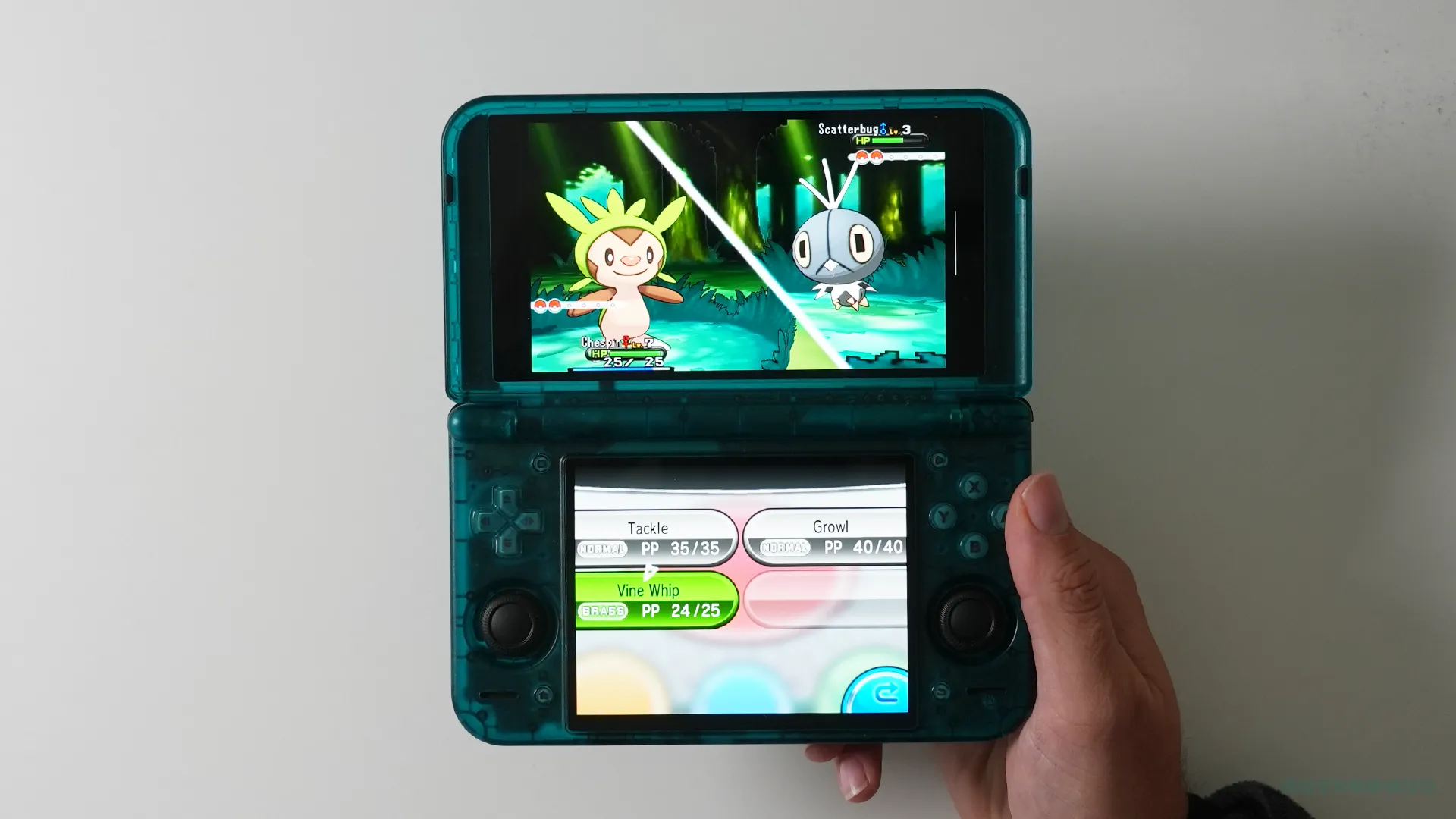
I was intrigued to know how far the Retroid Pocket Duo could go, only because I was somewhat disappointed with the Lite version when I compared it to ANBERNIC's sub-$100 RG DS Plus and seeing as it's a $269 price tag, it's competing with some big dogs on the scene, including its very own AYN Thor, which starts at $259.
So, getting straight into the very console that many of you are likely interested in is the 3DS, and oddly Nintendo 3DS is a cumbersome console to emulate; it requires a great deal of power and a unique architecture, but thankfully the Duo can emulate it very well; in fact, it can upscale to 3x or even 4x native resolution when you put the Duo on Performance mode, offering a beautiful and unique 3DS emulation experience that pairs perfectly with the two displays that match the 3DS ratio.
In fact, I'd even go as far as saying the 3DS emulation is better on here than the AYN Thor thanks to the larger bottom display. Yes, you get some black borders on the top screen, but all-round it's a remarkable little 3DS handheld that makes your games look real juicy. The only issue is that it doesn't come with a built-in stylus like its competitors, which is a real shame, because that's somewhat expected on a $269 3DS-focused device. It's included on the ANBERNIC RG DS Plus, which is only $85, and the upcoming Yoniq Duo will have one too, which is around $150.
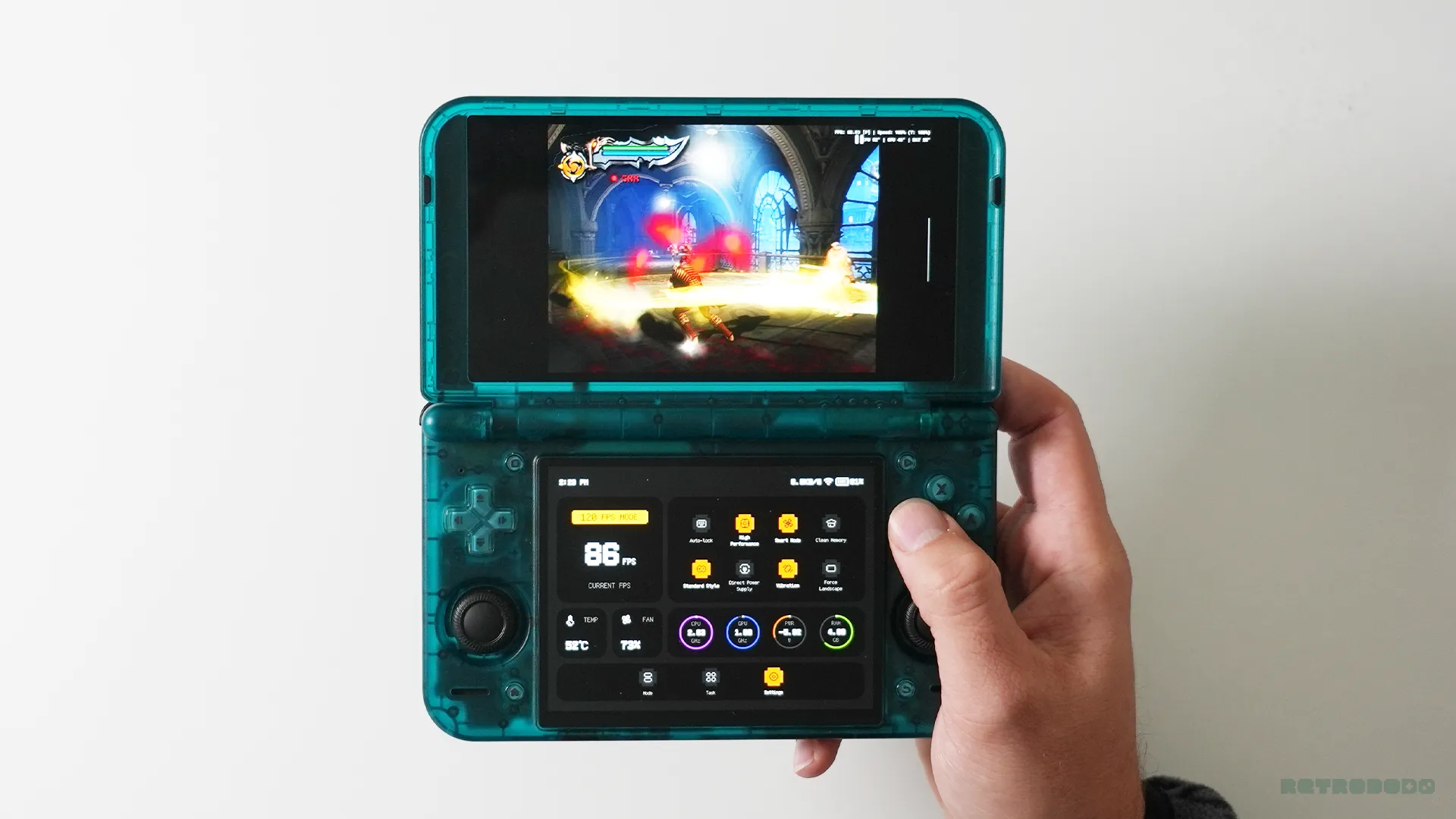
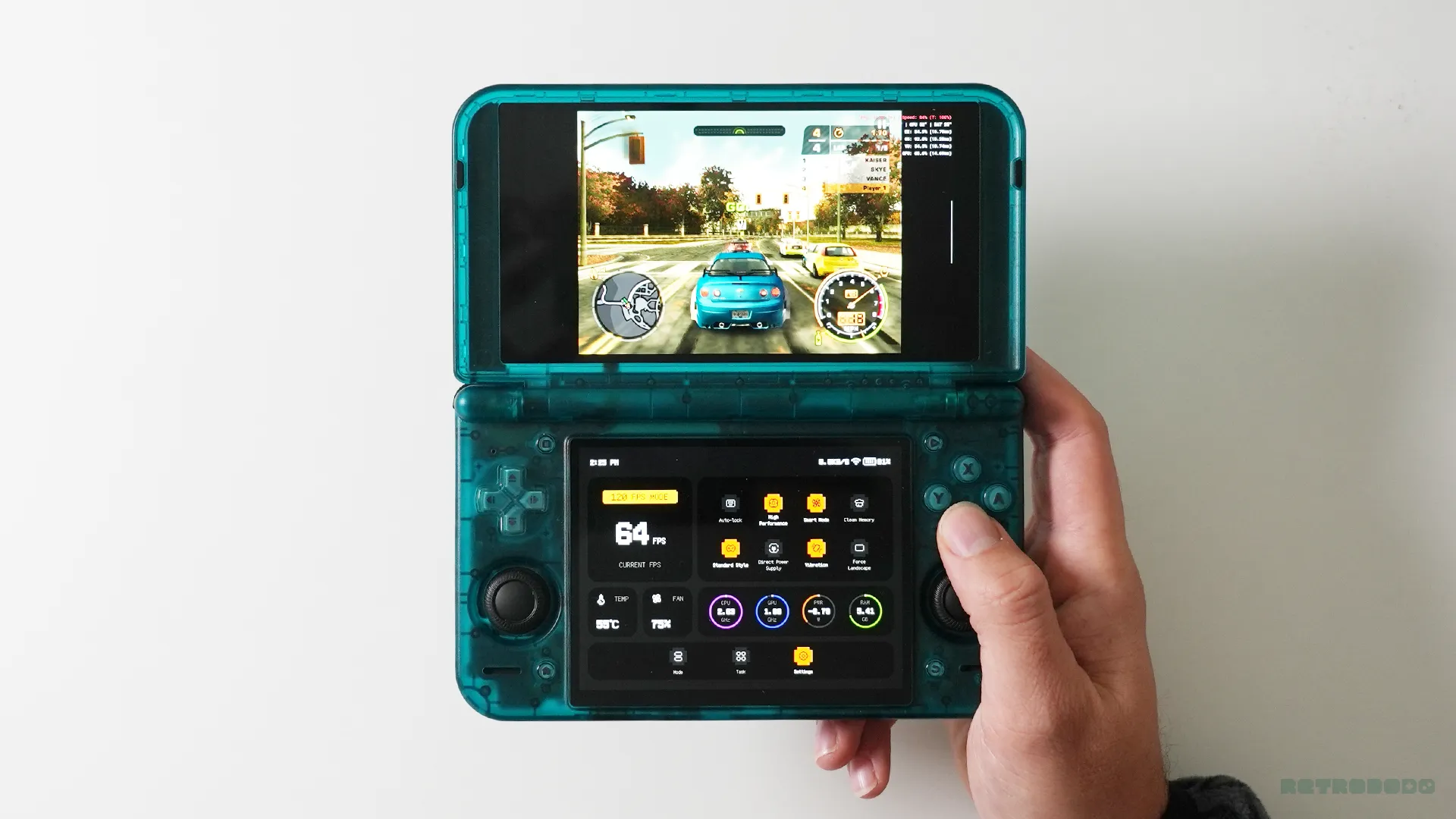
I then jumped over to PlayStation 2, and that's where I could feel the Duo's limitations because I struggled to get 2x native resolution out of intense PS2 games such as Need For Speed: Most Wanted, which I was a little disappointed by because I was really hoping that all of my PS2 catalogue could push to 2x, but that is not the case. Many of your PS2 games will, though, its just the larger ones won't. God Of War runs at 1.5x nicely, and just about looks nice on this screen, though for me 2x is when PlayStation 2 games look really nice on something like this; at 1 and 1.5x you get the sharp edges, artefacts and annoying ripples in pixels so this isn't a device I found myself gravitating towards when I want to explore my PS2 library, and that is what brings the entire device down for me, personally.
Only because I wanted this to be the dual-screen handheld that does it all for under $300, and by all, I mean up to PS2 very well, but it's not quite there, so it isn't one I take away with me if I am away from home for a week or want something serious, and there's a thought in the back of my mind wondering if Retroid has done this on purpose in the hope that you go and buy a more expensive $300+ AYN Thor from their sister company?
GameCube runs great at 2x native resolution, allowing you to explore that awesome library of games; the same goes for Nintendo Wii, and then your older consoles such as Nintendo 64, PSP, PlayStation 1, GAME BOY Advance, and Sega Saturn on more all run well at great upscaled resolutions, which is to be expected on a device like this, and because of the dual-joysticks you'll have no issues mapping all of your buttons across all of your consoles.
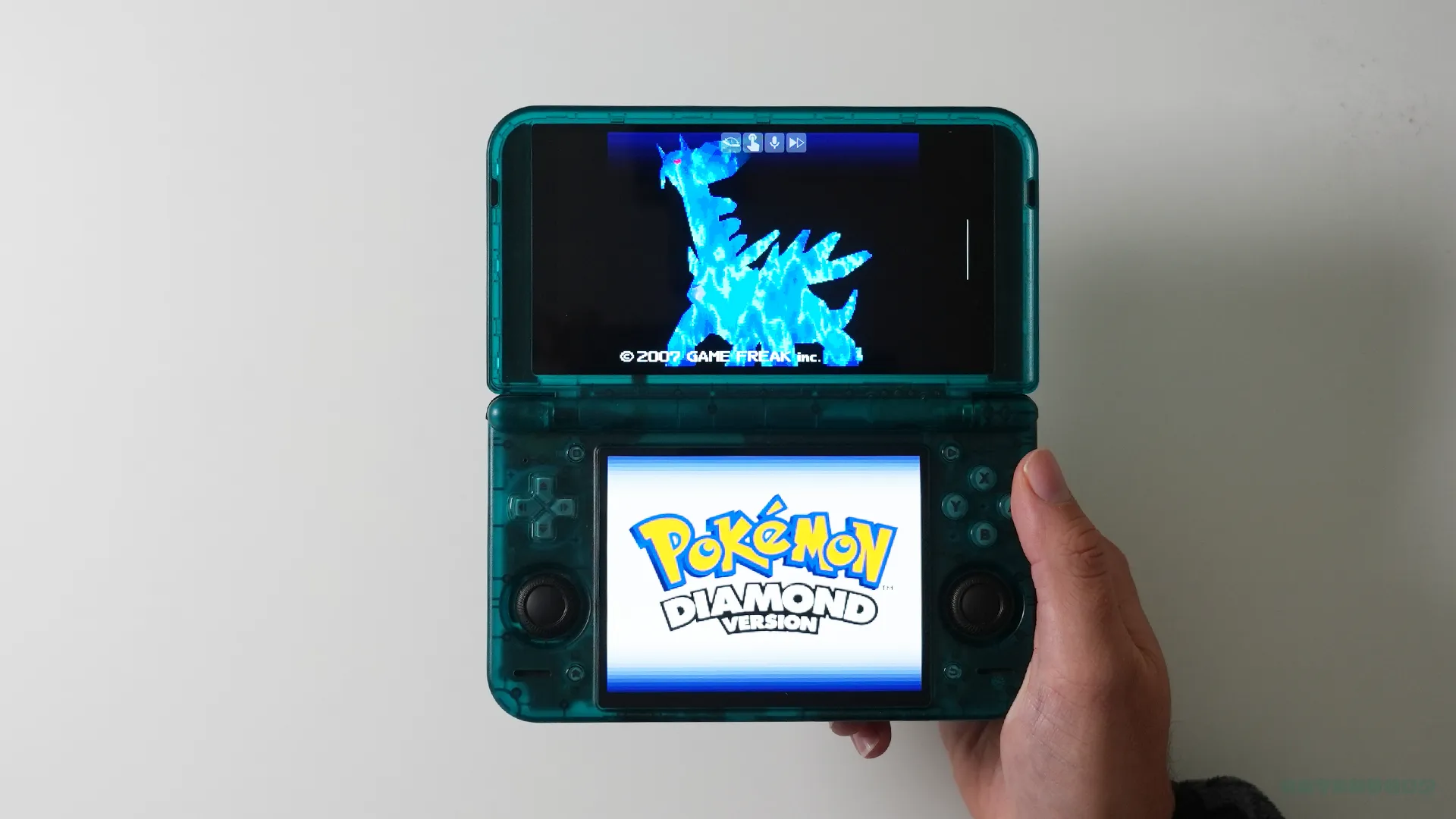
I also want to mention that Nintendo DS games are also a pleasure to play on because the top screen perfectly aligns with the bottom screen in a way that feels incredibly organic, and it does it without stretching it, another reason it emulates DS games better than the AYN Thor. Though I'll admit the AYN Thor can emulate PS2 games far better than this if you go for the more expensive versions.
But for me personally, and it's hard to admit this, I only really play 3DS games on here. I just love the transparent aesthetics, the big bottom display, upscaled resolutions and the way this device feels when playing them; it's one of the best handhelds on the market for 3DS emulation in my opinion and at times I will dabble in Android games such as Diablo Immortals, which also runs well at medium-high settings. That partnership between 3DS and Android makes this a really fun, explorative handheld that I know many people will fall in love with if they're after a 3DS/NDS specific device.
Battery Life
Battery life on here has a vast range due to the use of two screens, and at times you will find that you'll have to manage these screens in more than one way. By that I mean lowering the brightness or completely turning off the bottom screen when emulating single-screen games to preserve battery life.
For example, when pushing it to the limits on PlayStation 2 emulation, you can drain your battery in 2/3 hours, which is... quick to say the least, so again, lowering the brightness, turning off screens, and lowering volume will mean you can push this close to 3 or 3.5 hours if you're careful. When it comes to Nintendo 3DS though, you need both screens, so it's a little harder to go into preservation mode; I was seeing anywhere between 3 - 4 hours here when playing 3DS games.
Then of course the less consuming consoles vary too, and if you're using it for PS1, GAME Boy, Neo GEO, NES, you can easily get 8+ hours out of this thing, even more if you're on 50% brightness etc, so the range varies considerably, which is a good thing as it means you can adjust to your battery's capacity when you're not near a charger.
Overall Opinion
- Two Beautiful AMOLED Displays
- Great Build Quality & Transparent Shells
- Superb 3DS Emulation
- Pretty Damn Comfortable Considering Its Weight/Size
- 2x PS2 Emulation Isn't Great
- No Included Stylus
- My Pinky Rests On The Power Button
- Battery Life Is Incredibly Broad
The Retroid Pocket Duo is a remarkable dual-screen handheld for those seeking a premium device specifically to explore their favourite dual-screen games, and that's it. Which is a high price to pay for a device that you have to somewhat niche yourself too. Yes, it can emulate your older games well, but it feels like overkill when doing so, almost as if you're wasting the device's potential in some way.
And then there's the slight disappointment in the fact that this cannot emulate larger PlayStation 2 games at 2x native resolution, meaning it's not one I go for a serious gaming session, or a device I need to bring with me on a week away from home, for example, so I found myself loving the device aesthetically and loving it for its remarkable 3DS experience on two AMOLED displays that take full advantage of the 3DS/DS screen ratio. And I can see why many will prefer this over the AYN Thor for that reason, only if they don't want PS2 and beyond emulation; that's where the Thor still wins.
But nonetheless, a great dual-screen Android handheld that makes the Lite version irrelevant in many ways, and it sits itself in the mid-high category with honour. Retroid did great here, but again, I wonder if they knew exactly what this could power and chose not to pack it with more for the primary reason they want you to buy a more expensive and more powerful Thor. Nobody will know, but at least we have more choice now.