


Last year I said that 2026 would be a battle of dual-screens, and I think it’s fair to say that’s somewhat come true with many handheld manufacturers launching new devices with two screens this year, and there’s more to come. The big dogs on the scene are obviously AYN, Retroid and ANBERNIC, though AYN and Retroid are owned by the same company and everyone and their mothers has an AYN Thor these days, so I want to focus on the two “affordable” dual-screen retro handhelds that have recently launched: the ANBERNIC RG DS Plus coming in at $95 and the Retroid Pocket Duo Lite starting at $149.
These are two devices that have received a lot of attention recently, and I want to put them head-to-head so that you can make an informed buying decision. You’ll need to stay until the end, though, because I think you’ll be surprised at my opinions here.
So, grab a cup of tea, and let me show you two great dual-screen devices for those who want something under the $150 mark. ☕️
Product Design, Open & Closed
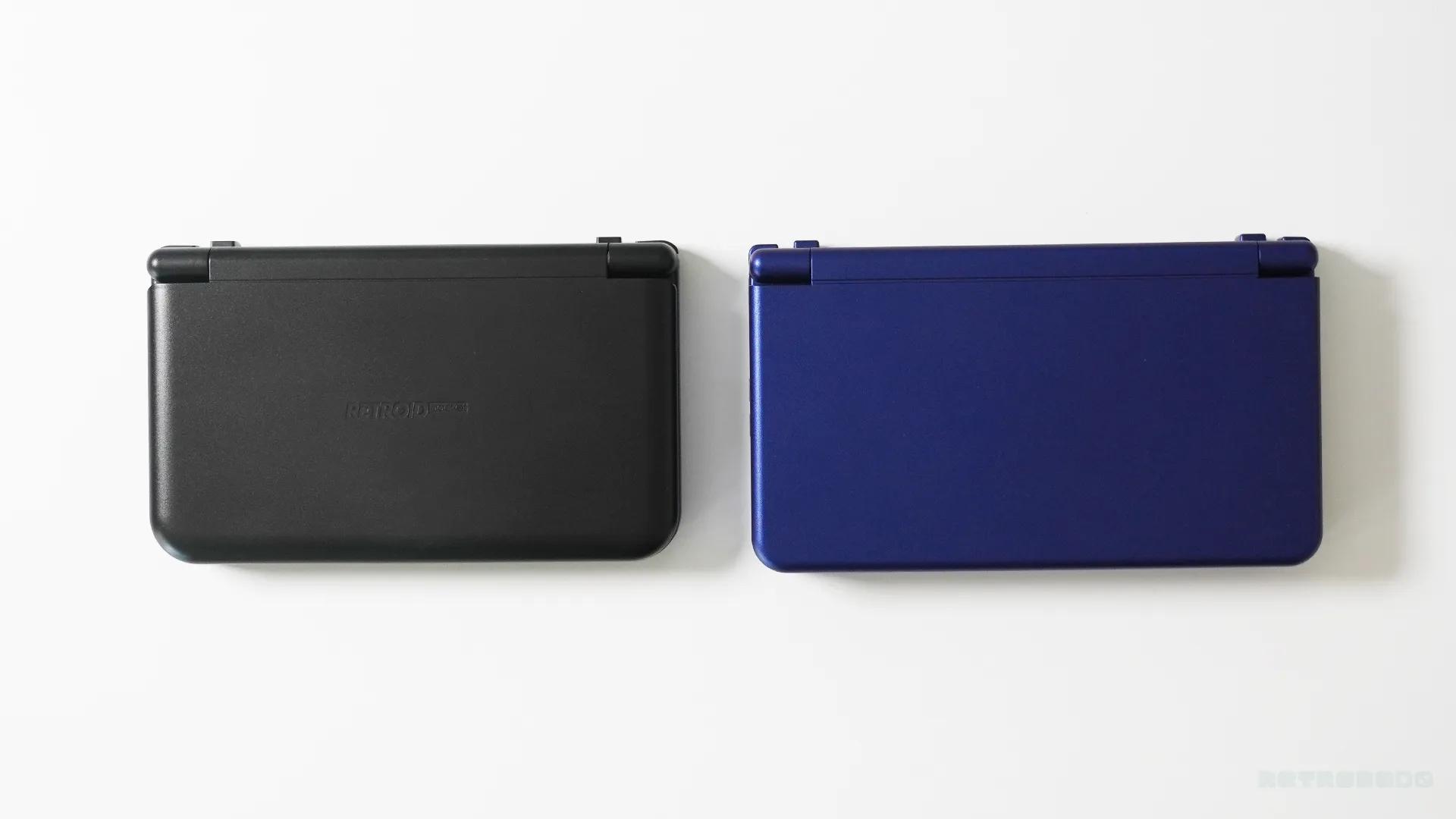
The newest of the two is the Retroid Pocket Duo Lite; it’s Retroid’s first jab at creating a dual-screen device (if you ignore their parent company making the AYN Thor), so they have plenty of experience in this field, and it shows. This keeps the Retroid feel, which is typically a high-quality shell, matched with good-quality buttons and a couple of good displays. This is their “Lite” model, which is more affordable, has less power, and has two LCD displays instead of AMOLED when compared to the upcoming “Duo”, which is more powerful. But Retroid played us all recently by also launching a new Lite Plus model that comes with a different chip with more power, which I know didn’t go down well with their community because many already made the purchase of a Lite model, some even receiving it before this announcement too, and it’s not new; this cheeky tactic has been done in the past. Whereas ANBERNIC, on the other hand, have one model, ready to go and doesn’t tend to pull these fast ones anymore.
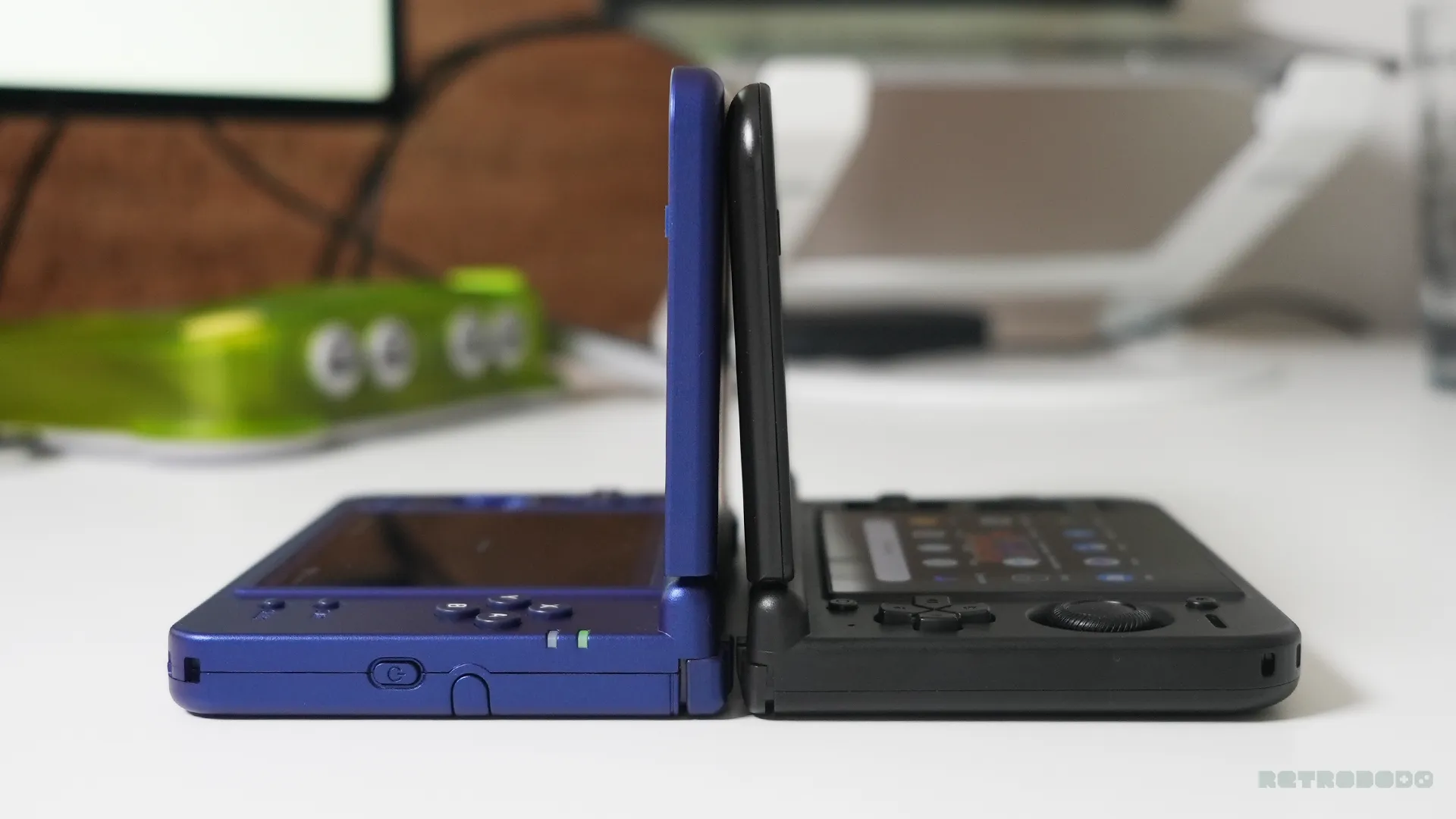
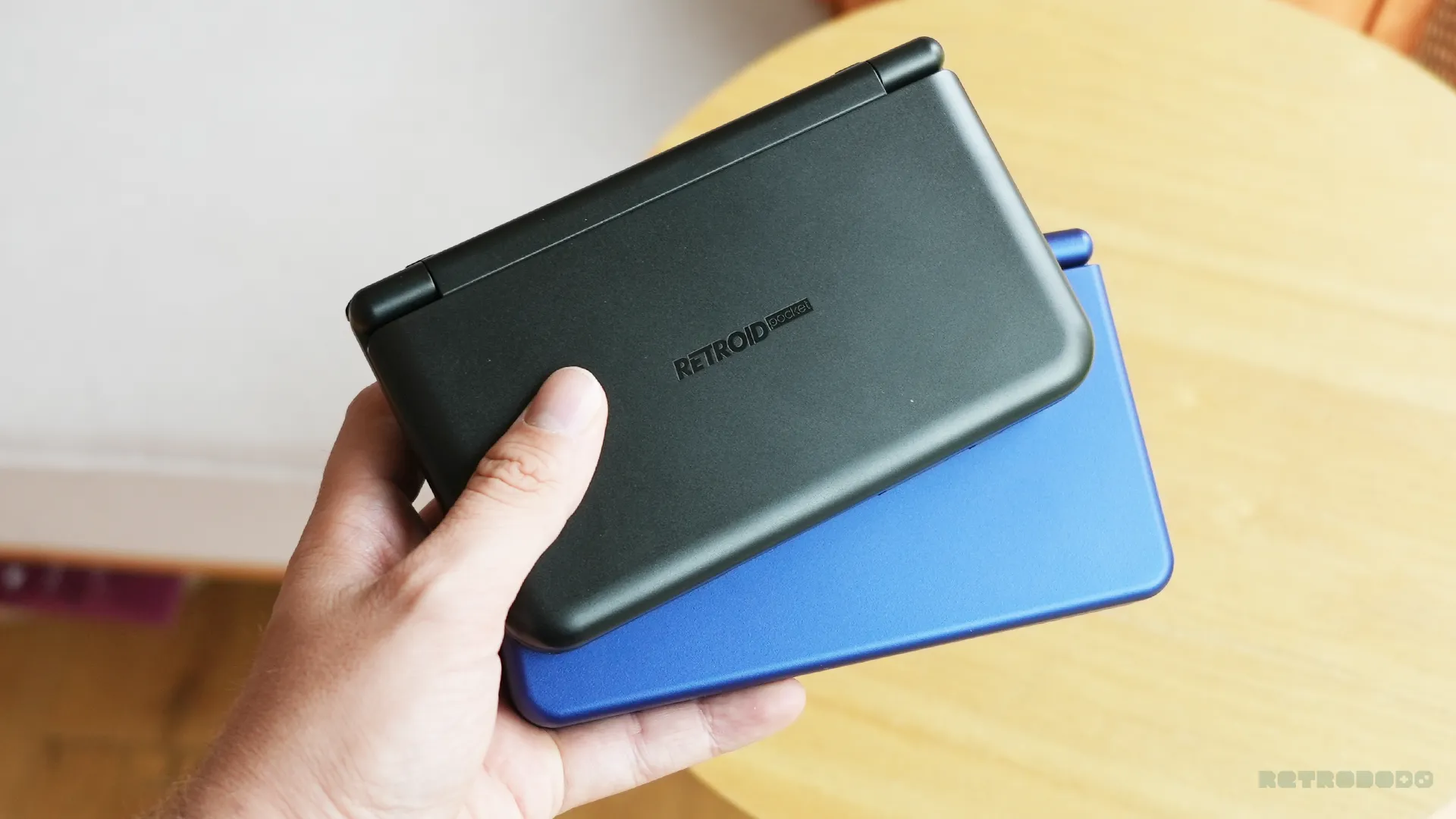
When you put the Duo and the RG DS Plus together closed, you can see that they are two very different handhelds. The Retroid has a rounded, more portable, smaller, lighter and a touch better design philosophy in many of its areas, whereas the RG DS Plus wants to stick closer to the Nintendo DS design, with more squared, sharper corners, and if you attached wheels to it, you could probably use it as a skateboard.
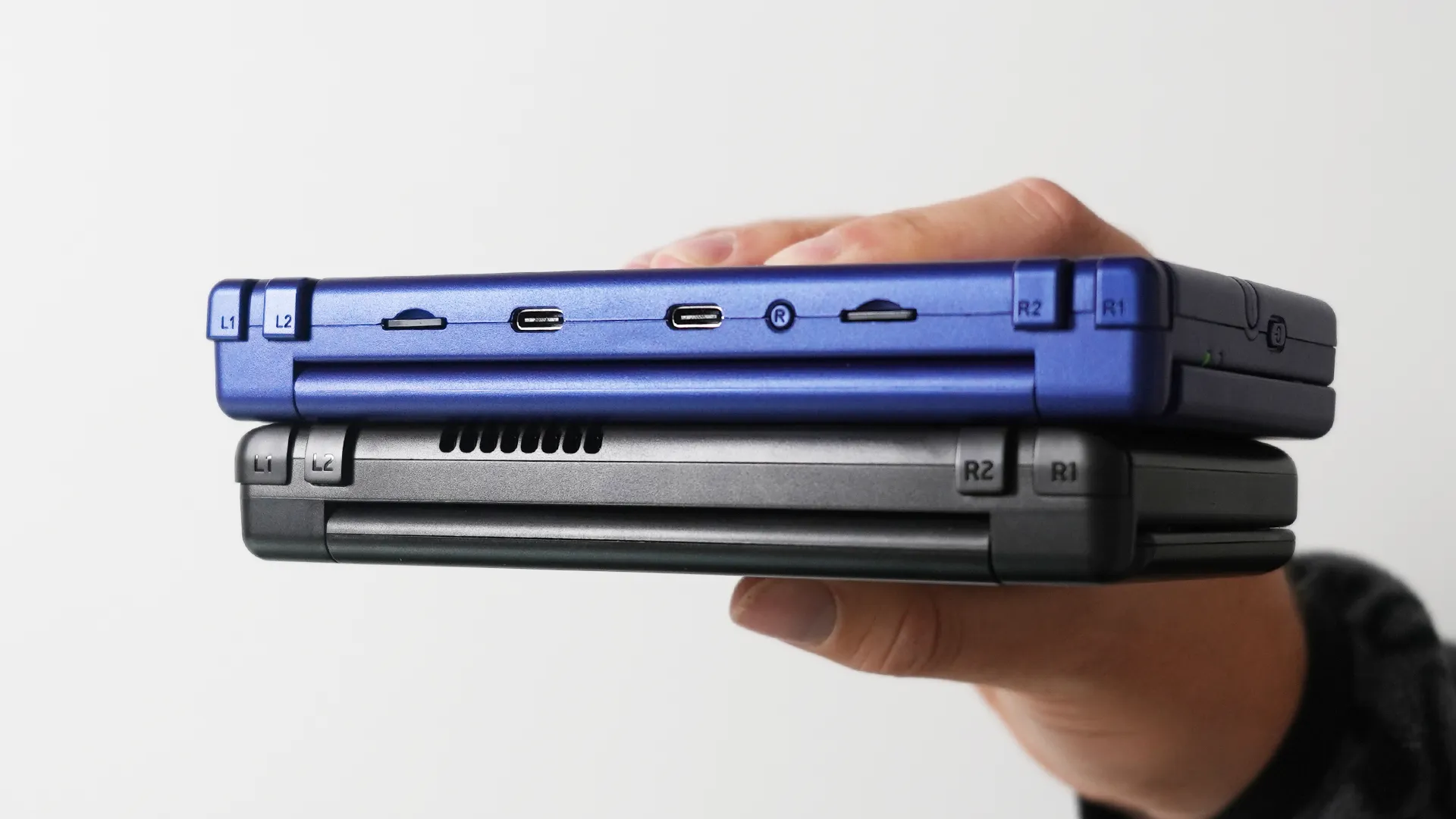
Shoulder buttons on both are minimal, not flared, designed to slimline the devices, allowing them to be placed into a pocket if you have pockets the size of pillow cases, so I found myself transporting these in slings or my backpack, so I do advise a case for both of them if you have one.
The ports around the edges have been tucked on the back of ANBERNIC’s, featuring two USB-C ports and two SD card slots; the headphone jack is located on the front chin where it should be, so your ports are mostly out of the way of the eye. Retroid’s, however, are on the front, which is a personal choice, and although they’re easier to get to, I did notice I rest my pinky on the volume button most of the time, which has triggered the volume down button when holding it with one hand on more than one occasion.
On the sides, the Duo Lite has nothing; it’s very minimal, whereas the RG DS Plus has its volume buttons, on/off button and a stylus. A physical stylus that slots inside of the shell, allowing easy transportation and the enjoyment of pairing it with those stylus-friendly games that we all miss. It’s an accessory that I now expect on future dual-screen devices due to how much I enjoy having it, and when I go back to the Duo Lite and even the Thor for that matter, I kinda miss it, and take offence that I don’t have it on far more expensive handhelds. So this for me is a big positive on ANBERNIC’s side, though I believe the adding of the stylus means the device had to be much bigger in order to cram everything into the slim casing. Retroid has a stylus, but you have to buy an ugly case that attaches it to the back of your device; this will cost you an additional $15 and makes your device less portable in the meantime.
Button Quality & Choice Of Displays
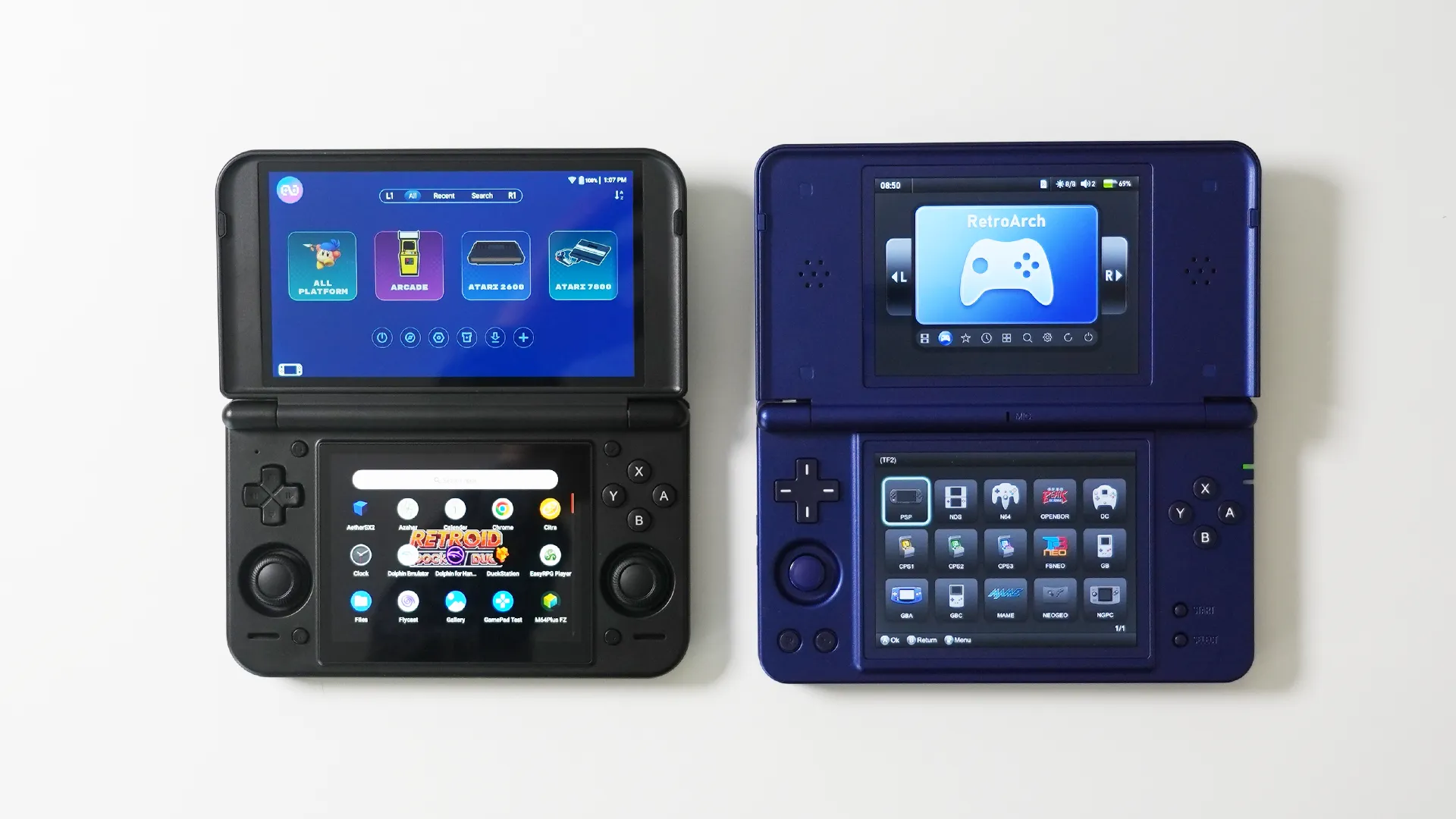
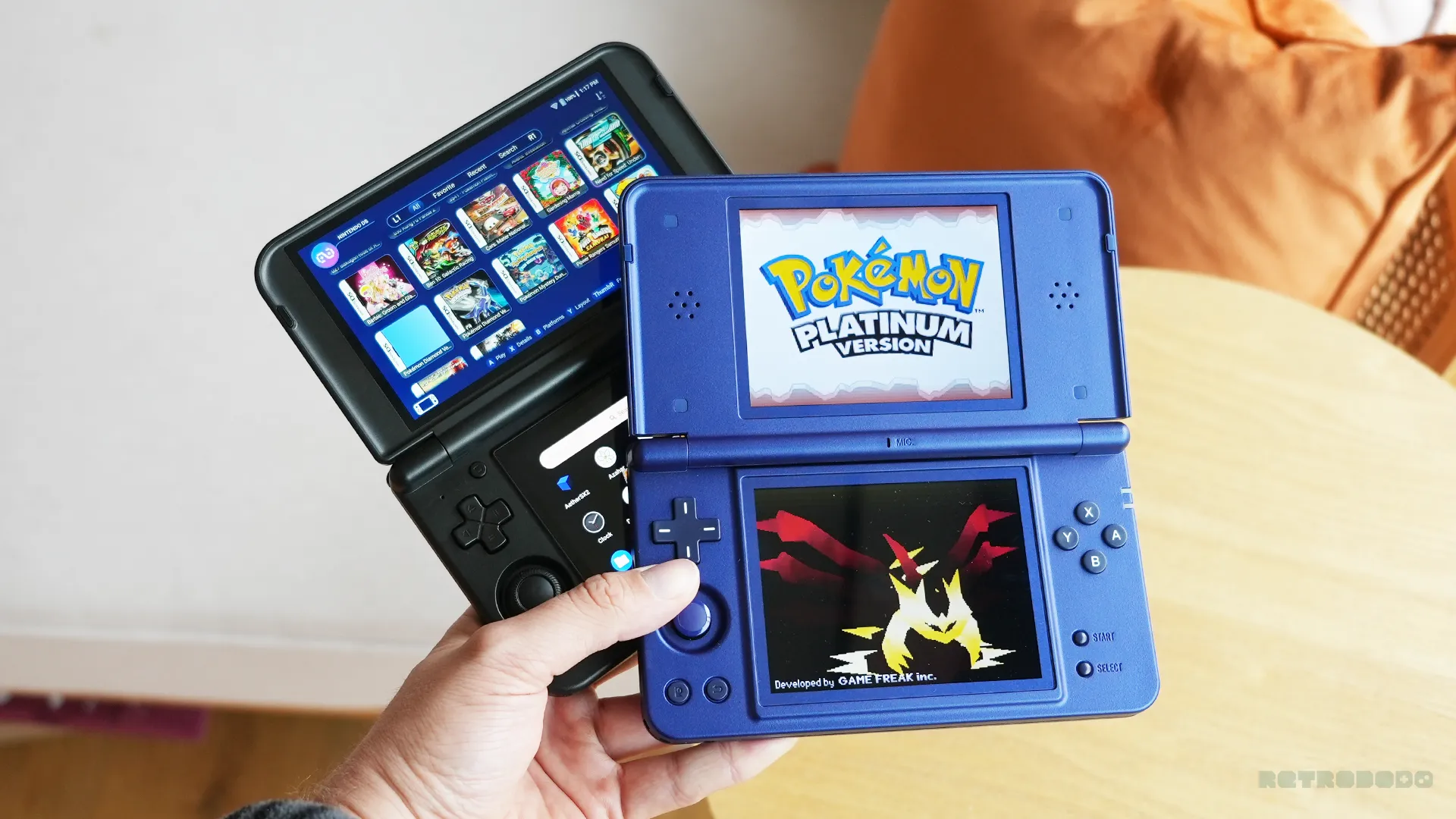
Opening up the devices, though, it’s clear that Retroid takes the lead in both design, button quality, screen choice and comfort. This is where Retroid’s expertise comes in handy. Retroid's top screen is a 16:9 5.5" 1080p display that looks gorgeous; it's bright, has minimal bezels and fills the majority of the top part of the device, allowing you to take full advantage of Android games, PSP games and other 16:9 consoles. I was going to mention 3DS games, but we'll talk about that a little later on. There's nothing else on this top section apart from padded feet to stop the hinge from cracking shut.
On ANBERNIC's, you can see this has a 4:3 4.3" IPS display that again resembles the Nintendo DS. This has a resolution of 1024 x 768, so it isn't as crisp or as bright as Retroid's and won't play your 16:9 games, but offers space for two front-facing speakers on either side of the display alongside natural integer scaling.
When you put them side by side, the RG DS Plus has a slightly cooler tone to the display, a bluish hue, whereas the Duo Lite has warmer colours that may be more comforting for those wanting that nostalgic touch, but actually, for me, I do like the slightly bluer hue even if it is possible to alter that on the Duo Lite.
Coming down to the bottom part of the RG DS Plus, you will notice that this has just one analogue stick that sits deep into the shell, whereas Retroid's has dual joysticks. Though in all honesty, you only need one on this device due to its power and the lack of being able to emulate Nintendo 3DS games and PS2 games, but it's there for those that find the odd niche PS1 game that needs them for example.
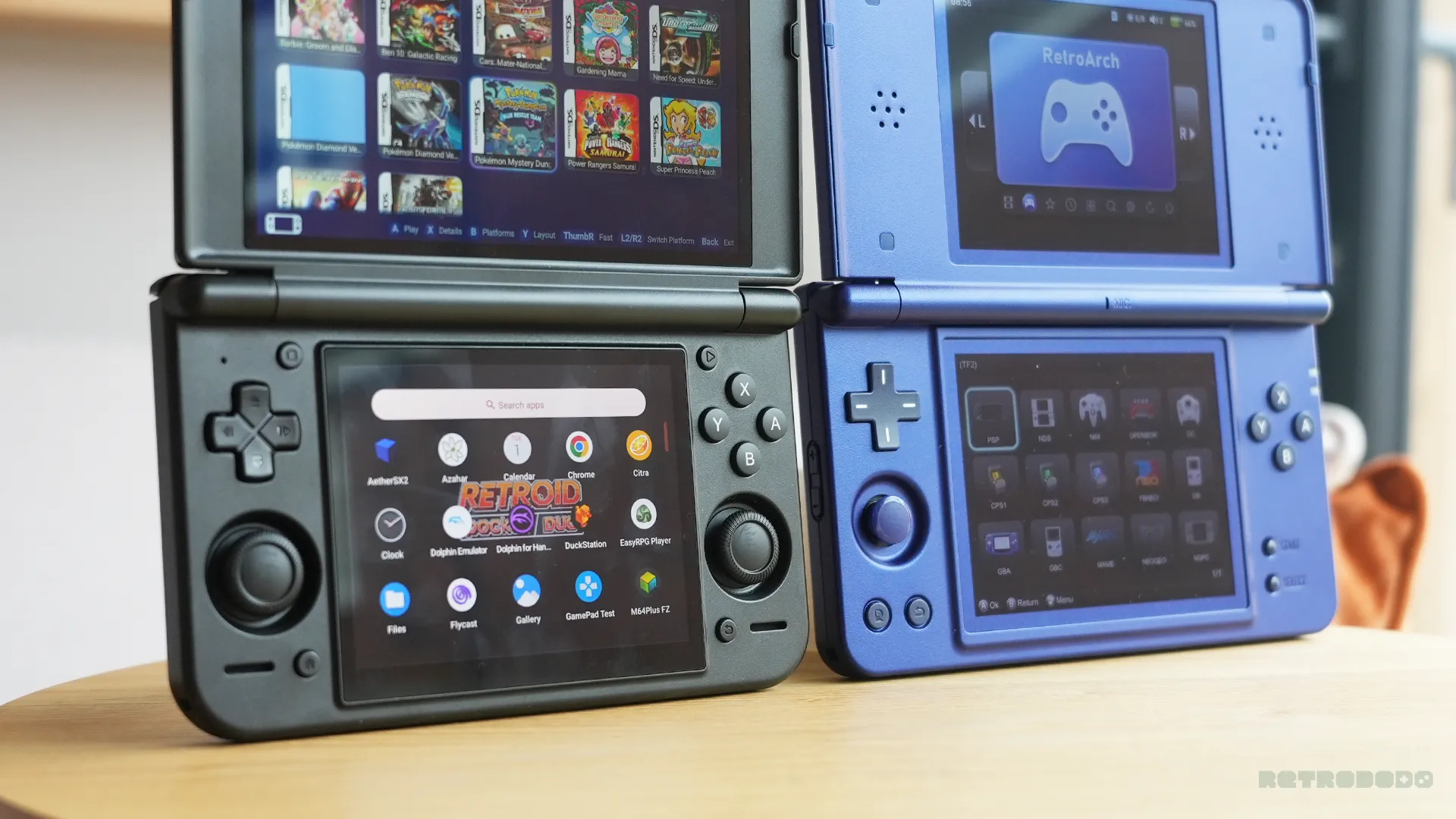
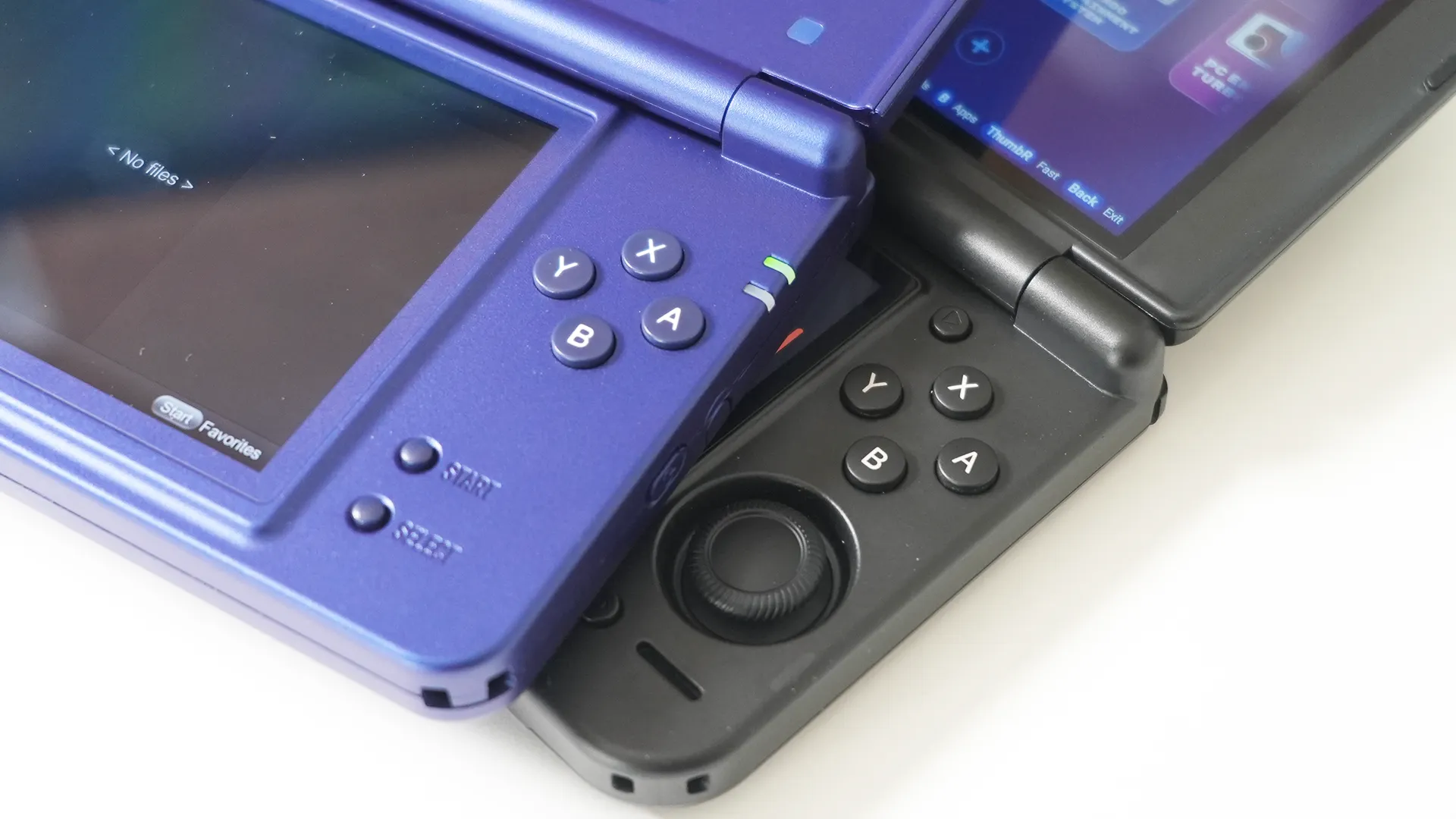
The stick quality on the RG DS Plus is hit and miss; it's a thin stick that doesn't really have good grip to it and feels as if it's missing a rubber pad on top, but it's not, it had to be slim to tuck itself away without touching the display when closed. The Duo Lite's sticks are far more comfortable and are an all-round superior quality in my opinion, and yes, they all click down on these handhelds.
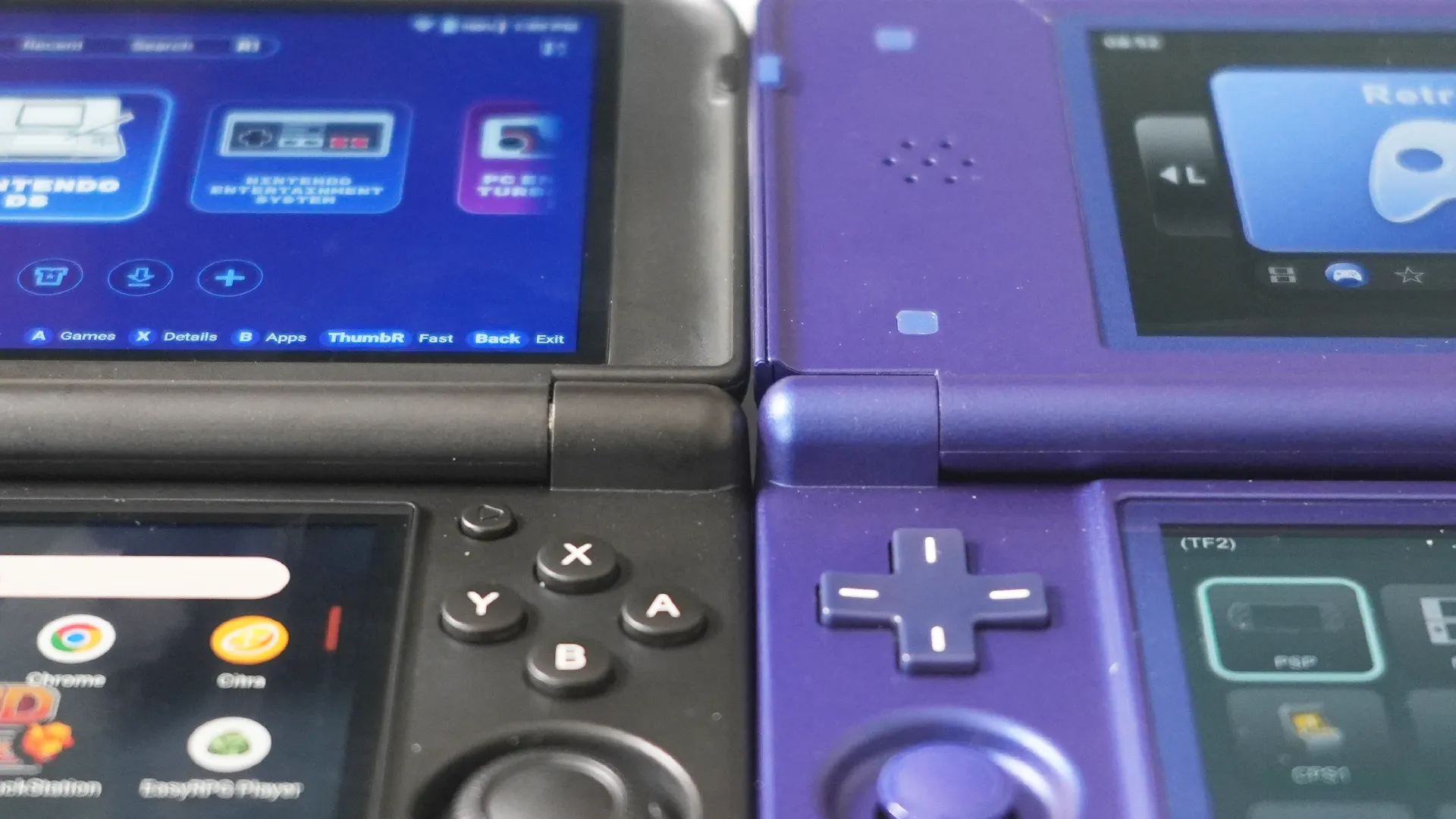
The DPADs used on both devices are great; Retroid has stuck with their signature, minimal PSVita-like DPAD that feels light to touch, his little trafel to it but offers good feedback and a nice dampened clicking noise when touched. The RG DS Plus has a much bigger DPAD that's flat, but again, sensitive, with no travel to it and is unlike ANBERNIC's normal DPADs, again for the reason of fitting in this compact shell when the device is shut. I like both the DPADs on here personally.
The action buttons match each device's DPAD authentically, with Retroid's having more travel to them, being rounder, sitting high out of the shell and feeling far more nostalgic with a dampened click back. These are more enjoyable to use personally, whereas ANBERNIC's are flat, with almost zero travel and have a louder click to them, though if it means anything to you, you can spam the RG DS Plus's buttons far quicker due to no travel. So for me, Retroid wins on action button feel.
Then finally, around the chin of each device you'll find your start, select, and menu buttons, all very small, clicky and light to touch. The Duo Lite has a couple of buttons up near the hinge, as it has two front-facing speakers under the joysticks which get covered up by your thumbs when playing, which makes the audio a little distorted and multi-directional at times, so actually the RG DS Plus has a slight advantage there when it comes to audio quality because of the Duo's need of a alrger display.
Hinge Strength
The hinge quality and strength are very important on a device that will undoubtedly take a beating over the coming years, and I feel like both companies have got it right. Both require some decent force to open them up, and both have a zero-stop hinge, meaning there are no points that lock your screen into place; they can be opened and left open at any angle. This also stops you from slamming the device shut hard because of the soft force it requires throughout every angle.
Both are made with alloy hinges to add that support and strength needed for their longevity, though i do notice on the RG DS Plus that I can hear some noises on the inside of the hinge, as if springs are scratching on the inside. This isn't an issue, but it doesn't sound healthy. ANBERNIC has also added the microphone inside of the hinge to obviously resemble the DSi.
Even at full lock both screens can take a fair bit of pressure without hearing cracks, which is a good sign, as you need some level of flexibility at the end for it not to be easily broken. I would say the RG DS Plus can be pushed slightly further back in comparison to the Duo Lite, but in no way does that mean one is more susceptible to breaking than the other.
OS/UX Comparisons
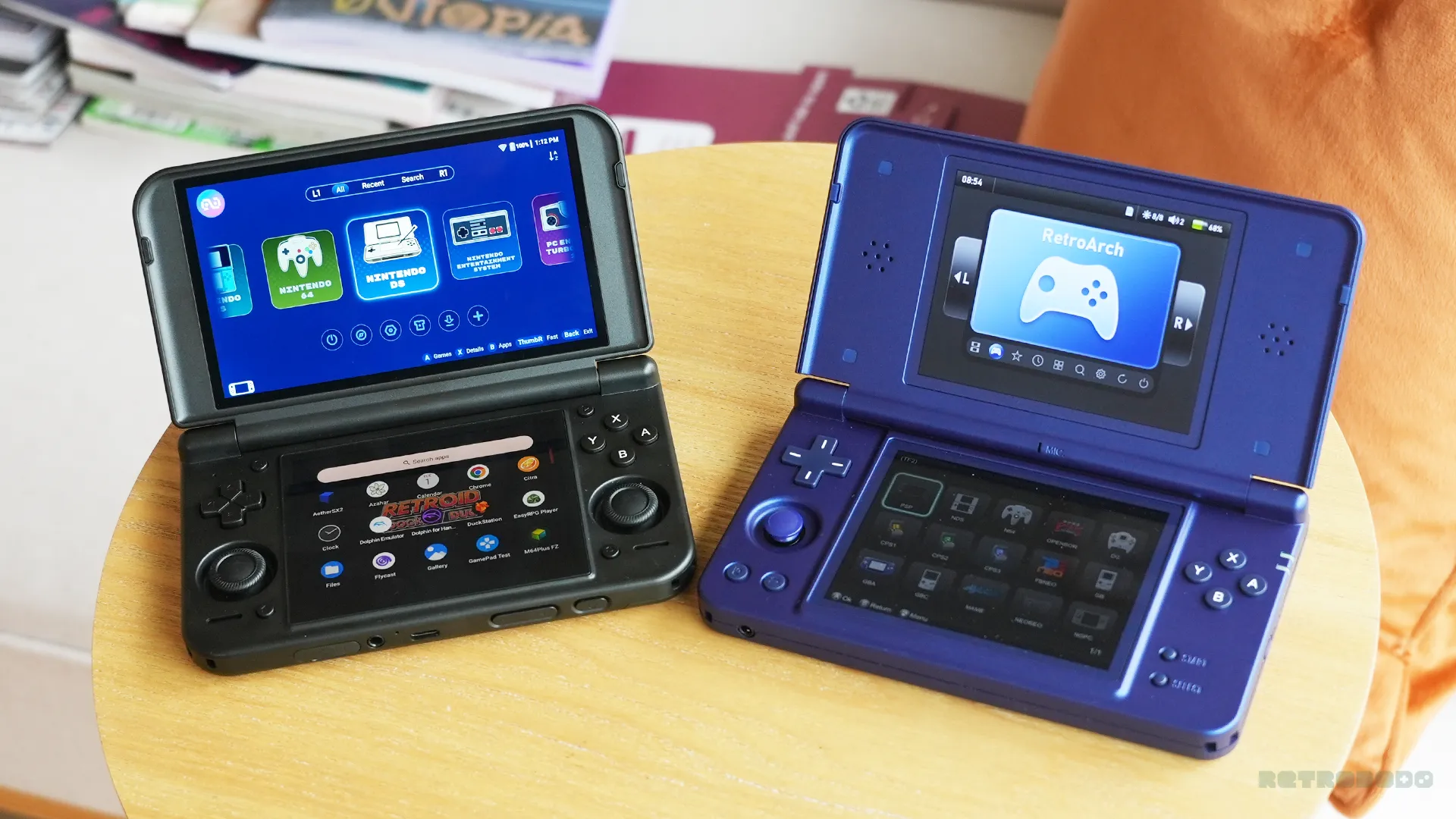
One of the biggest differences between these two devices is the fact that the RG DS Plus uses a Linux operating system and the Retroid Duo Lite uses Android 15. This in itself should be one of the bigger deciding factors for you. Do you want a simpler user interface that is ready to go with very little setup and almost zero visual customisations, or do you want something that offers more customisation, a larger catalogue of games thanks to Android and the fact you can pair it with popular emulators that you may prefer using? Each have their advantages and disadvantages.
Linux is much simpler yet can at times feel a little dull. ANBERNIC has designed this frontend to organise your games and its applications in a way that feels a little like the Nintendo DS, but not close enough to scratch that nostalgic itch. It's very plain, but gets the job done. There are little to no customisations either; I think there's literally the choice between light or dark mode and the ability to add a background image. Game organisation is also very simple; when you choose a console, the games will show on the bottom screen in a scrolling layout. Just make sure you have box art available; otherwise, your library will look bland, like mine.
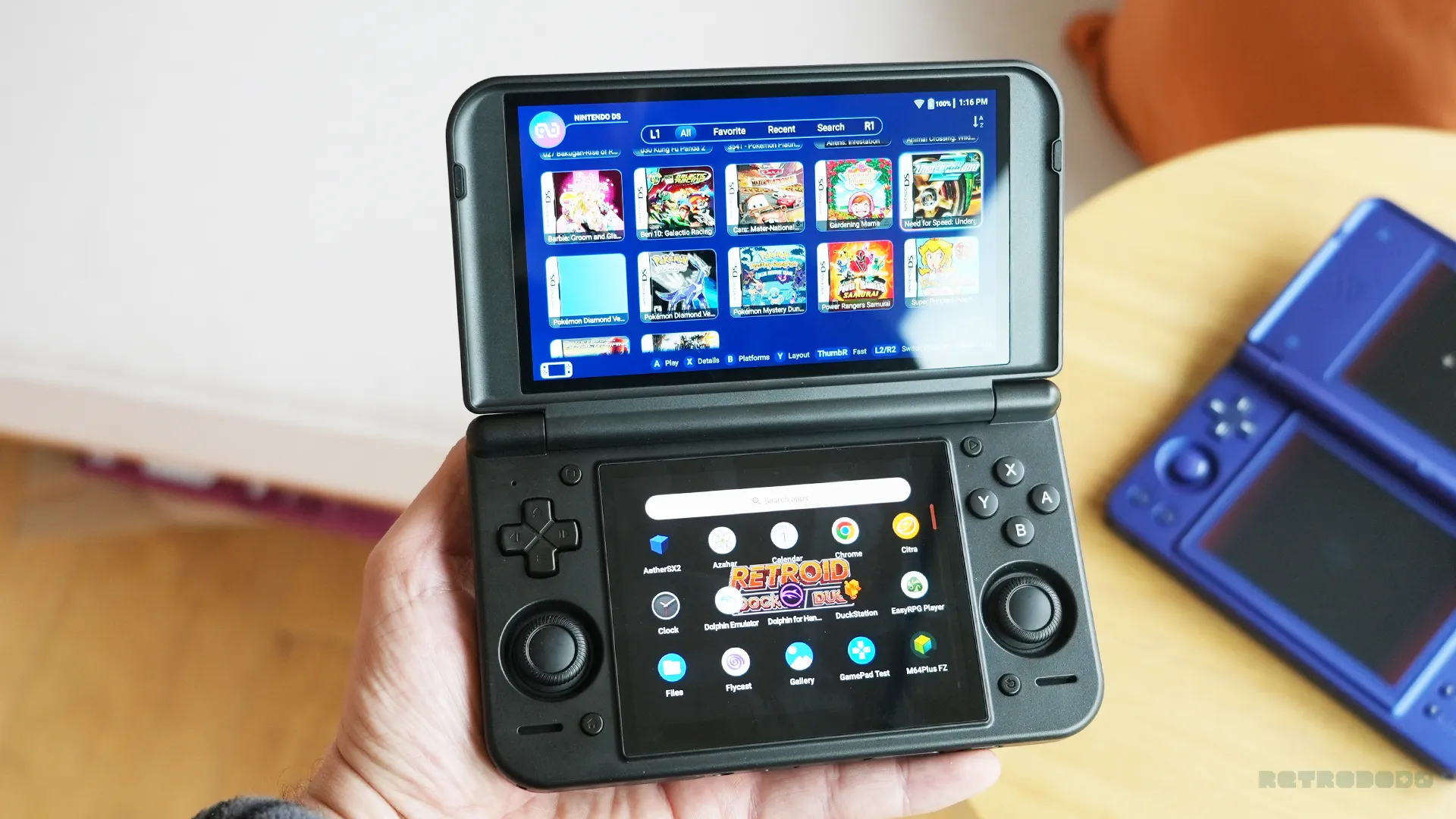
In comparison, the Duo Lite feels more like an Android phone, showing applications that you have downloaded, shortcuts at the swipe of a finger, and the ability to download apps from the Play Store, alongside exploring the web, answering emails and more. It can also be paired with great new Android frontends to better resemble the Nintendo DS, or you can choose something to better match your taste, which is one of the big benefits of an Android retro handheld; the customisations are almost endless, alongside reliable, great-performing emulators. ANBERNIC decided to build their own Nintendo DS emulator for Linux, seeing as others were not as reliable as they liked.
So, one question you need to ask yourself before purchasing one is: do you want something that is easy to get to grips with, forces you to jump into games rather than organising or downloading, or do you want an Android OS that offers customisations and Android games/emulators straight out of the box? Retroid's user interface is far more compelling, as they've made their own custom frontend that works well with box art and customisations, whereas the Linux UI feels more outdated in my opinion.
Emulation Performance Comparison
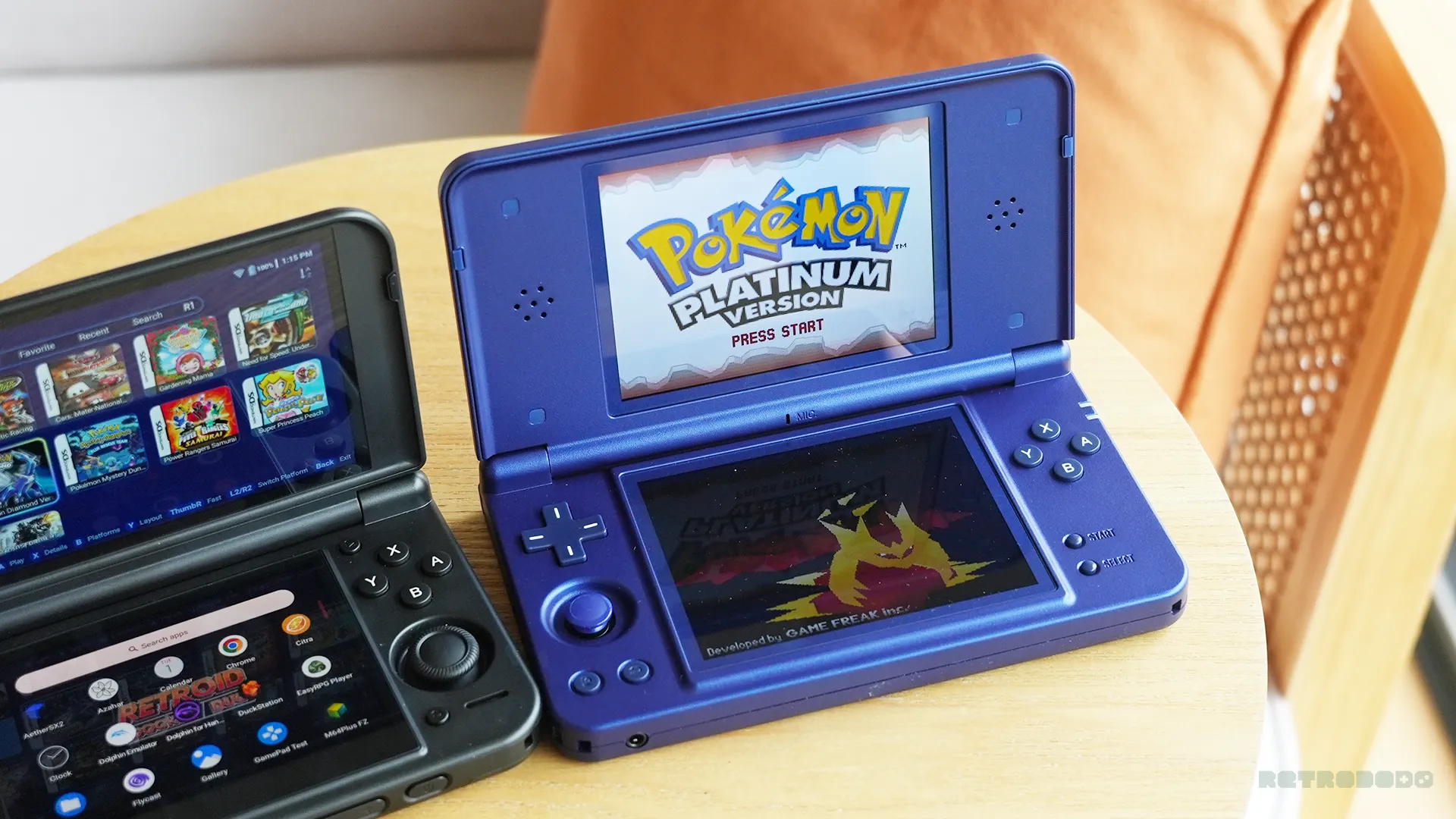
I want to make this clear straight out of the gate that none of these devices can emulate Nintendo 3DS games well. To emulate 3DS effectively, you need some decent specifications, which require more investment from the customer and aren't something you're going to get on handhelds under $150 in 2026. So if you're wanting either of these for that, it's not going to happen; I advise waiting to see reviews of the more powerful Retroid Pocket Duo or going for the AYN Thor.
I don't really want to talk much about each of their specifications because it all comes down to experience and quality of gameplay, but to quickly scan over it, the RG DS Plus has an RK3568 CPU and the Duo Lite has a Qualcomm QCS6125 CPU, both capable CPUs, although the Duo Lite packs up to 6GB of RAM whereas the RG DS Plus has just 1GB.
If you're after Nintendo DS games, then emulation on both of these is possible, but you will notice some issues on the Retroid Pocket Duo Lite, which is surprising for a $150 device that has been designed specifically to emulate just that, and that's the ongoing community feedback recently from anyone who has purchased one: Nintendo DS emulation is not flawless, and you will come across noticeable delays on occasion, which is very disappointing to her and kinda makes these devices redundant. You will have some good experiences, but over the weeks and months of use you'll notice some inconsistencies.
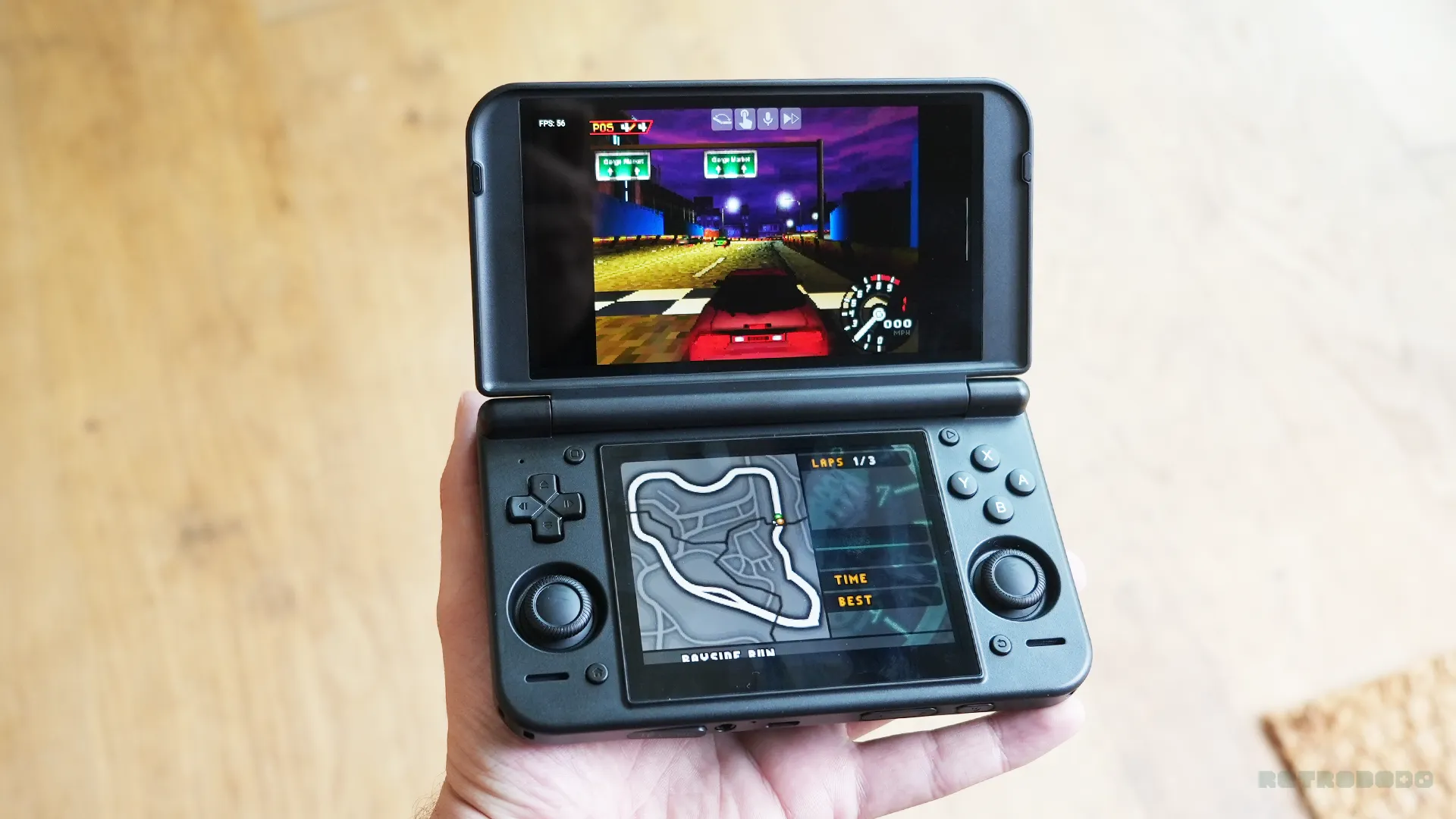
On the RG DS Plus you have two options to emulate Nintendo DS, via RetroArch which uses Drastic, and in all honesty i've had mixed experience with this method, even though it comes with some customisation benefits and fast forward options, the other method is by using ANBERNIC's new NNDDSS Linx application that has performed better in my opinion, and this can run pretty much all of your Nintendo DS games at full speed at native resolution, though it will struggle if you upsacle it to 2x which is a shame as it adds some nice crispiness, but for less than $100 I think native resolution at full speed is respectable, even if the emulator needs some quality of life upgrades, which I am sure ANBERNIC are working on. So as much as I said Linux is somewhat pick-up-and-play, there is some disorganisation on ANBERNIC's behalf; newcomers will get confused with the two Nintendo DS options, undoubtedly.
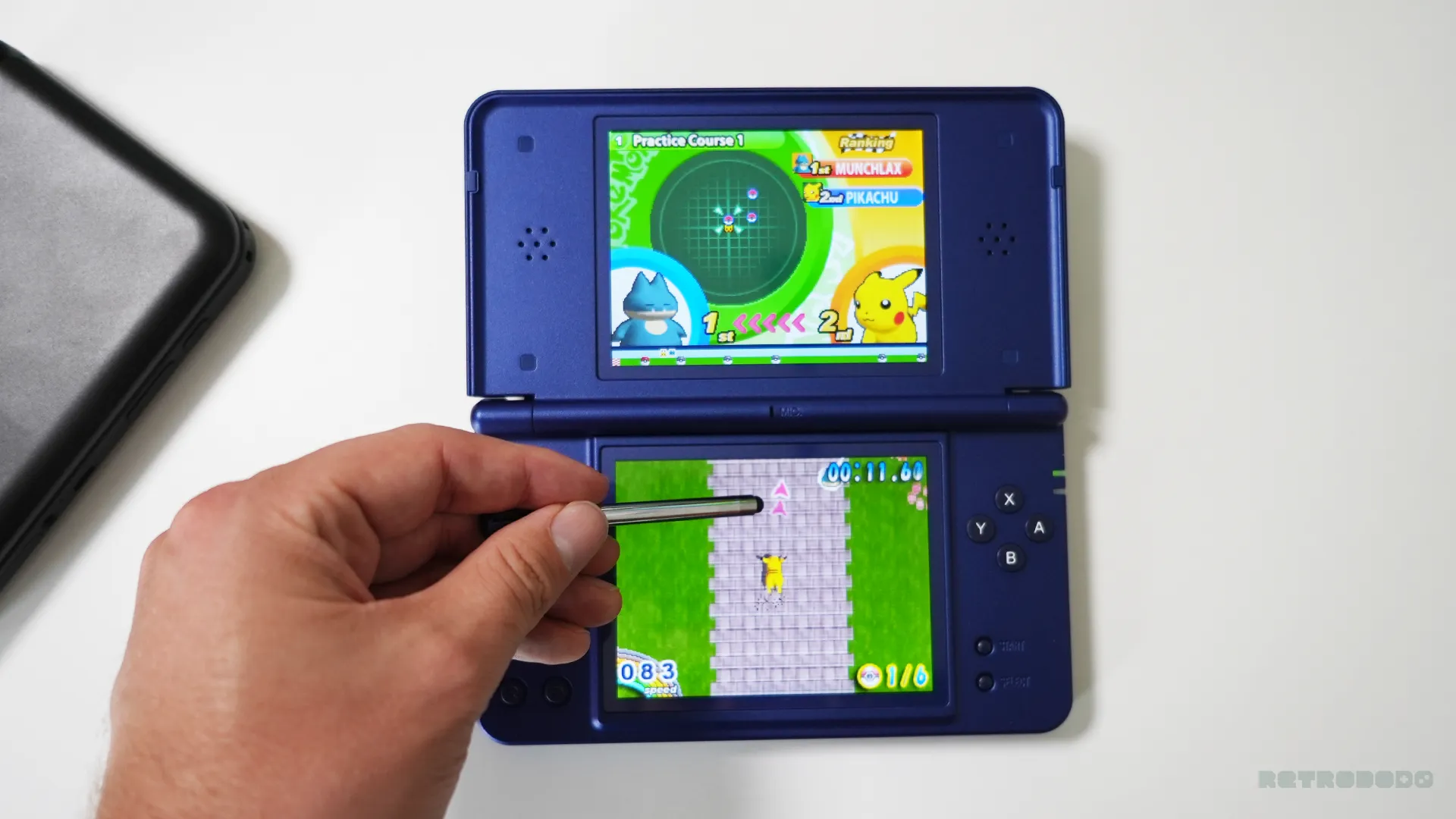
And the RG DS is an all-round good performer up to Nintendo 64, so you'll get a good range of gaming choice on here for a budget price, and the single stick comes in handy often too, though Dreamcast is where it starts to struggle, so Dreamcast fans, don't snag this if you're after good emulation in that area; it's just not there.
That's where the Retroid Pocket Duo Lite overshadows the RG DS Plus slightly, as it can emulate Dreamcast games well due to its extra power and Android OS. The secondary display can also be used to multitask and opens an additional app should you want to play games and watch videos for those that want to dopamine max. And at times I feel like the extra money is worth it when those extra features come into play, admittedly very rarely, but the only thing I can't get my head around is who the Duo Lite is actually for, seeing as it's a mid-tier dual-screen handheld that cannot emulate Nintendo DS games flawlessly, leaving it in an awkward spot for those wanting an all-round great affordable dual-screen device, which it just isn't at this moment in time.
Whereas, it feels like you know what you're getting with the RG DS Plus: low-tier emulation with the possibility of Nintendo DS native resolution gaming on Linux. The Duo Lite feels as if it hasn't made it clear to its customers what it can do and who it's for. It's not even for hardcore Android gamers because of its specs, so... yeah, it's confusing.
Battery Life
The RG DS Plus has a 4000MAH battery, whereas the Retroid Pocket Duo Lite has a larger 6000MAH battery. A considerable ammount more that does certainly add to the longer lifespan in comparison, though it has larger, more intensive screens to power. My Retroid Pocket Duo Lite will get 5 - 6 hours depending on what you are emulating, and the RG DS Plus closer to 4 - 5, again depending on what you are emulating.
You can choose to turn off the bottom screen to prolong the battery life on both devices, which is a nice feature and is one I use more than I thought because two screens can be a little overwhelming at times.
Bang For Your Buck?
So, overall these are two great devices, yet one is certainly enticing me more than the other in regards to the best bang for your buck, and the answer may surprise you, because I actually recommend the ANBERNIC RG DS Plus over the Retroid Pocket Duo Lite at this moment in time, considering there's a $50 difference between the two.
For me, the Duo Lite is a complicated device. It's hit and miss with Nintendo DS emulation, which is what many will want to buy this for, and it's not powerful enough for Nintendo 3DS and heavy Android games, leaving it to deal with lower-tier emulation when its priced itself in the mid-tier category. I'll admit, the build quality is great, and the displays are lovely alongside great button choice, though that's somewhat expected in a mid-tier device these days and is nothing new.
Whereas the ANBERNIC RG DS Plus costs just $95 and can emulate Nintendo DS games fairly well, it comes with two 4:3 screens that offer good integer scaling and the addition of an actual stylus that slots into the device naturally, something the Duo Lite and even the AYN Thor do not do, which is a nice touch. But the Linux UI does bore me, and ANBERNIC has complicated the choice of NDS emulators.
For me, if I had $150, I would buy the ANBERNIC RG DS Plus and keep the extra $55, knowing that this device is specifically a low-tier dual-screen device that does NDS at 1x resolution and no more. It's the only budget dual-screen device that I recommend, and one of the only ones under $100 right now; it has no competitors, whereas the $150 Duo Lite does, and I advise anyone wanting the Duo Lite to wait for its bigger brother, which will hopefully emulate NDS and 3DS very well at upscaled resolutions... hopefully.


