


The Nintendo 64 console is by far one of the most popular gaming consoles ever made, and if you're a N64 fan, you'll know that Analogue was the first to develop a mass-produced, premium FPGA console that allows you to play your cartridges on modern hardware with many quality of life upgrades that make our lives easier.
It sold in abundance, so much so that it has continuously been in and out of stock since launch in November 2025, alongside an array of beautiful, highly limited versions for you to buy from scalpers.
Analogue set the tone and produced an incredible console that pleased many eager fans due to its minimal design, simple OS, and overall great performance when it comes to playing most N64 games. However, hot on their tail was ModRetro, a new company that came out swinging in late 2024 with an FPGA GAME BOY called the Chromatic, to not only compete with Analogue's very own Pocket, but to prove to retro gamers that other FPGA-focused companies can enter the field.
With the success of ModRetro came the reveal of the M64, an FPGA N64 to rival Analogue. But were ModRetro too late to the scene? How will this product match a "near-perfect" modern remake of the Nintendo 64? What are they doing differently? And most importantly, which one do you buy?
Please note: Both the Analogue 3D and ModRetro M64 have promised upcoming updates that will add new features. But I am reviewing these consoles as they are today. I will not give credit to "upcoming" features. If it's not on the console, I'm not crediting it. For example, Analogue has said OTA updates are coming, but they are still not here. ModRetro has said that Chromatic Passthrough and save states are coming, but it's not currently on my unit. We will update this comparison article once both have had significant updates.
Console Design
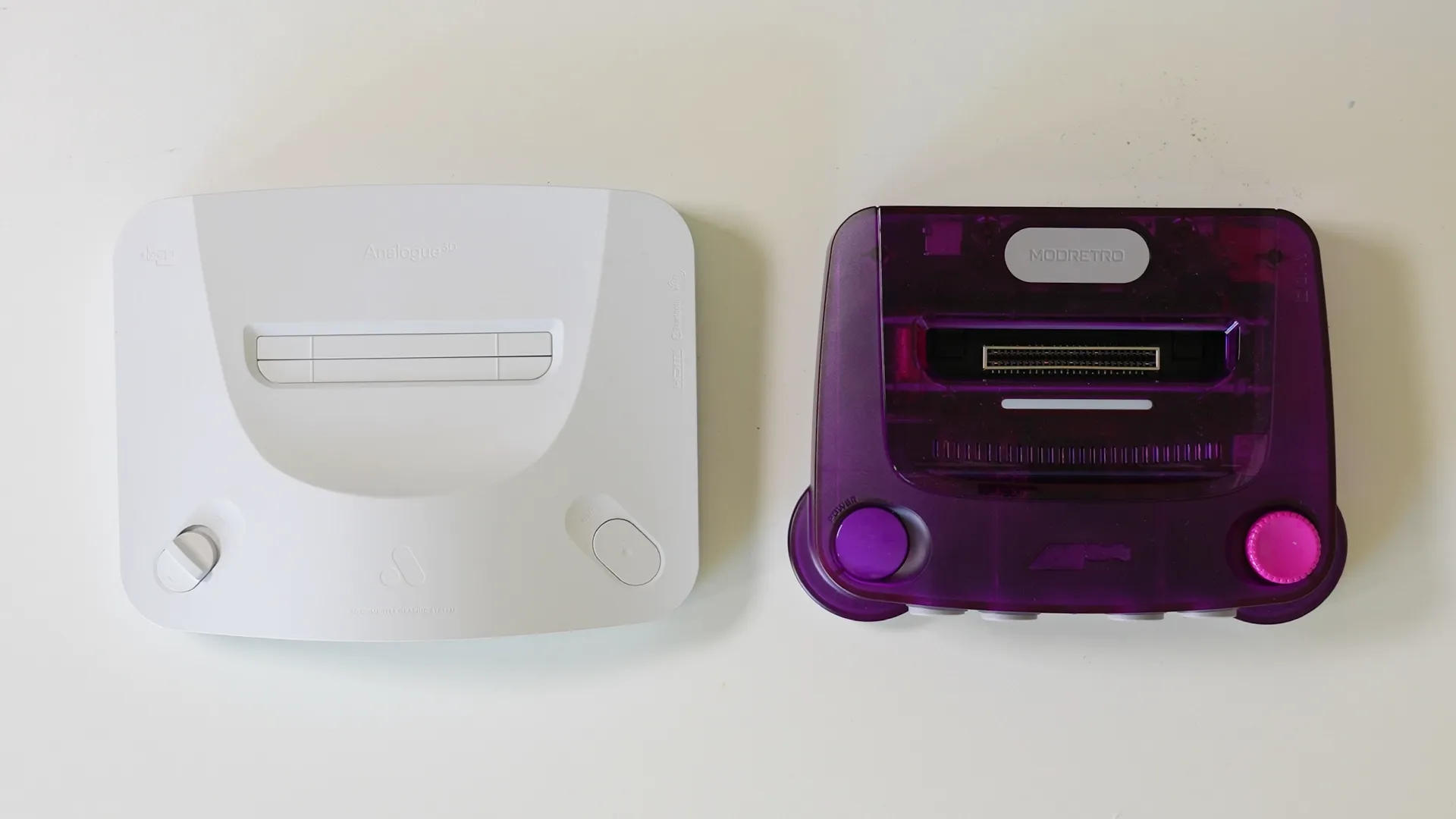
Winner: I still can't decide.
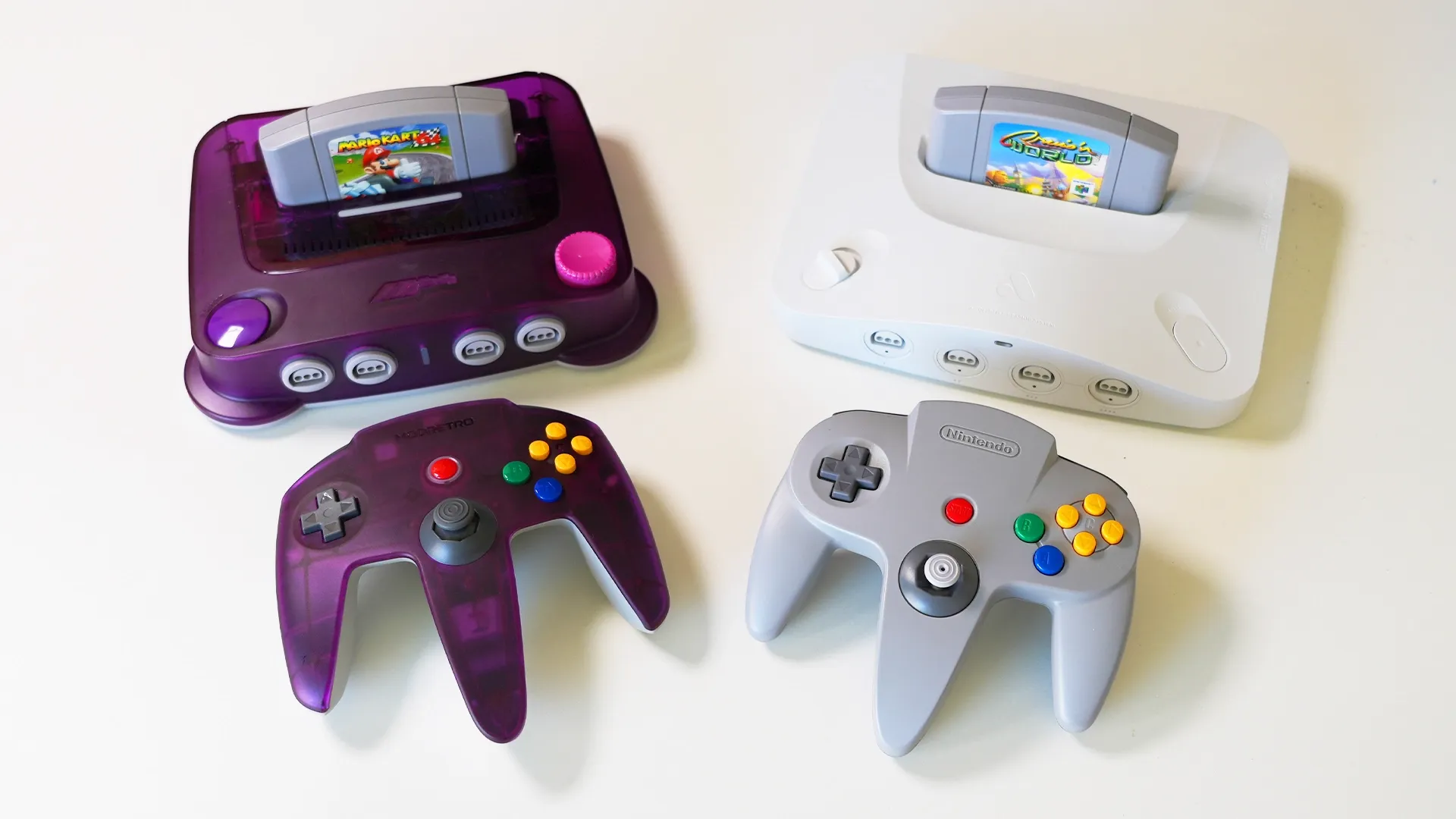
The biggest difference by far is the product design. Each is at either end of the spectrum, which makes it quite an easy decision depending on your artistic taste and how it will mix with your gaming setup. The Analogue 3D has been designed with minimal, yet modern touches, not to complicate or overwhelm the gamer, featuring buttons that blend into the shell and ports that somewhat disappear into the console itself. Less is more, so to speak.
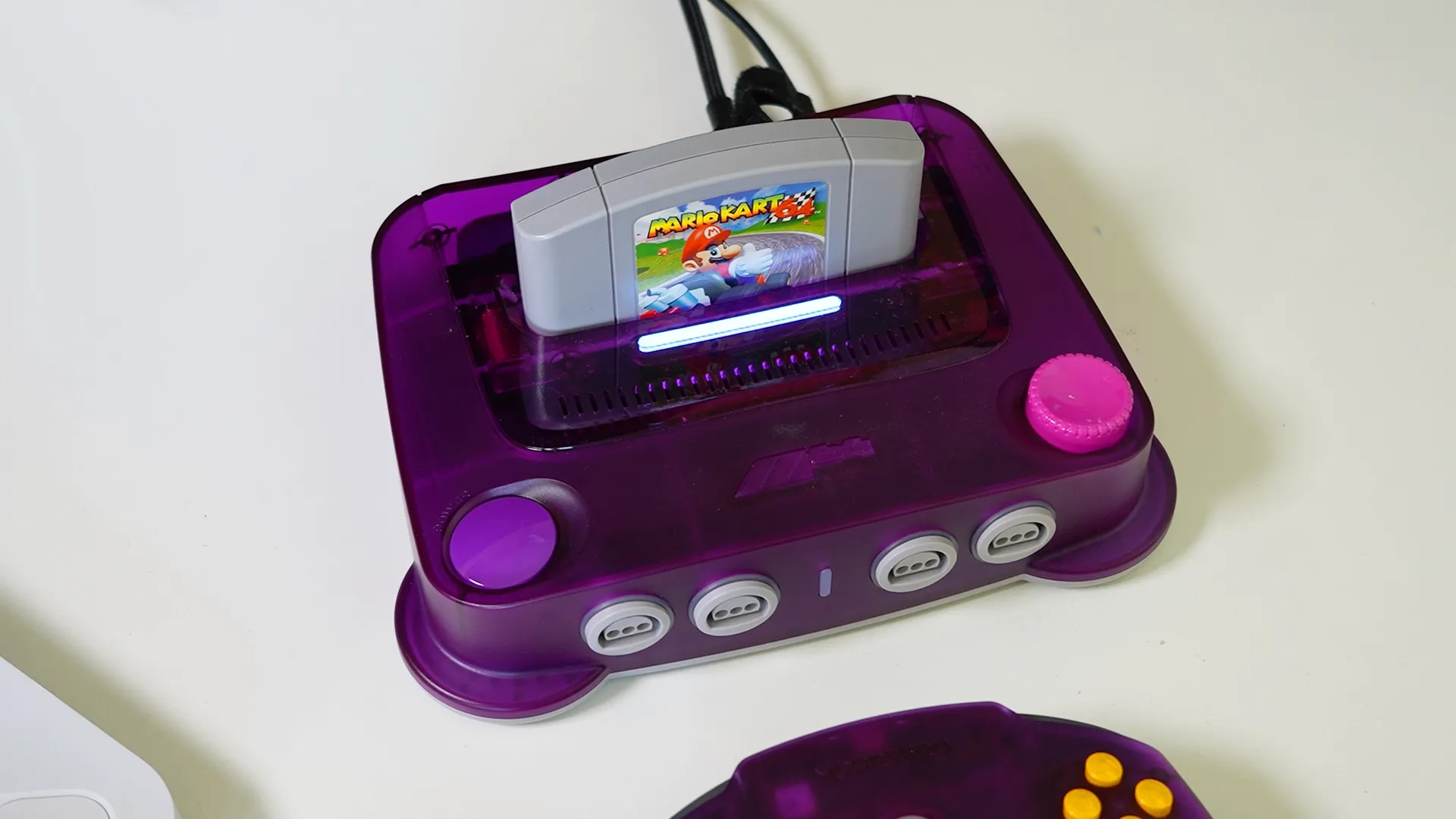
The M64, on the other hand, is far more nostalgic, playful, and chaotic, with nods to the transparent gaming era and features that overexaggerate and overwhelm on purpose. There was no holding back here, and if you ever have guests around your house, it will certainly make heads turn.
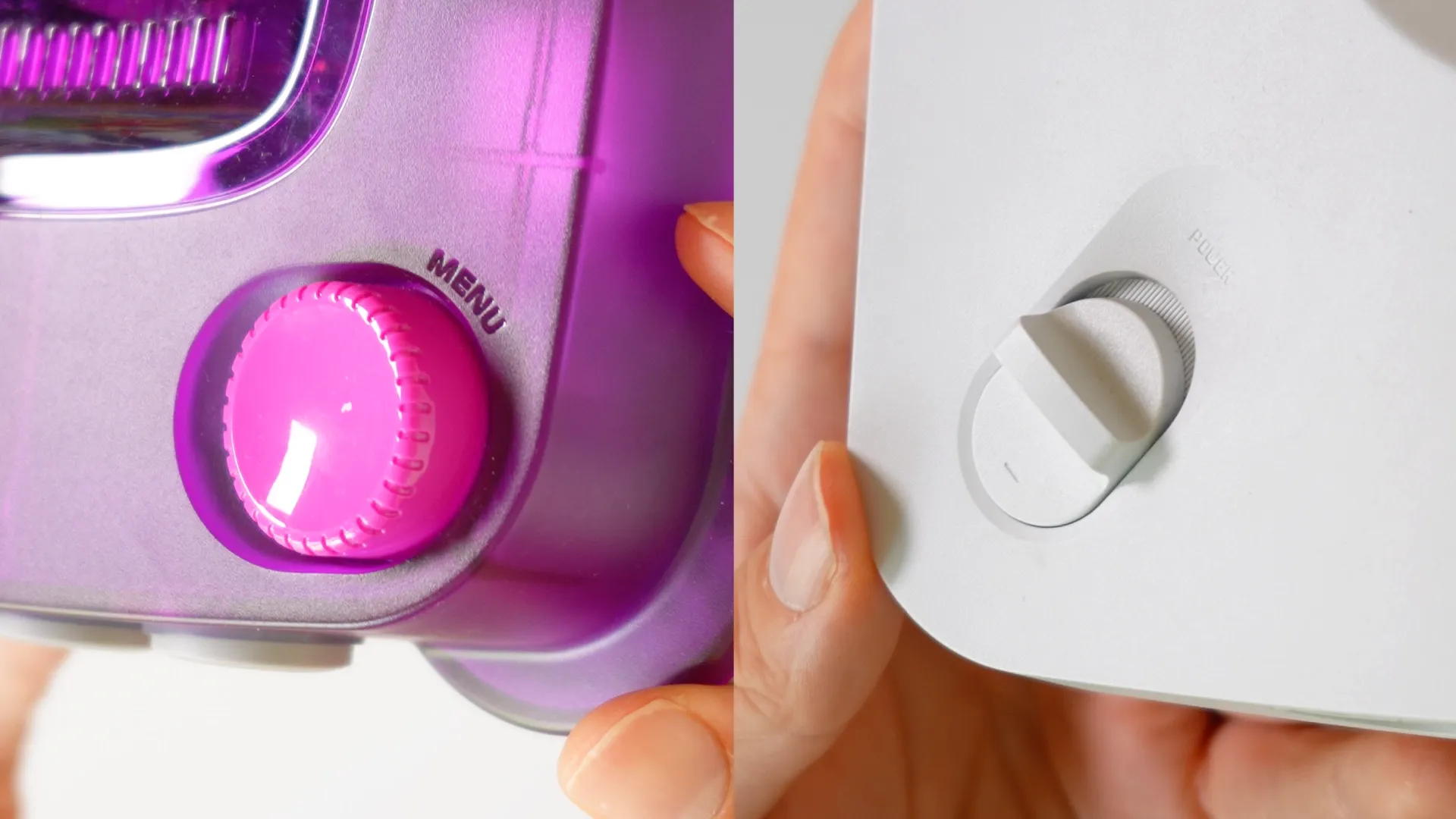
On top of the M64, there is one button that spins so you can navigate the menu, and the other presses down normally. They're both in different colours, to again, overexaggerate the product design. In contrast, the Analogue 3D uses a sliding button that closely resembles the N64 power button, and the reset button is similar to being pressed down to reset the console.
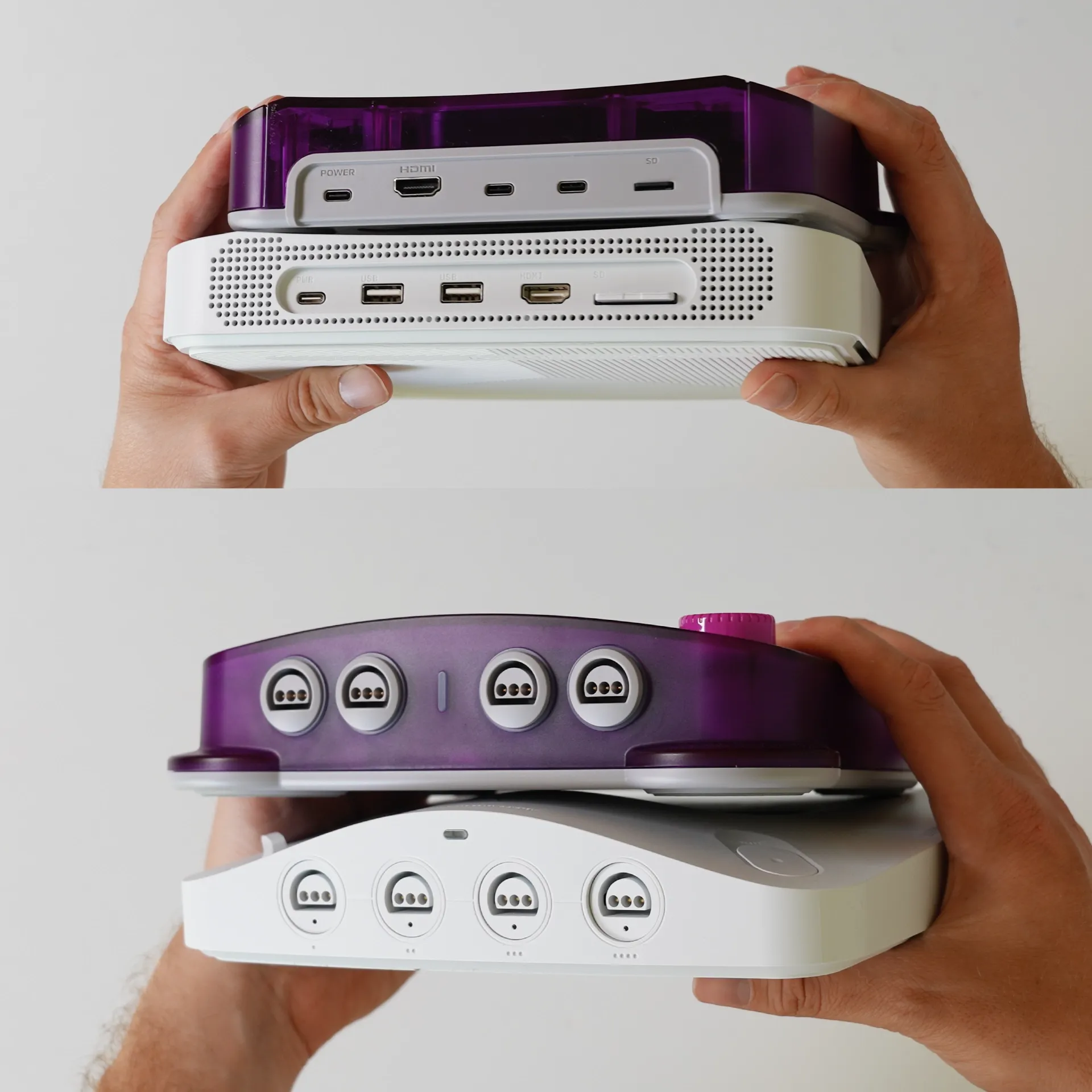
Side by side, it's yin and yang, and still to this day, I do not know which one I prefer. This is the only part of this comparison that I am going to leave up to you, because I am still on the fence.
I would say ModRetro has gone further with regard to minor physical features, though. The cartridge eject button is a very helpful and satisfying feature that allows you to remove your sticky cartridges with assistance, using one hand. So you'll no longer have to wrestle your cartridges out with two hands like you do on the 3D.
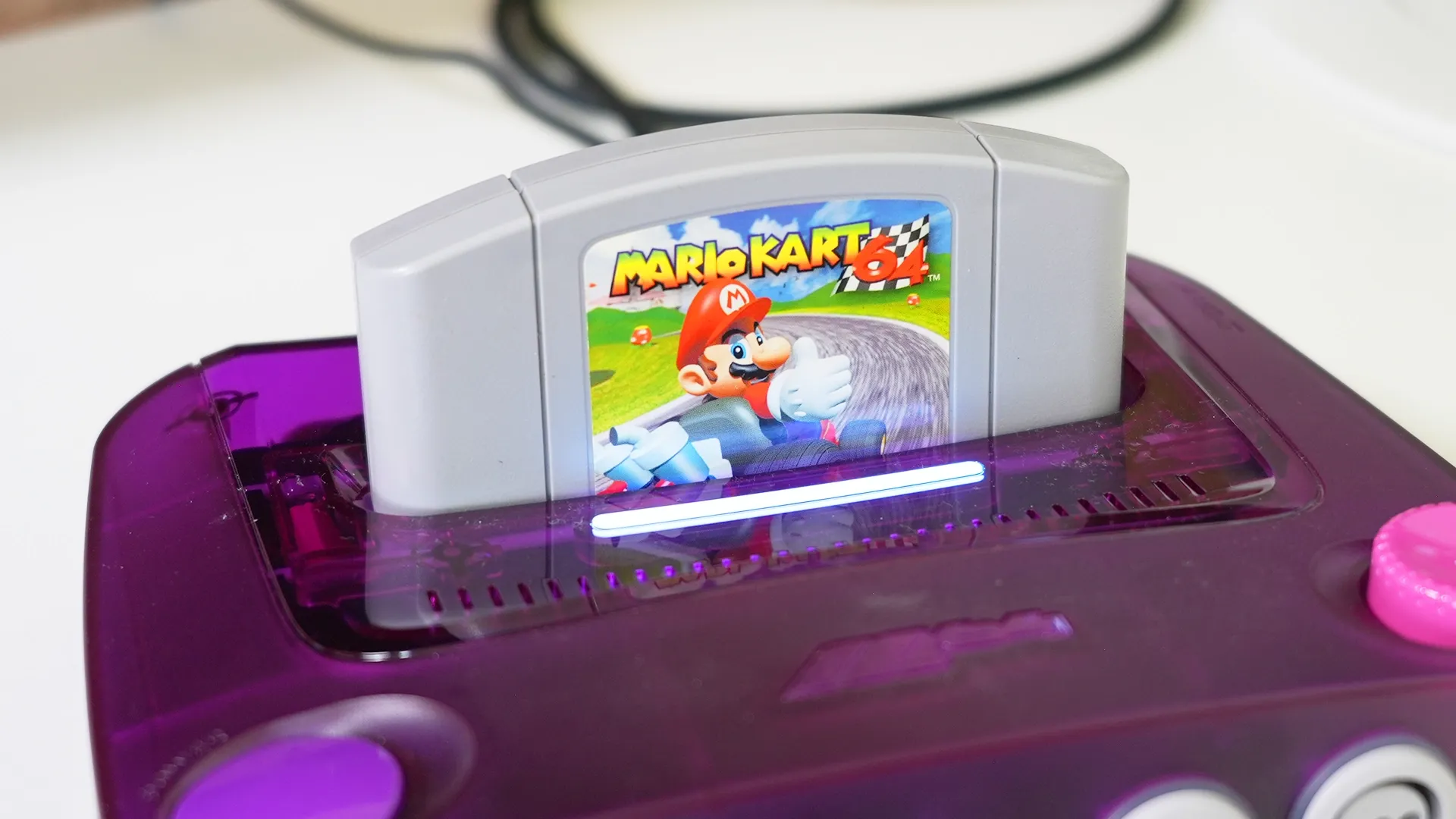
There's even a clasp in the slot to keep the doors open or closed. ModRetro has also added an LED light in front of the cartridge that primarily acts as a notification bar for things, but also as a light that hits the beautiful cartridge art at night, so you can see what you are playing and show off your collection. It's a nice touch. These are two features I do wish the Analogue 3D had, but they're not a dealbreaker in my opinion.
It simply comes down to whether you want a minimal-looking console or a playful one. Analogue do have limited edition transparent versions of the 3D that are a little bit more expensive
The Controllers
Winner: ModRetro
What I do find odd about the Analogue 3D is the fact that it doesn't come with an official controller. Analogue only sells the console and then expects you to go find and buy a controller yourself. Admittedly, many N64 fans will have a cabled Nintendo 64 controller somewhere in their house or even a modern Bluetooth controller that works with it, but it's rarely heard of that a console manufacturer hasn't created a controller for their very own game console.
They offered an 8BITDO controller with it, separately, that works well, but I think it's fair of me to say that Analogue was lazy here. We all wanted a unique controller made by Analogue; they're incredible product makers, so why not create a unique and upgraded controller to pair with their beautiful console?
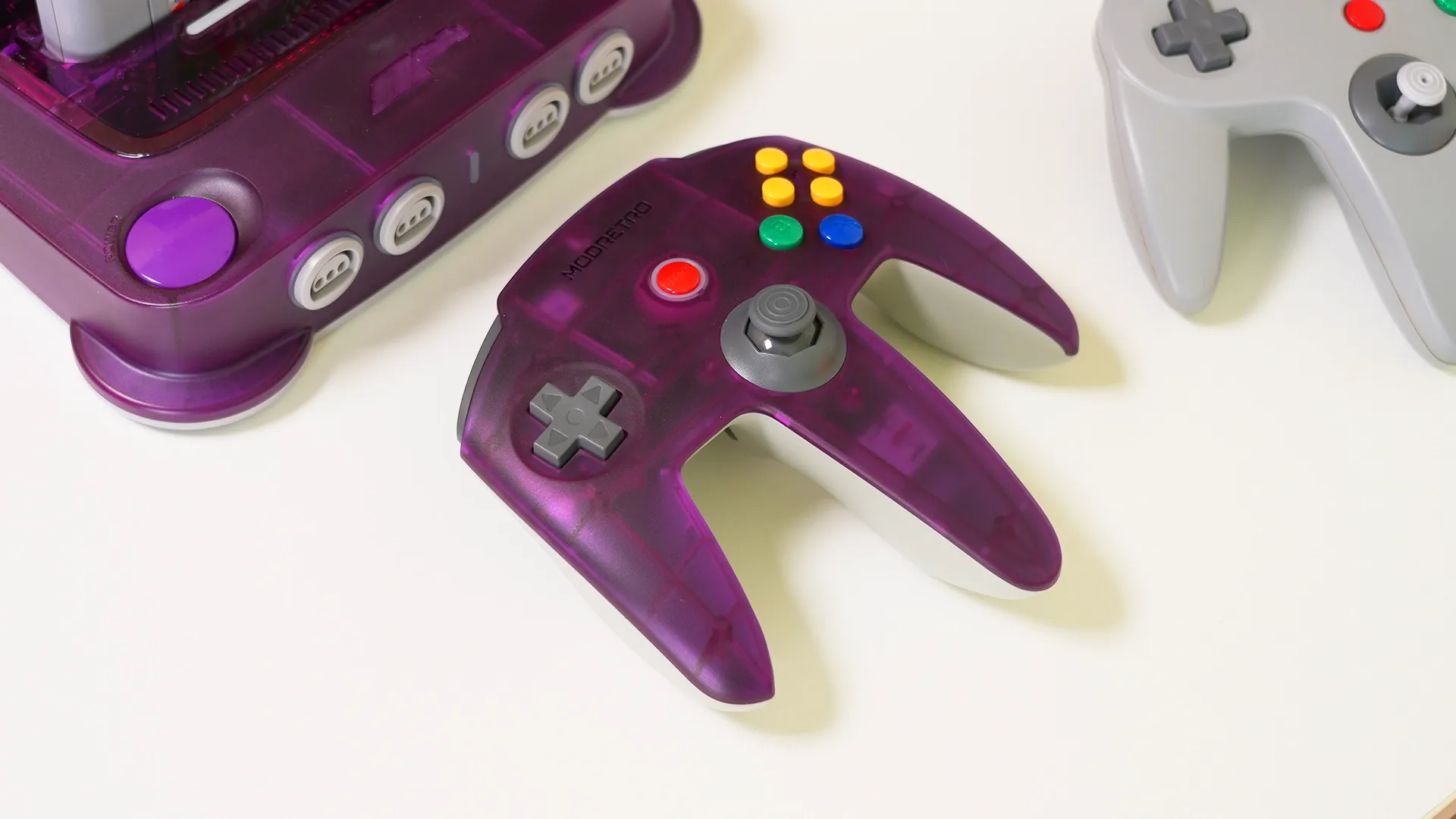
ModRetro, however, took the time to give retro gamers what they wanted and developed an incredible controller that I simply cannot put down, and I think it's one of the best things about the M64. In fact, it's worth buying on its own if you're not even contemplating picking up the M64 console, but just to note, Analogue needs to update their console to make it work with the M64's controller, so its on them to allow compatibility, not ModRetro.
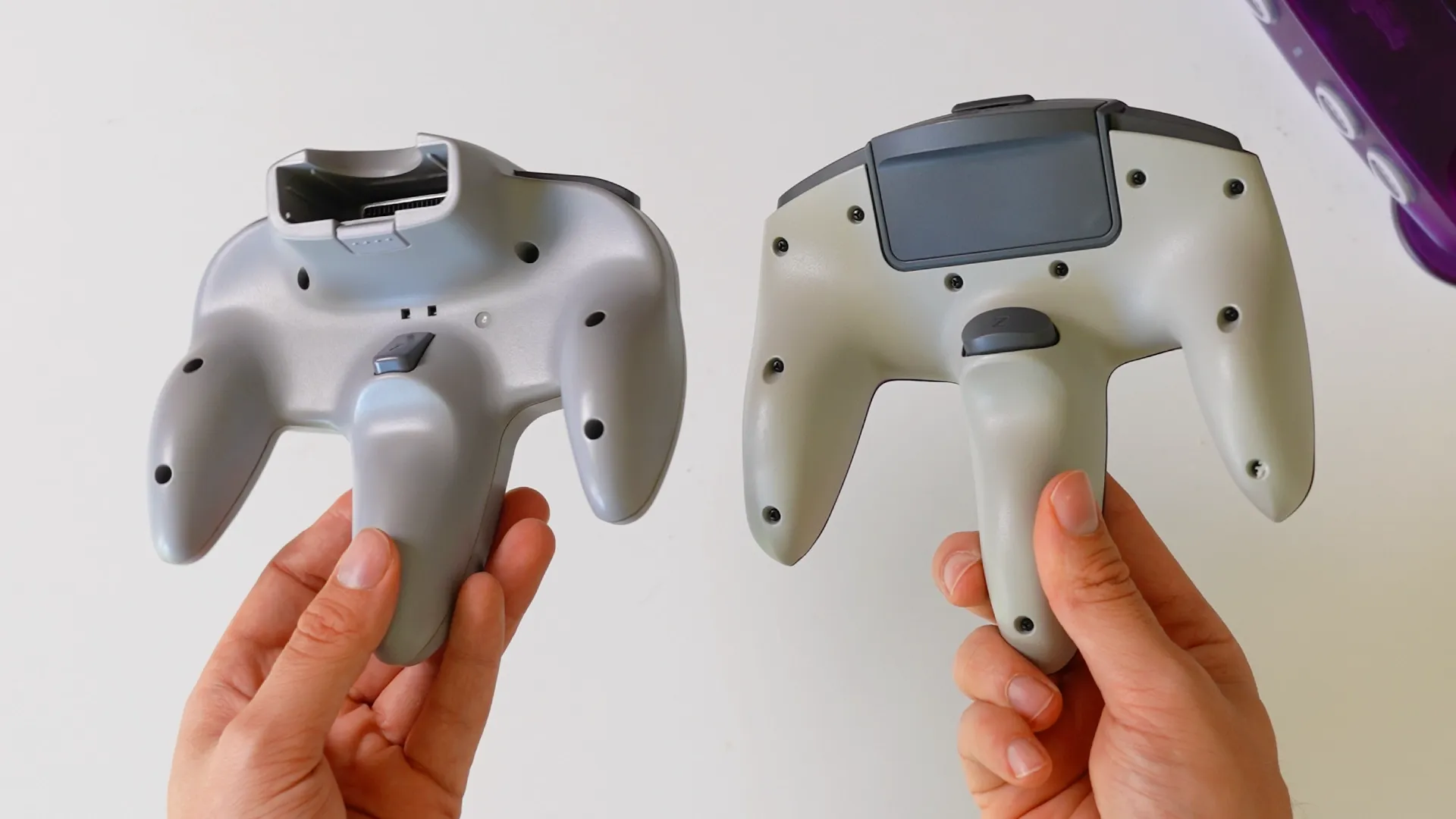
Their official controller comes in multiple colours to match the console and has an aluminium die-cast backplate that adds a premium touch, increasing its durability. It also adds a nice bit of weight to it that certainly catches new gamers' attention when you hand it to them. It can be used wirelessly and comes with a very long 10ft cable that can stretch to most couches here in the UK (because our living rooms are typically smaller in comparison to American homes), and it works with the original Nintendo 64 hardware too. The cable is braided and comes with a clasp around the USB-C port to stop it from being pulled out by little ones or bypassers.
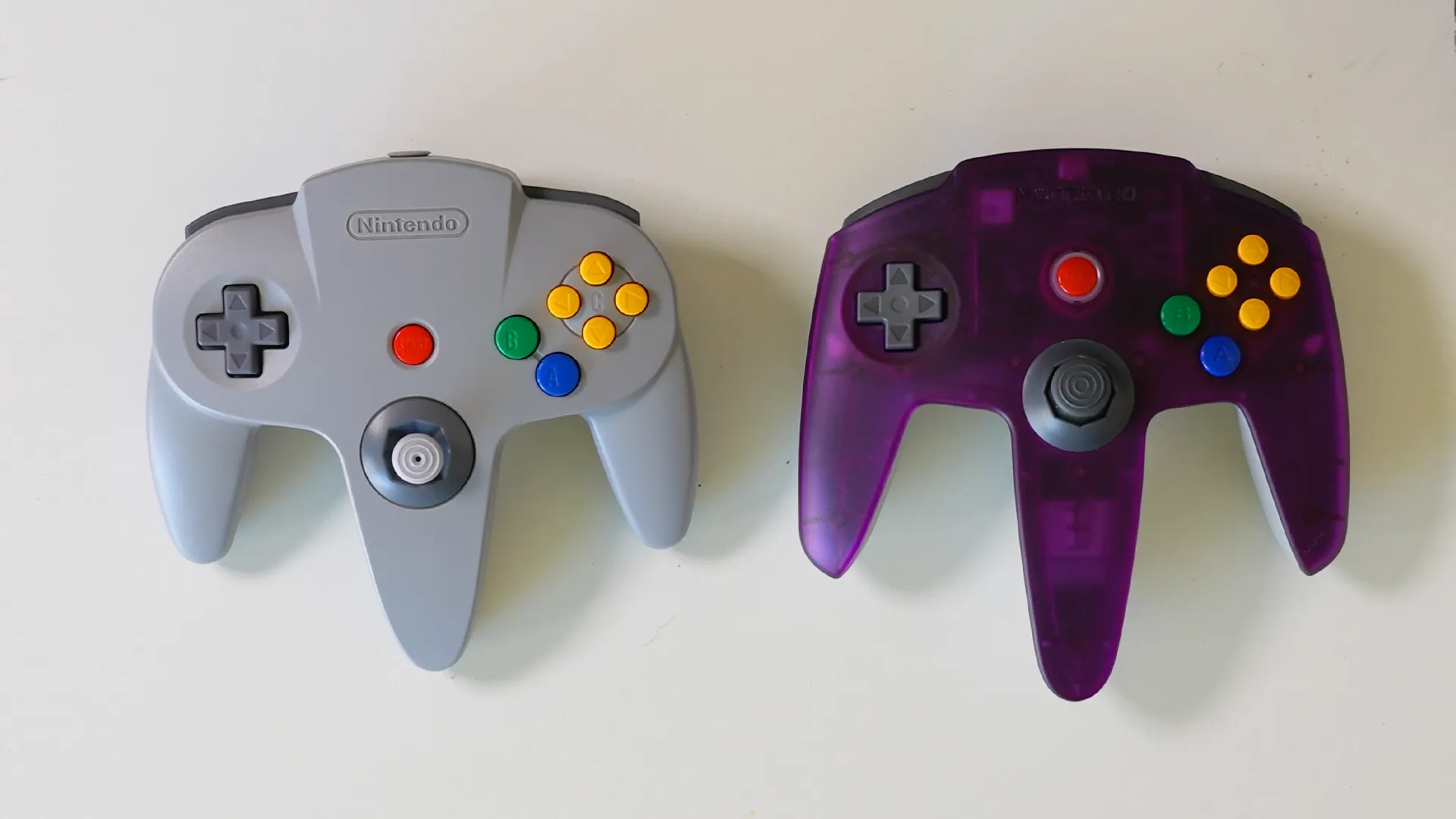
The controller itself keeps the iconic N64 layout, but with an exaggerated middle grip. The buttons are nearly identical in size, apart from the shoulder buttons that are thicker, and the Z button is thicker too. The buttons feel the same too; it's clear that ModRetro are trying to modernise the controller, not replace it, so the buttons sound and feel the same in a very nostalgic way.
The only major difference in feel and sound is the analogue stick; it no longer features Nintendo's vulnerable shaft. Instead, it's a modern TMR thumbstick that feels like it will last a lifetime, even if the sound feels far lighter and cheaper than the rest of the buttons.
It's an incredible Nintendo 64 accessory, and it's the last Nintendo 64 controller you'll ever need to buy. It works with Mac, PC and Android too, comes with a built-in rumble motor, a removable battery pack and auto pairs with the M64 on most occasions. I have had some issues with quick pairing, forcing me to plug it in to re-sync it, and it tends to be a little bit unreliable when the controller has no battery, as it cannot charge itself through the console... I know annoying! So you have to charge it externally like you would a normal controller.
Many will ask if it has a built-in Controller Pak. As of right now, the answer is no, which is disappointing, but apparently it's coming in future updates. As I said, though, I'm not giving that credit; my unit does not have Controller Pak compatibility at this moment, and I'm sticking to working with what I have today.
User Experience & Operating System
Winner: Analogue
You may disagree with me here, and you'll need to read the entire article to understand why, but the User Experience and the way you can explore the settings and quirks of each console is one of the biggest differences between the two systems. It's one you need to consider, deeper than you think, when considering which one to buy.
Starting with Analogue's OS on the 3D, it's clear that it matches the company's design philosophies, staying on track to make things minimal, yet modern, with as few distractions as possible. It does look dull, I'll give you that, but it's incredibly easy to understand, allows you to focus on what matters, and is purposefully designed to not waste your time, even if it takes a couple of days to learn where things are.
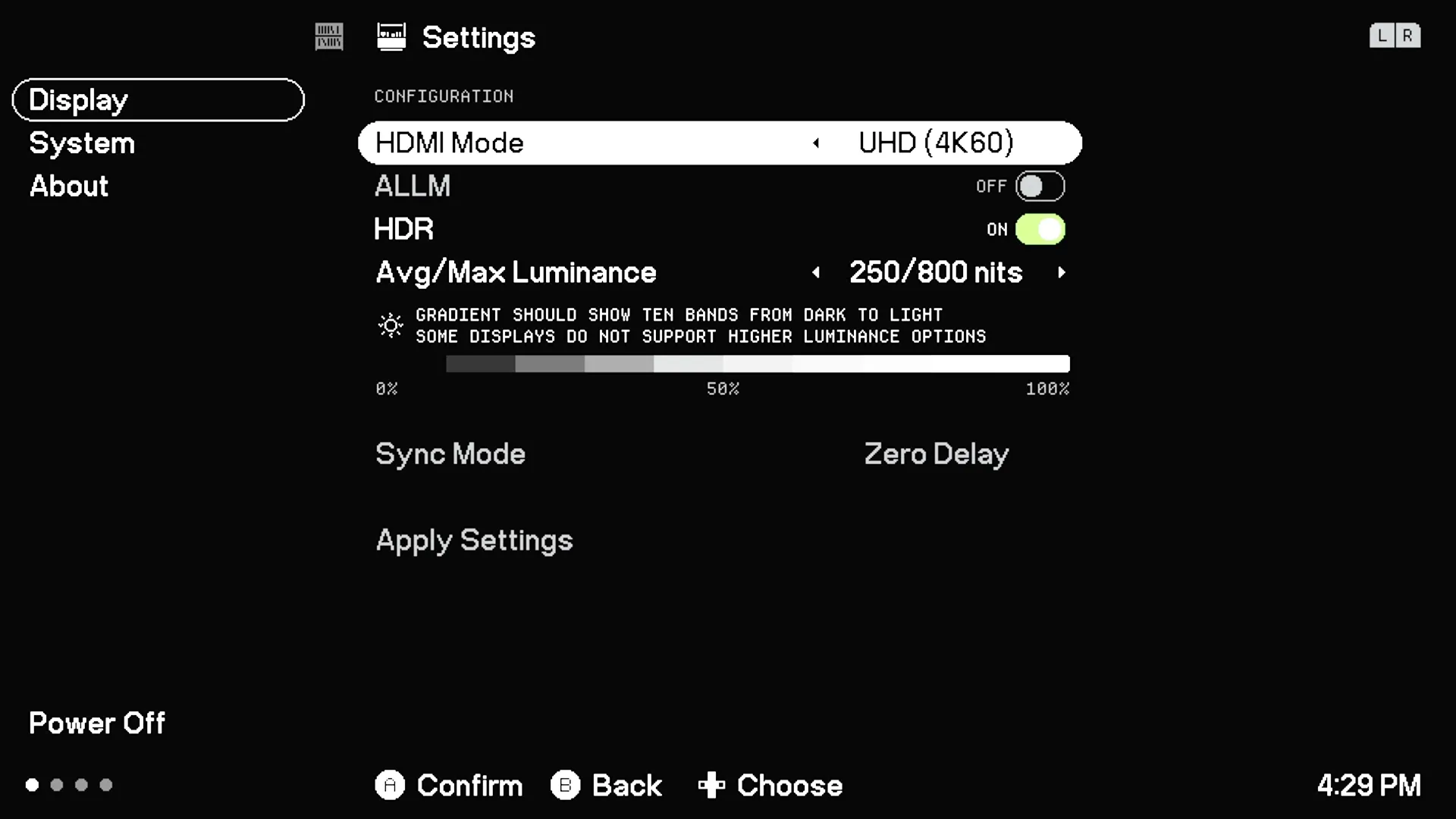
I really like AnalogueOS; it's remarkable on the Analogue Pocket, and it's remarkable on the Analogue 3D. It's only recently that I have made the decision that I prefer exploring the 3D's menu and operating system in comparison to the M64's.
Both are very similar, but as of now, because the Analogue has been out longer, there's far more to explore. It's neater, it doesn't feel forced, and it feels very nostalgic in a way. I somehow compare it to the loading screen of an old Windows PC, whereas ModRetro's feels like it's been designed in a slightly more forceful way.
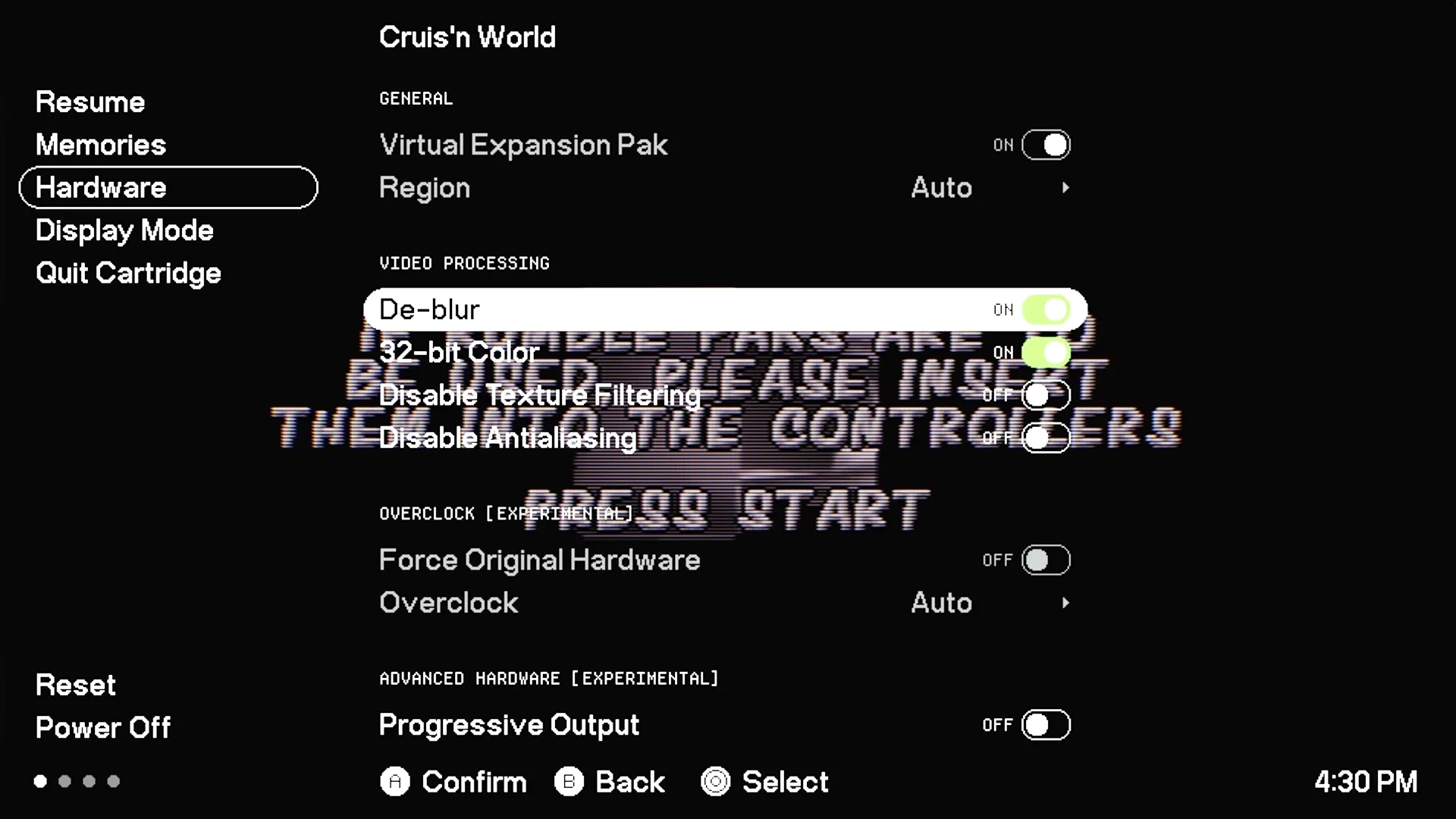
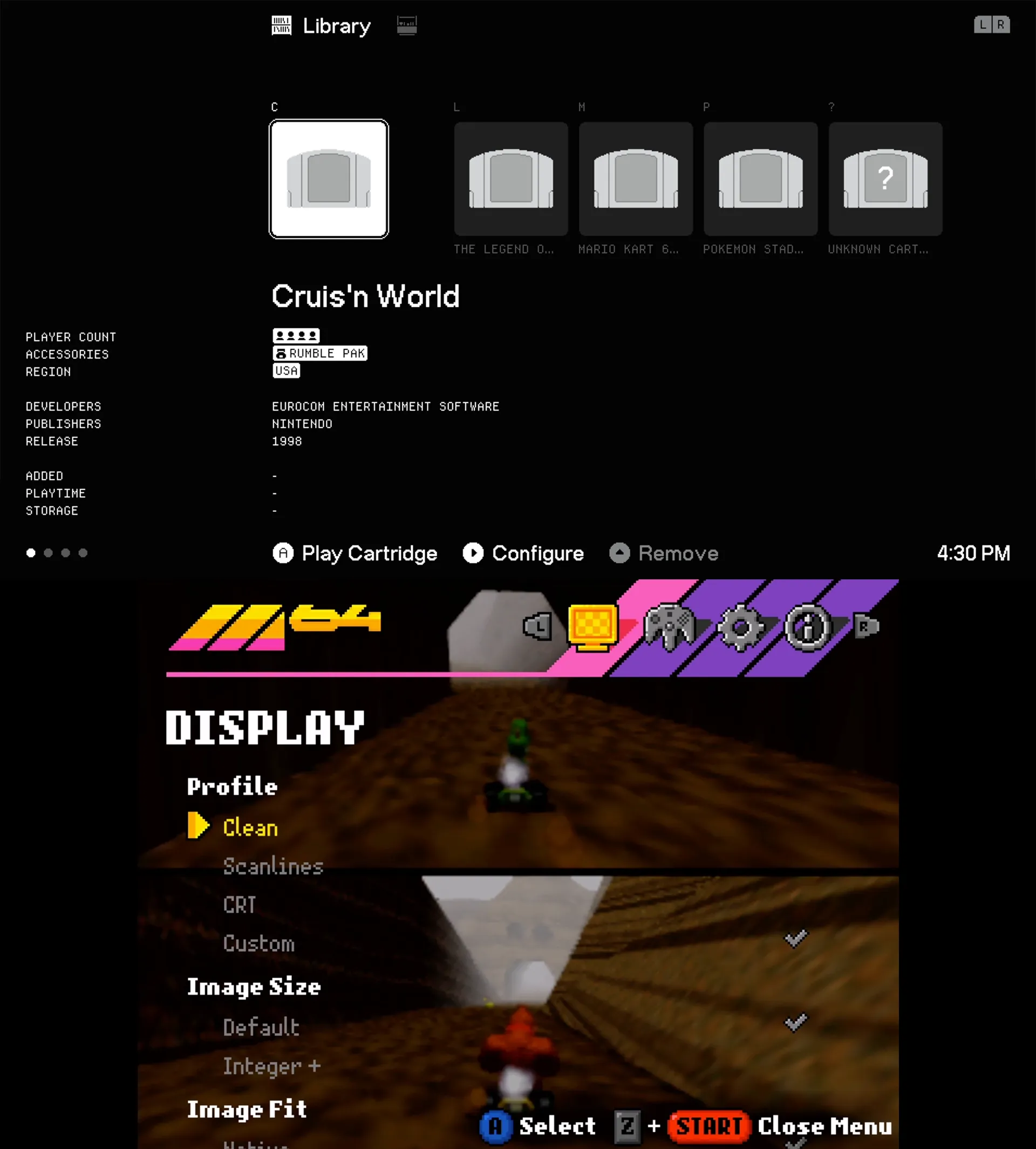
Don't get me wrong, the M64's menu system is incredibly easy to use and is probably quicker to get to grips with, but in my opinion, it doesn't pair naturally with the physical side of ModRetro's design laws. For example, the menu does not overlay well, and in some games, it's very hard to see the menu text. It's an easy issue to fix, I know, but it shows that more needs to be done to not overwhelm the user here.
There are areas in which ModRetro's OS "out eases" Analogue's OS, such as syncing controllers and the much-welcomed feature of installing updates with the click of a button using WiFi, which the Analogue 3D still does not have! It's absurd to me that Analogue still don't have this.
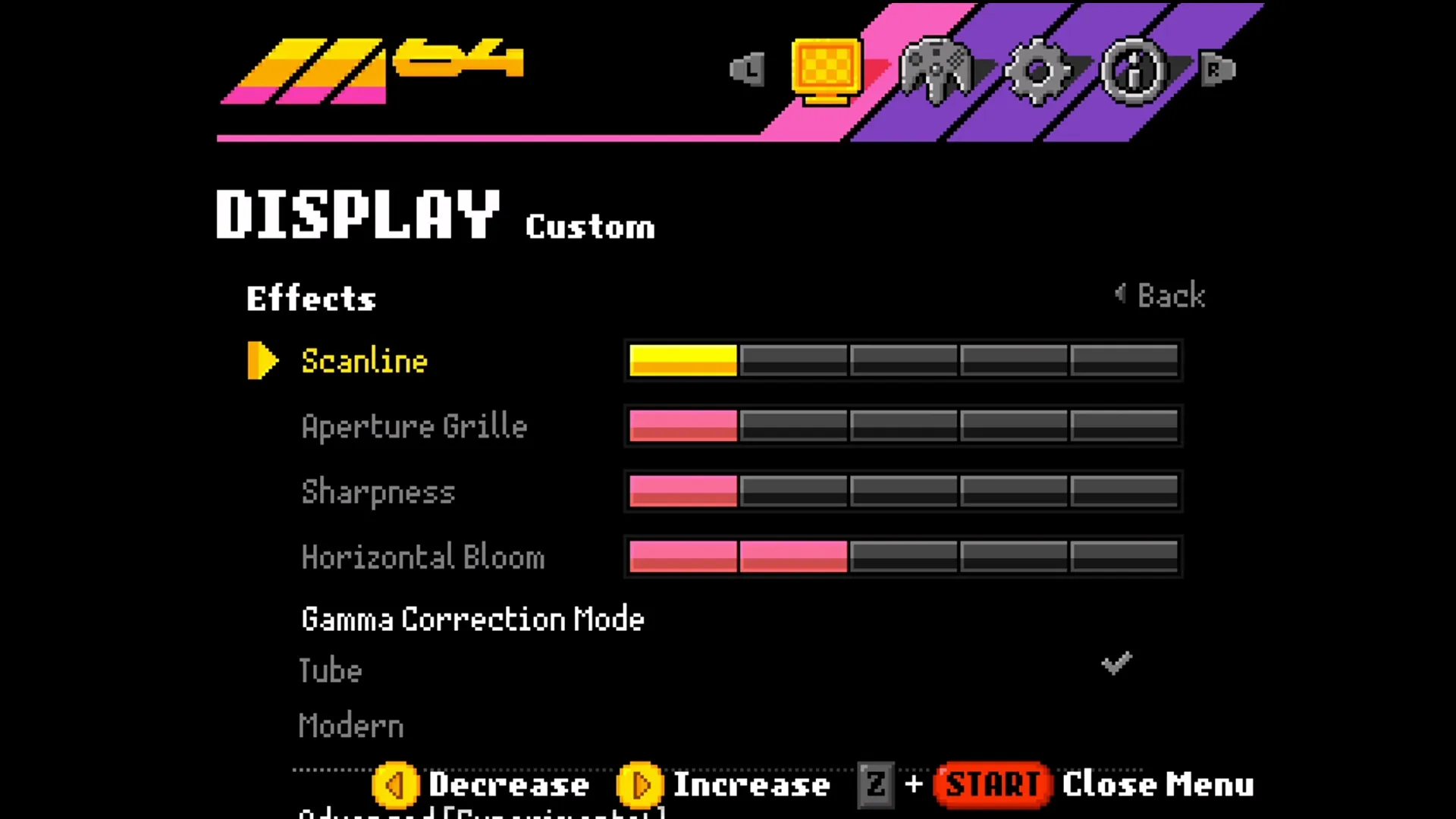
It's a high-demand feature, and it has the capabilities to do so, but Analogue still haven't given it to their customers 8 months on, forcing their users to take out the SD card, plug it into their computer, update it, take it out, plug it back in, and wait for it to load. The M64 takes seconds to do this.
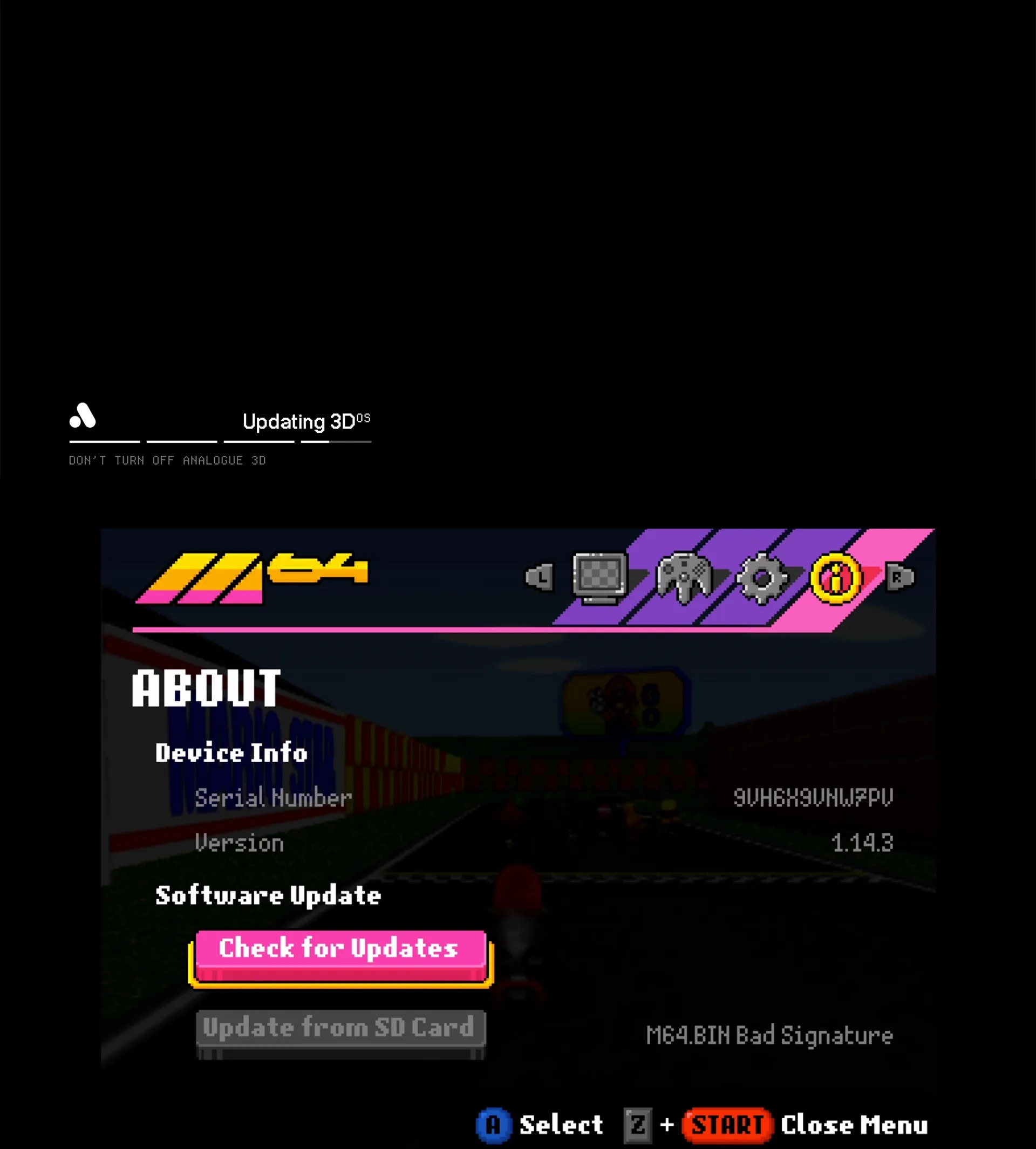
That said, Analogue's OS is cleaner, simpler and more enjoyable to use, and since May, the 3D now has the ability to save games on the console, which the M64 cannot do as of yet. Not having this feature out of the box is a bummer and a serious negative against M64 for those pulling the trigger anytime soon. So there are pros/cons to both, making the choice of which to choose even harder. For me, Analogue just about wins this category, but ModRetro are hot on their tail.
Emulation Performance
Winner: Draw
Now, the big question. Which one performs better? I am going to come out of the gate swinging here, and I'll probably get some heat for this because I know I have a lot of Nintendo 64 enthusiasts here, but to be completely honest, the large majority of people who buy these consoles will not be able to tell the difference in performance between the Analogue 3D and the ModRetro M64. The differences are so minute that you have to be a real Nintendo 64 nerd who looks incredibly hard at the small details to figure out which one you prefer.
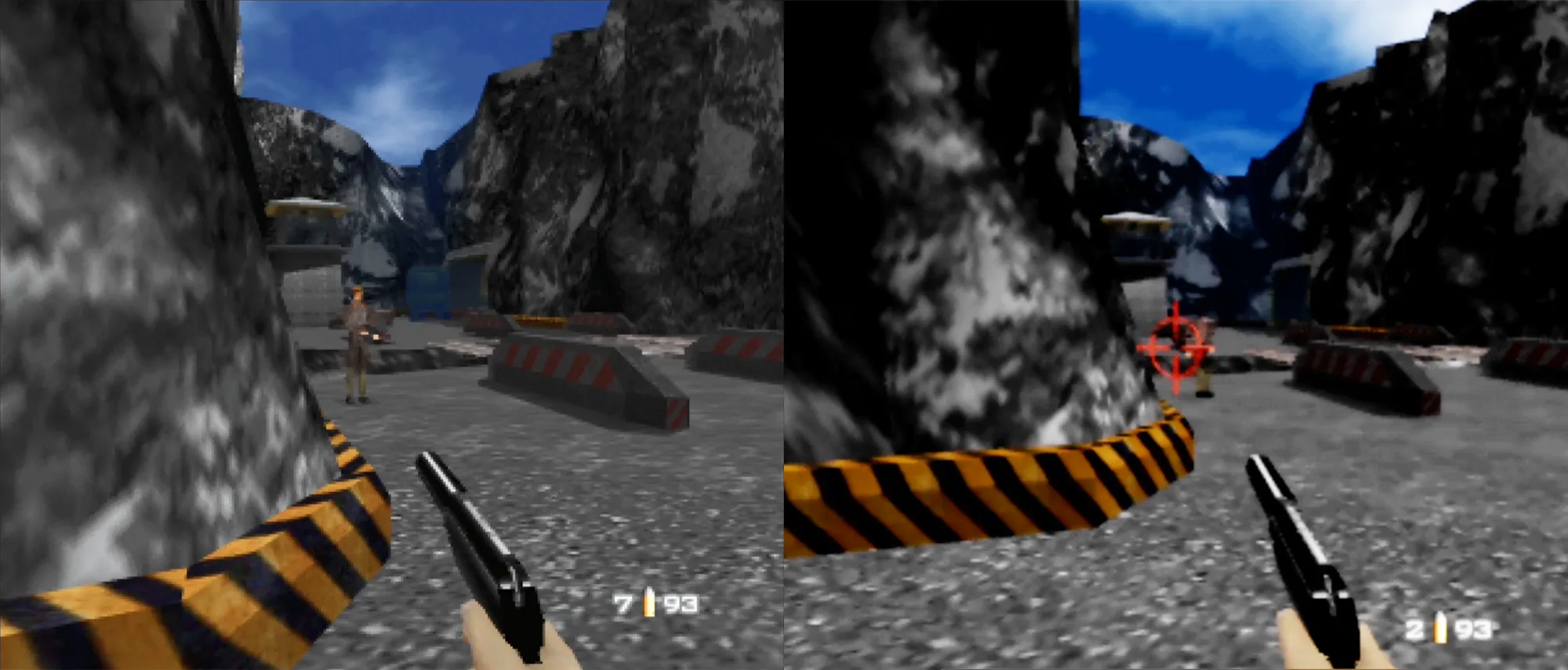
We had the opportunity to experience the M64 before, and after the overclocking feature was pushed to our review samples, it's a feature ModRetro has informed us that is coming at launch, which is a huge deal, because before the M64 had overclocking, it couldn't even come close to matching the 3D's performance. The comparison between them both in 007 was very clear; the A3D kicked the M64's ass, that was until we could test their overclocking feature.
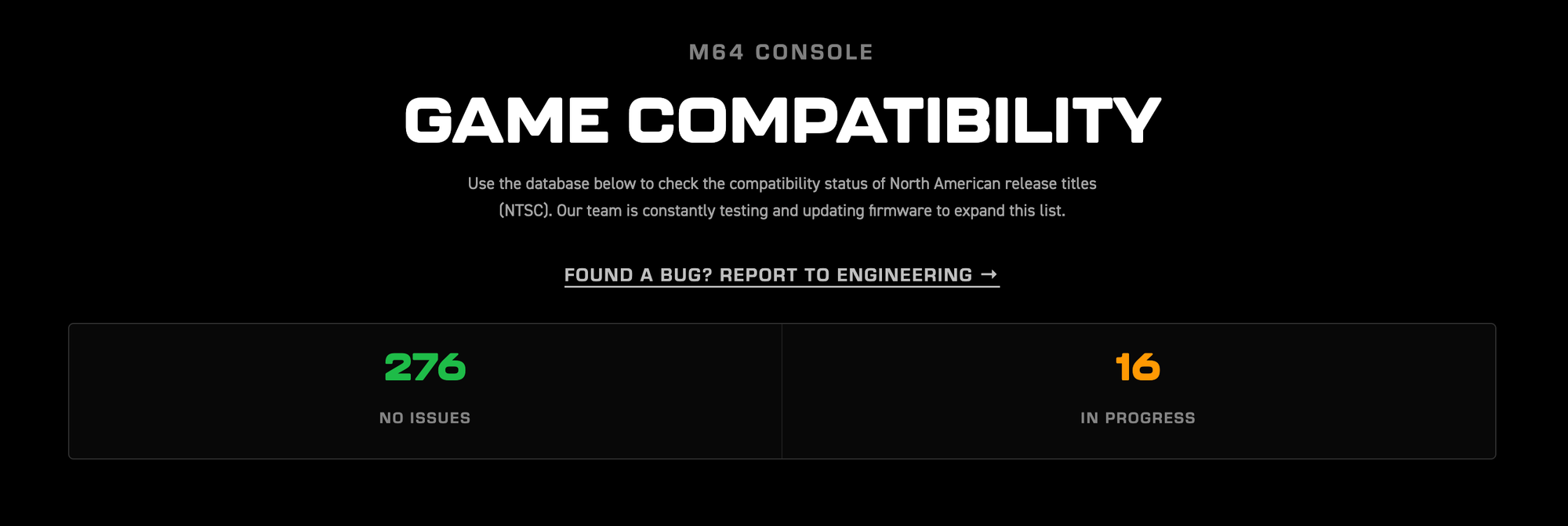
Now, the M64 performs very well when playing games, with overclocking allowing for silky smooth 007 performance, just like the Analogue 3D. When comparing the before and after footage, it's very clear that ModRetro has indeed increased the performance of this console, and they've even increased their game compatibility numbers too, with now only 16 games that may have bugs, meaning the M64 has a success rate of 95% when it comes to playing N64 cartridges very well. Analogue still have no public information on their game compatibility numbers, so we cannot compare, but from comparing my game library, both perform well, and overclocking is a mandatory setting every user will eventually turn on.
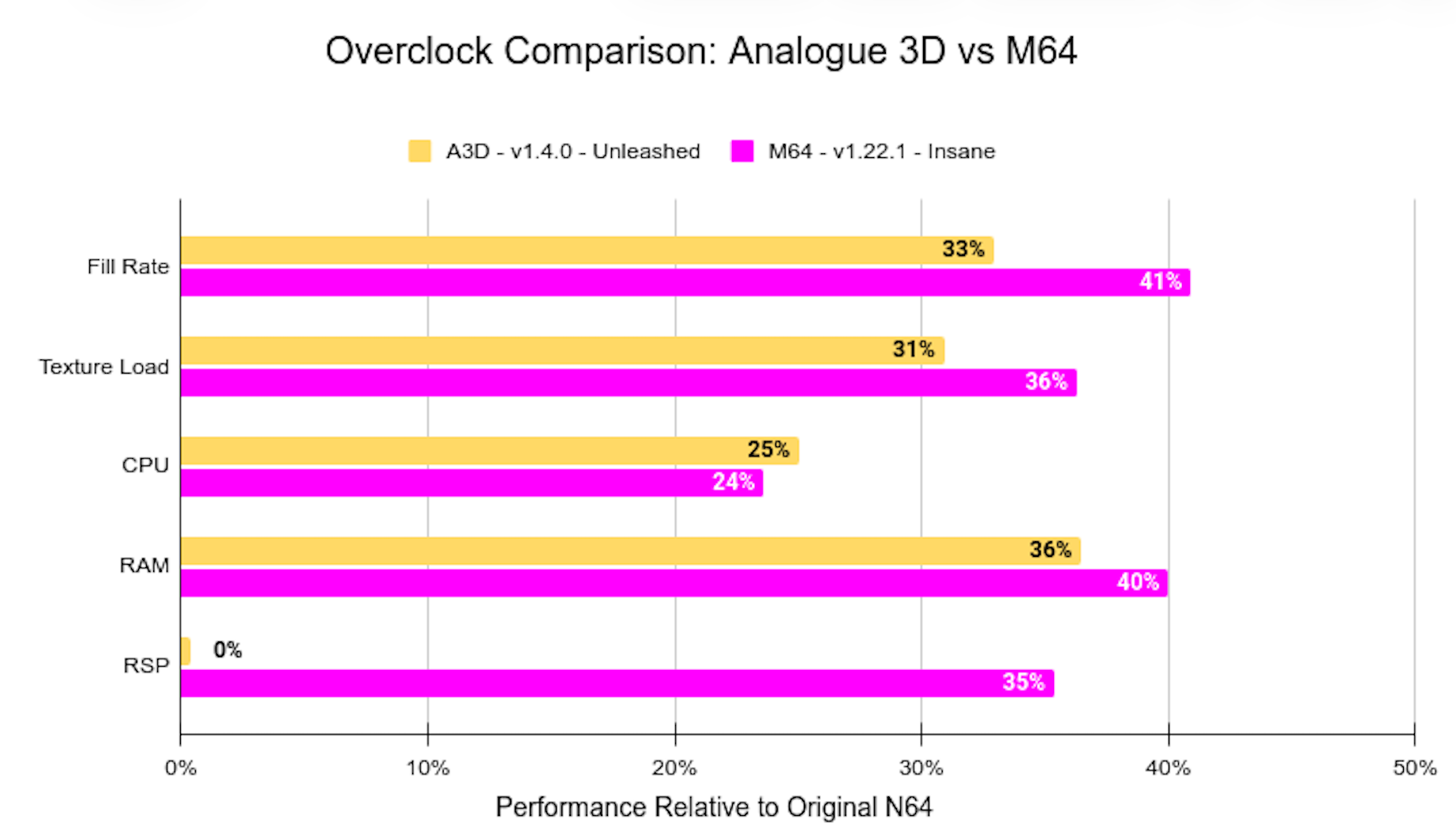
I haven't plugged this into any pieces of software to give you hard statistics, that's not the way I review things, but ModRetro has shared some charts with us that state they actually have better overclocking performance than the Analogue 3D, but again, i'll state it's very minimal, and the average gamer will not recognise the differences. Though that's not denying how much effort it would have taken ModRetro to build FPGA technology of this calibre, it's impressive stuff.
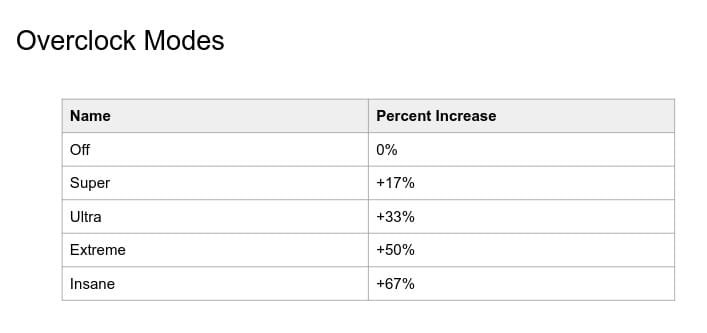
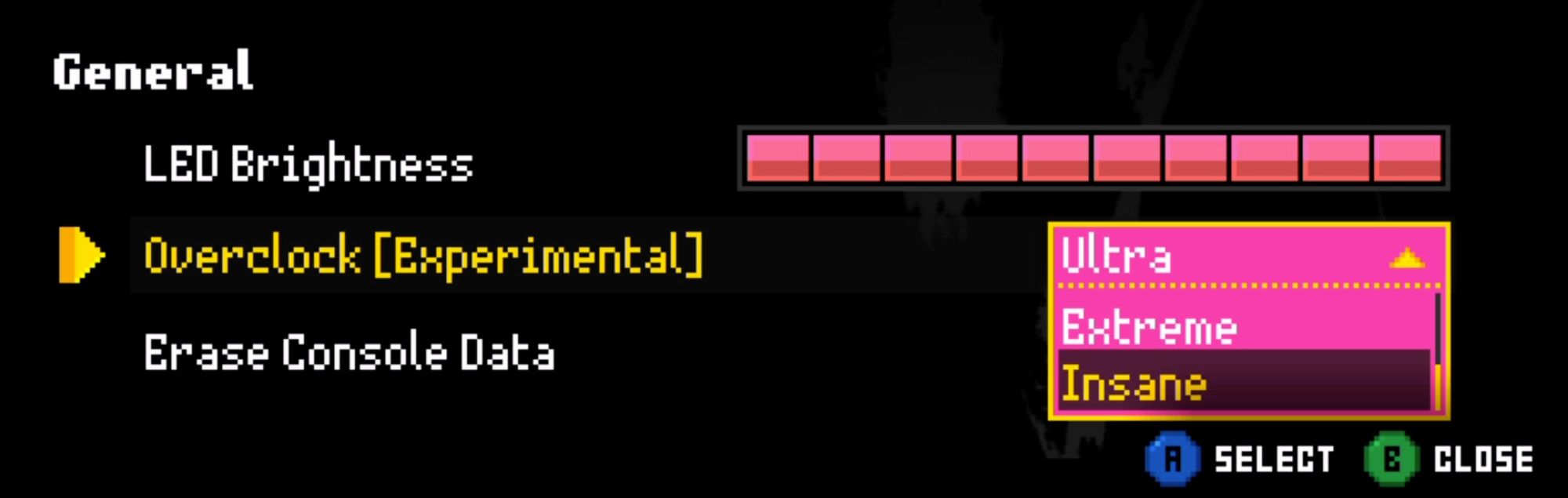
Though I will say both companies have overcomplicated their overclocking settings by adding multiple modes such as Super, Ultra Extreme, Unleashed and Insane. All I really need is on and off. I get it, some users may not want to overheat their console (and they both get a little warm on Extreme, Unleashed and Insane after 30 minutes), but in reality, I believe most users will just go straight to insane or would find it easier to just see the % increase instead of random words. The differences on the M64 are:
- From Off (0%) to Super = +17% performance boost.
- From Off (0%) to Ultra = +33% performance boost.
- From Off (0%) to Extreme = +50% performance boost.
- From Off (0%) to Insane = +67% performance boost.
Both consoles allow you to upscale to 720p, 1080p and 4K resolutions. This is great, and is one of the primary selling points of upgrading from an original Nintendo 64; this is a plug-and-play console that pairs with modern HD TVs.
That being said, it won't make the game look "better", so to speak. This is a 64-bit game; it's pixellated, and it will still be pixelated on your 50" display. These consoles simply upscale naturally, and they do a good job at it, without any obvious glitches, screen-tearing, or artefacts. As I said, both consoles emulate most games well; neither is really better than the other in a way, because both are designed to do the same thing - replicate the original console as closely as possible.
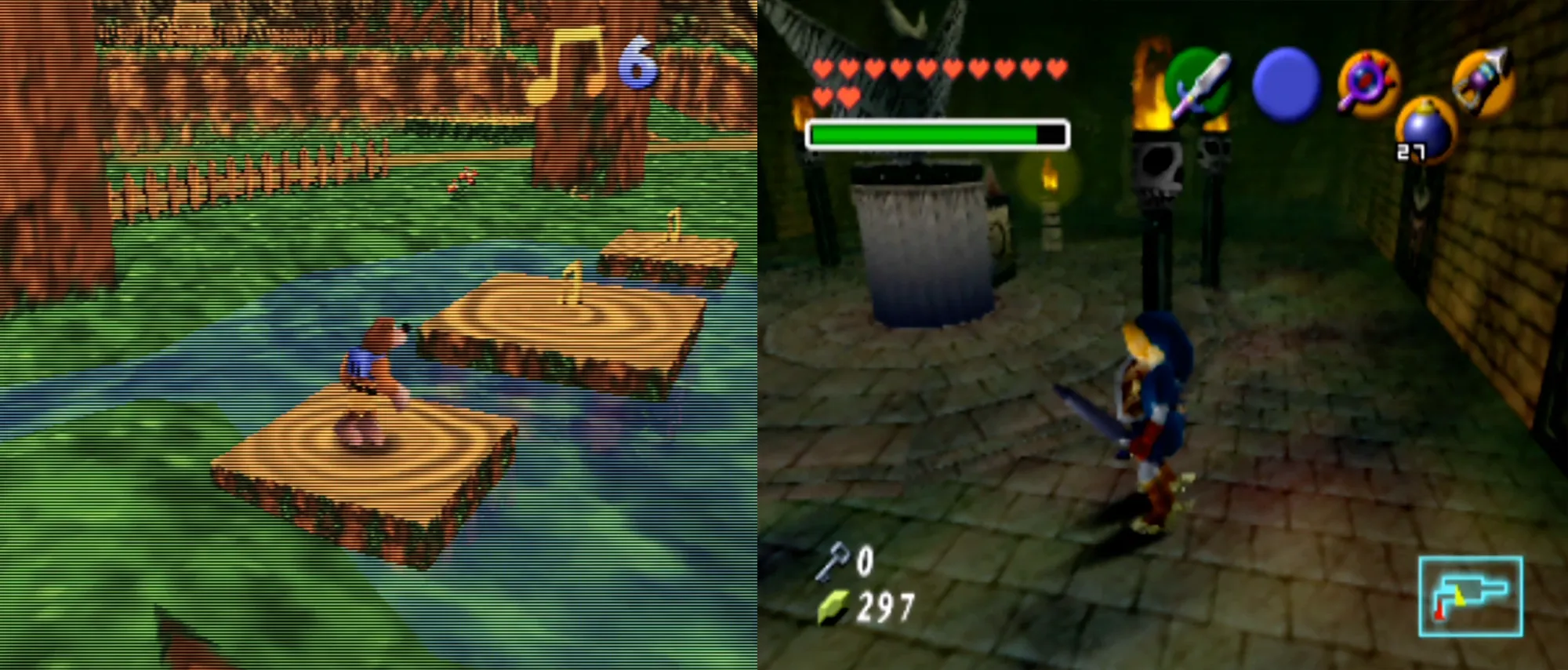
Because both consoles perform so similarly across the board, this comparison of emulation quickly goes into customisations, because that's what differentiates the consoles noticeably.
For me, it simply comes down to game compatibility. Which console can play most of my collection better, and which console is easiest to use? It may be hard to believe it, seeing as I run a retro gaming publication, but I am very much a casual gamer when it comes to home consoles. I try to review these things from an average consumer's perspective, because I honestly don't really care about the deep, minute details. Does it play my games well, is it easy to use, and more importantly, is it enjoyable? Both consoles tick all of these boxes, proudly, and performance is incredibly similar on both devices. Some may run the emulation through software to pick up specific comparative numbers, but in all honesty, both do the same thing, and very well, most won't notice the difference at all.
Boot Time & Accessories
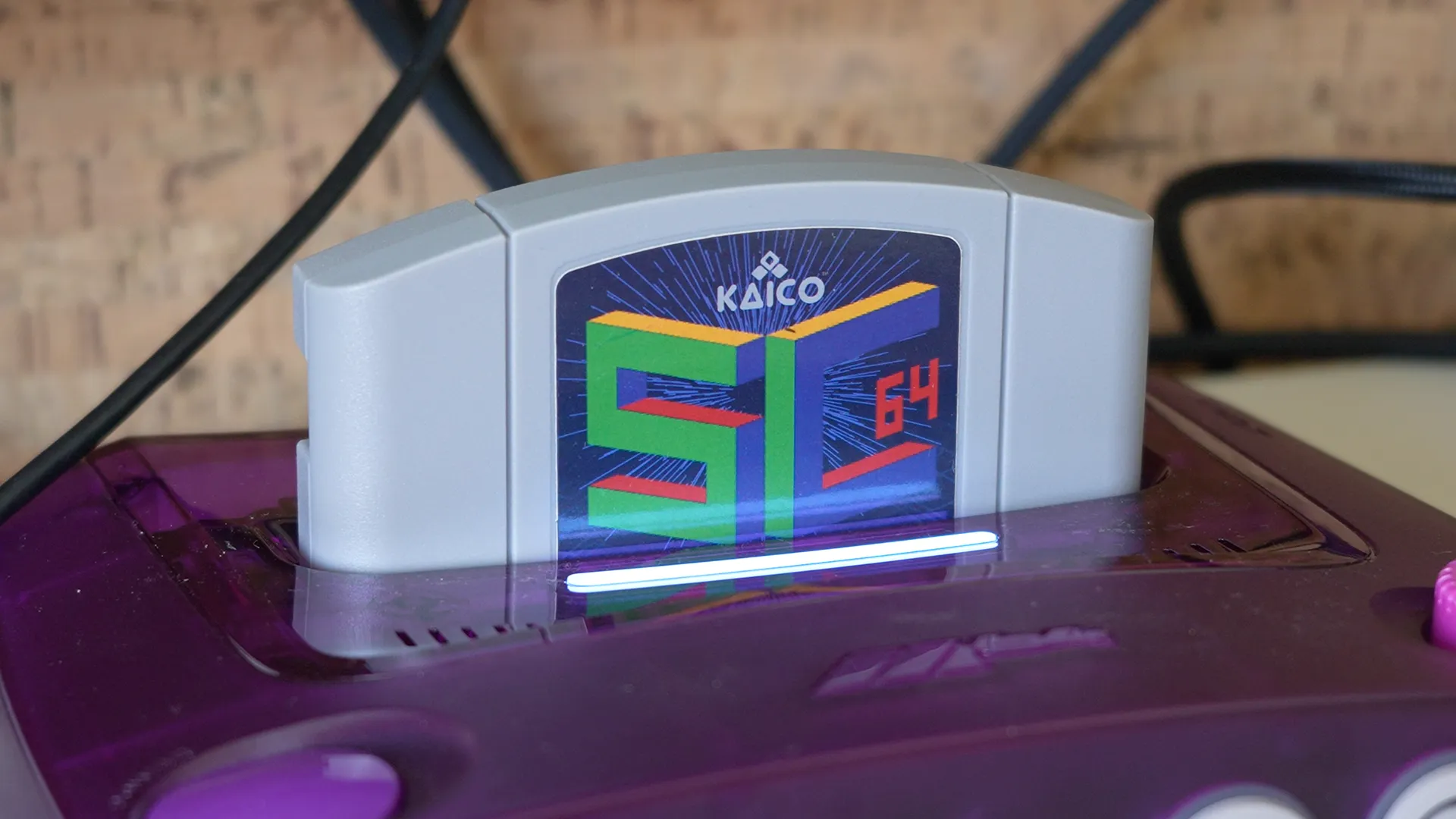
One of the biggest differences when loading up both consoles that I saw when I first had my hands on the M64 way back in February was the fact that the M64 loaded incredibly quickly straight into the gameplay. It took roughly 6 or 7 seconds to get into the game, which was far quicker than Analogues' load time, which was double that, and that only loaded it into the main menu.
However, this has changed because Analogue released an update that allows users to boot straight into the cartridge, following ModRetro's lead. Though the M64 is still quicker, it's no longer a major difference.
This is why I keep saying that the big differences come down to the physical aspects of each device. Both companies are so aggressive and fast with updates that they're both going to eventually do the exact same thing software-wise. ModRetro has some things coming in the future that Analogue can't do, such as Chromatic pass-through, but again, I'm reviewing this today, and not adding what is coming into the battle, to keep it fair.
I know the SummerCart 64 is a cumbersome piece of kit to get working on FPGA consoles, but both can do that and fluidly too. It's proof again that both companies are engineers at heart, tinkering, modifying, upgrading week in, week out, and I am conifdent that if any of them hear or see and issue, or a high demand request from their community, you can bet your butt that they'll be working on it and fast, which makes this battle between these two giants even more rewarding for us as consumers.
More Than Just Hardware
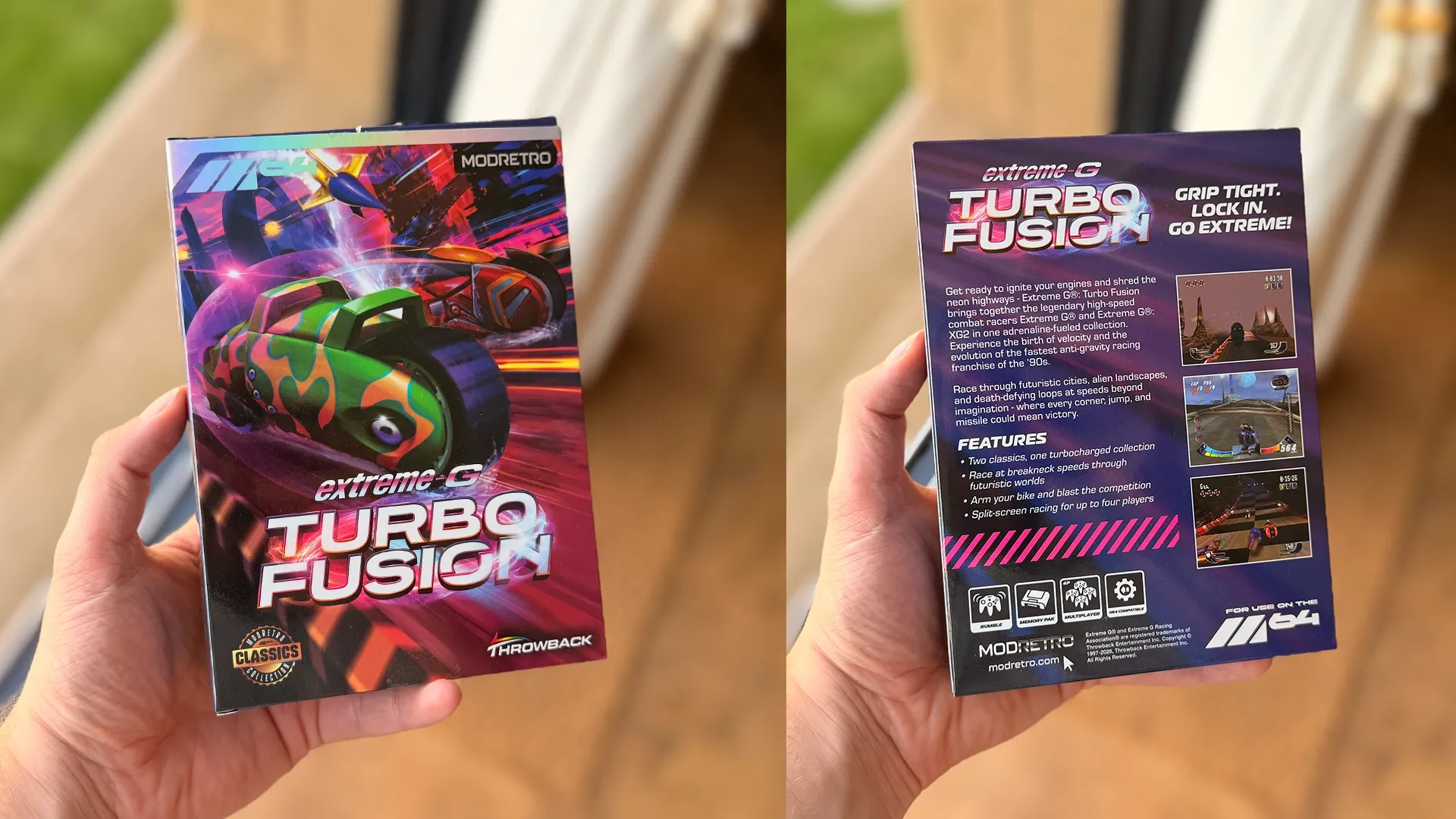
What ModRetro is doing that Analogue isn't is actively developing new games for their hardware, and they are working relentlessly with not only indie developers but also well-known developers in the space to create new and exciting games for retro consoles. This doesn't reflect the M64's review in a sense, but it is worth noting because this initiative is not only giving retro gamers more modern takes on old games, but it's giving developers in the retro gaming industry literal jobs.
ModRetro have launched 5 new games with the M64, one of which includes the widely loved Buck Bumble by Argonaut Games, adding some quality-of-life upgrades that will make the game more enjoyable, just like they've done with many Chromatic games in the past.
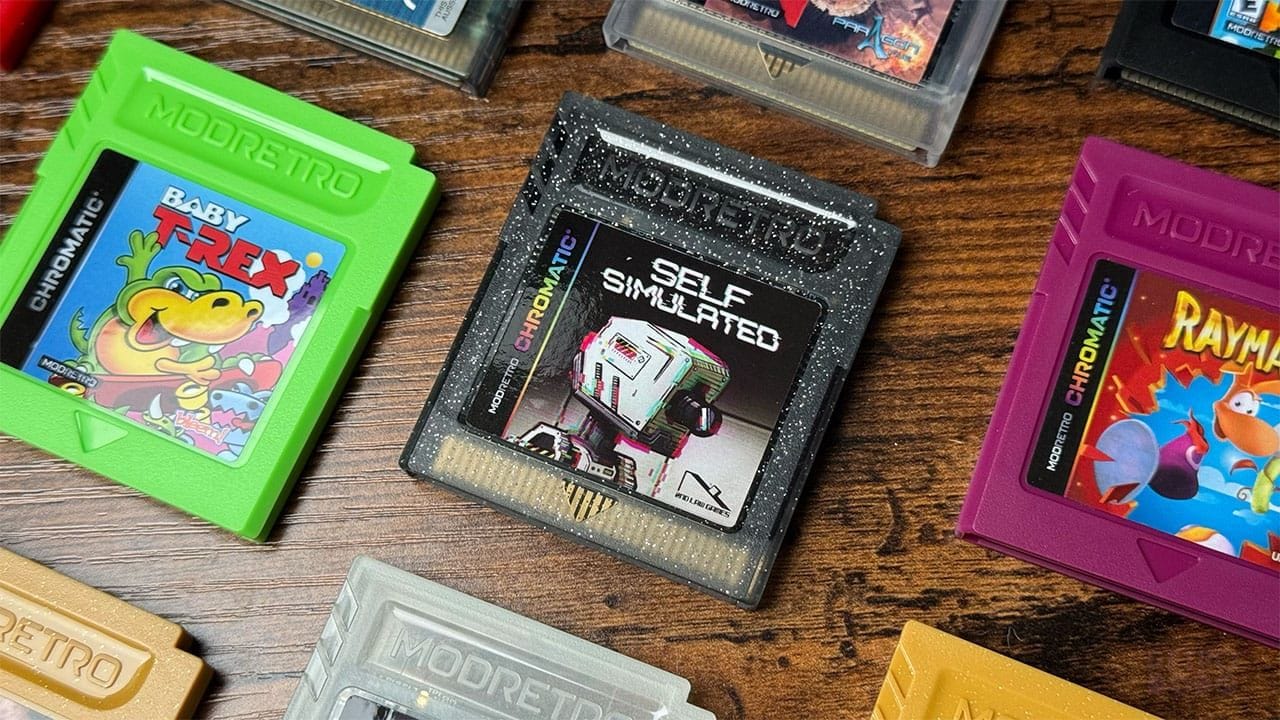
Since its founding, ModRetro has given over $1,000,000 in royalties to developers, igniting the retro gaming industry and giving back to many who dreamed of creating games for a living.
I honestly think Analogue should do the same. They missed out here, and I know I get heat for saying this because ModRetro is controversial in the eyes of the few, but to me it feels like Analogue make great hardware and software, but ModRetro make great experiences because typical ModRetro customers aren't just buying a console. They're buying that nostalgic experience all the way down to the packaging, the product design, unboxing new games, reading the manuals and experiencing a new controller. It genuinely feels like the 90s again when you buy a ModRetro product.
Pricing & Overall Opinion
The Analogue 3D costs $269, and the ModRetro M64 console costs $229, making the Analogue 3D 17% more expensive than the M64. Not substantial, but enough to turn some heads, that's for sure, and that extra $40 you save could go towards a game or the M64 controller that costs $89.
My overall opinion is that these are two very similar consoles that can do very similar things. As of now, we are in a moment when both companies are promising upcoming updates that could change my decision heavily. As of right now, the 3D has save states, overclocking, and a screenshot gallery, which makes gaming so much more enjoyable, and the M64 still does not have save states via the hardware, which is a big feature many gamers will want from the get-go.
The M64 has over-the-air updates, allowing me to patch and update my console, whereas the 3D does not. The Analogue 3D has a more pleasant user experience in my opinion, but the ModRetro M64 has some welcomed hardware perks and the addition of a bloody well-designed controller, alongside a mission to create great games and give back to the retro gaming community through independent development.
I do not have a definitive decision as to which one is better, which is one of the first times I have mentioned that in a dedicated comparison piece. Both are phenomenal FPGA Nintendo 64 consoles, and they'll both be even better in a years time. It comes down to which you prefer the look of physically and digitally, because although ModRetro has the "advantage" of the controller and games, Analogue's game settings is a little better at the moment in terms of choice and OS design.
Though I will mention, if you already have an Analogue 3D, it's likely not worth splashing out another $200+ for the M64, which does pretty much the same thing, unless you can sell it for $229, then you have to answer the question yourself. I am really excited to see Analogue and ModRetro fight it out over the coming years; they're both doing incredible things in the space, and we as consumers get the benefits of competition. What a time to be alive; the retro gaming industry has never felt so active, all thanks to technological geniuses and nostalgia.
Let me know in the comments which one you'll be picking up, and why.


