


A surprise announcement during Sony’s latest State of Play livestream on the 12th February 2026 saw the return of Ubisoft’s Rayman in a celebratory edition marking the coiffed platforming hero’s 30th anniversary. The announcement came as a surprise for a couple of reasons, and not just because Rayman originally released for the PS1 thirty-one years ago in 1995. This new edition would assemble no less than five versions of that original title, add some gameplay and visual options, and bolt on an interactive history of gaming’s most recognisable limbless hero from developers Digital Eclipse.
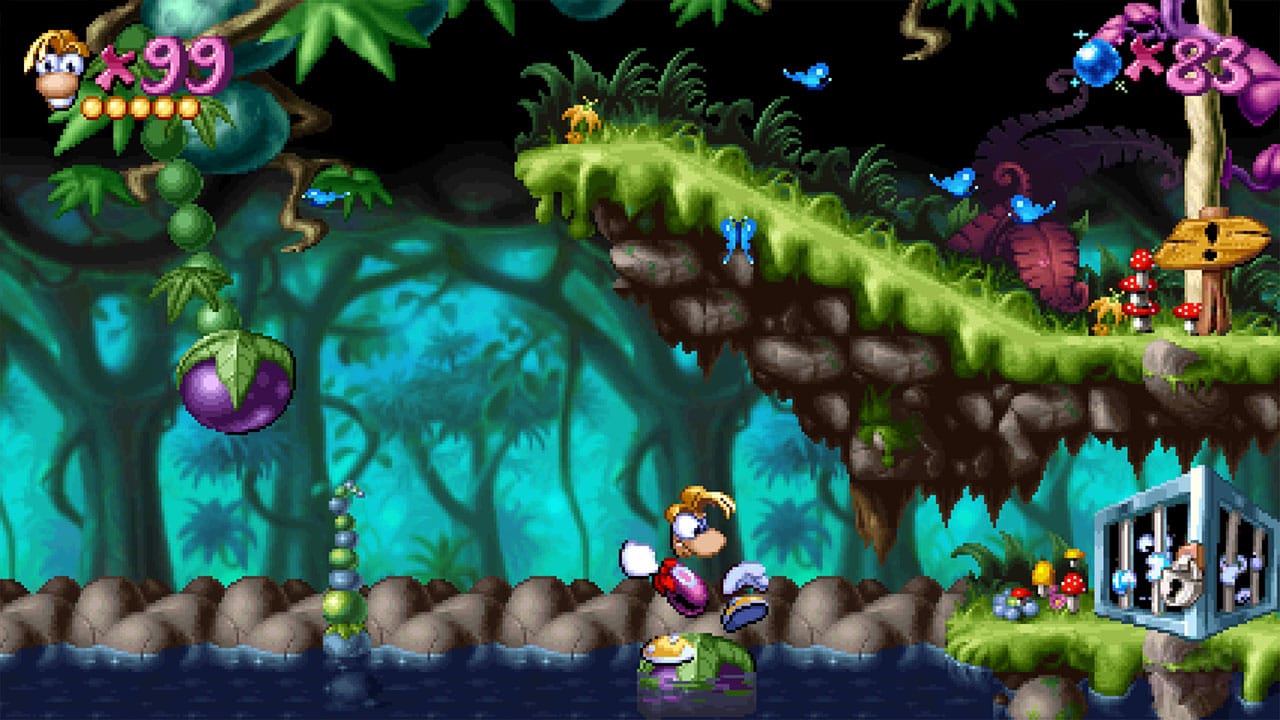
For the uninitiated, Rayman’s first outing introduced gamers to a blonde-haired, cheerful chappy who would strut, punch and jump around gorgeously painted 2D levels, collecting little blue pellets known as ‘tings’ and freeing Electoons (imagine walking pink gob-stoppers with ponytails) from cages. Rayman was, and remains, a basic platformer, but Rayman, like many games of its era, was also punishingly hard.
Rayman requires... no, Rayman demands pixel-perfect platforming and lightning-fast reflexes to navigate its levels. What starts as a simple stroll through lush green jungles eventually turns into a severe platforming obstacle course filled with bottomless pits and literal rock-hard enemies bombarding you with exploding boulders. It’s not for the faint-hearted, despite how smiley Rayman looks throughout his nightmarish adventure.
Now, three decades, multiple sequels, reimaginings and, sigh, Rabbids, later, developers Digital Eclipse have delivered a collection that Ubisoft are calling the definitive edition of that challenging first adventure.
Thirty-one years after its original release, can the original Rayman still provide a compelling platforming romp that’s worthy of your time, and how does the brutality of that original game hold up in the year 2026?
Despite some lovingly curated curiosities and welcome enhancements, the inconsistent implementation, along with the lack of the original soundtrack, means Rayman: 30th Anniversary Edition ultimately falls short of its self-proclaimed definitive status.
- Release Date: February 13th 2026
- Platforms: PC, PlayStation 5, Xbox Series X/S, Nintendo Switch
- Pricing: $24.99 / £17.99
- Where To Buy: Ubisoft or Console/Steam Stores
Same, Same But Different
Rayman: 30th Anniversary Edition includes no less than five versions of the Ubisoft classic, with MS-DOS, Atari Jaguar, Game Boy Colour and Game Boy Advance editions joining the 1995 PlayStation original. The front-end presentation is crisp and pleasingly characterful,, with each game featuring a short blurb about its release.
I personally grew up with the PlayStation version, with it coming as part of a console bundle from Dixons in Yeovil for Christmas 1997 (when I was 10 years old and still had a sparkle of hope in my eyes), along with Porsche Challenge and International Soccer Star. Naturally, that makes the PS1 original my version of choice in this collection, but I was surprised to discover just how similar each edition actually is.
Before we go any further I have to single out the MS-DOS version here. While nearly identical to the PS1 and Jaguar editions, it does boast a huge amount of additional content in the form of 124 extra levels from developers of the original game, as well as from fans utilising the original Rayman Designer software from 1997 that allowed players to create their own levels. They are, unsurprisingly, a mixed bag in terms of quality and enjoyment, but do provide heaps of extra levels to spin Rayman’s helicopter hair through.
Back to the core experience now, and the Game Boy Advance version aside, the four other versions of Rayman included here are very similar with their original, minor differences preserved. Some games have a fully voiced intro scene, while others offer static text. Sound effects can also vary depending on whether you’ve fired up the Jaguar or the MS-DOS version, and subtle differences to animations can be seen by players with keen eyes.
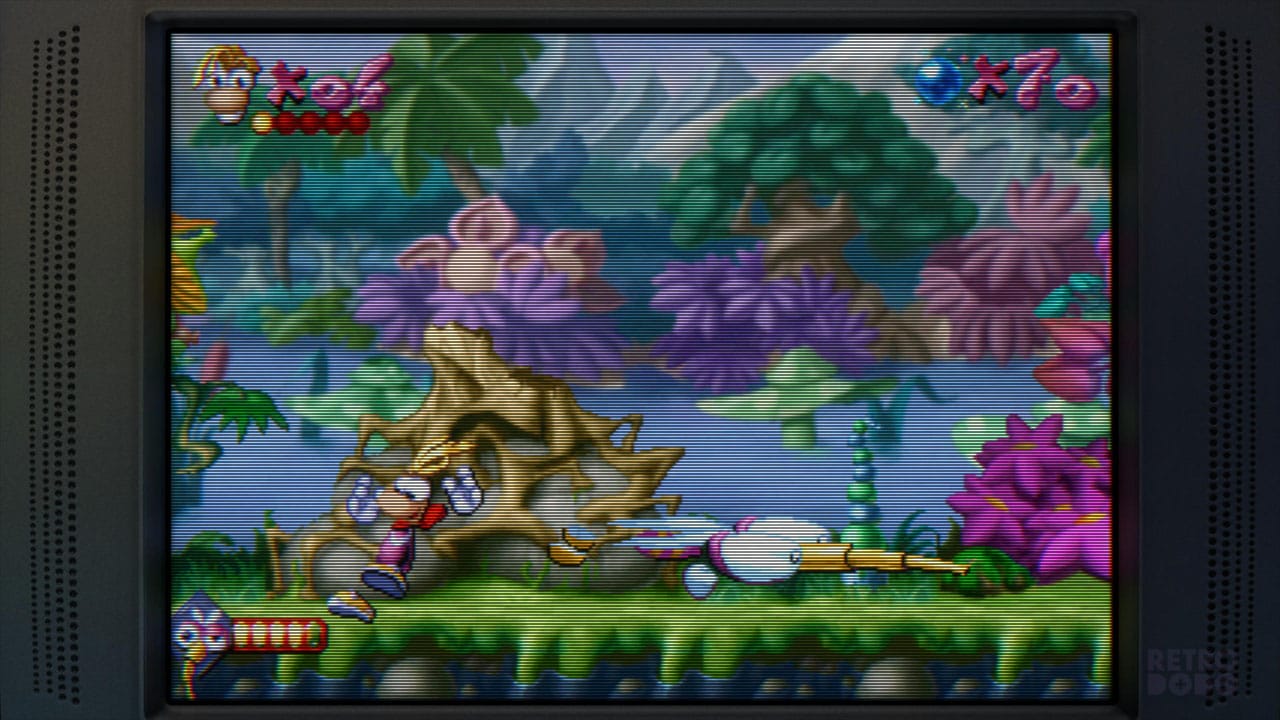
A few amendments to level layouts in the Jaguar version aside, sampling each title on offer here does feel like a game of spot the difference. As a collection, it’s great to see all of these versions on offer, and depending on how you first discovered Rayman, chances are the version that you played in the 90s is here. For new players, or indeed, those players short on time, I wonder how much value having four nearly identical games provides.
With so much similarity between them, I question whether a makeover in the Rayman Legend’s artstyle, that cherry picks the best bits of each version, could have been a better way to celebrate Rayman’s 30th anniversary.
Indeed, Ubisoft and Digital Eclipse have made changes to these games, which may actually provide the most divisive update to this anniversary collection.
Musique du jour
With the PlayStation harnessing the power of the CD-Rom, fully orchestrated music became a defining feature of many early PS1 games. Rayman is no different, with French composer Rémi Gazel, providing a rousing score with thunderous bongos paired with whimsical tracks that capture the fantasy of Rayman’s imaginative world.
For Rayman: 30th Anniversary Edition, that original soundtrack is gone. In its place is a new score from Rayman Origins and Rayman Legends composer Christopher Héral.
Héral’s music is beautifully orchestrated, full of plucky strings, floaty wind instruments and, naturally, some warming bongos. Unfortunately, the new score doesn’t gel with the on-screen action at all. There are whole sections of levels where the music just cuts away or loops strangely. It’s as if the score has been set on shuffle in the hope that it evokes classic Rayman enough that people won’t notice, or won’t mind the change.
And for many, the change in soundtrack might not be a big deal, but it’s strange that this collection, presented as the definitive edition, would omit the music that made Rayman so endearing to so many.
Héral’s soundtrack is wonderful in isolation, and I appreciate the effort that’s gone into creating it, but to not even have the option of the original score, like so many other anniversary editions have released with, is perplexing.
Limited Enhancements
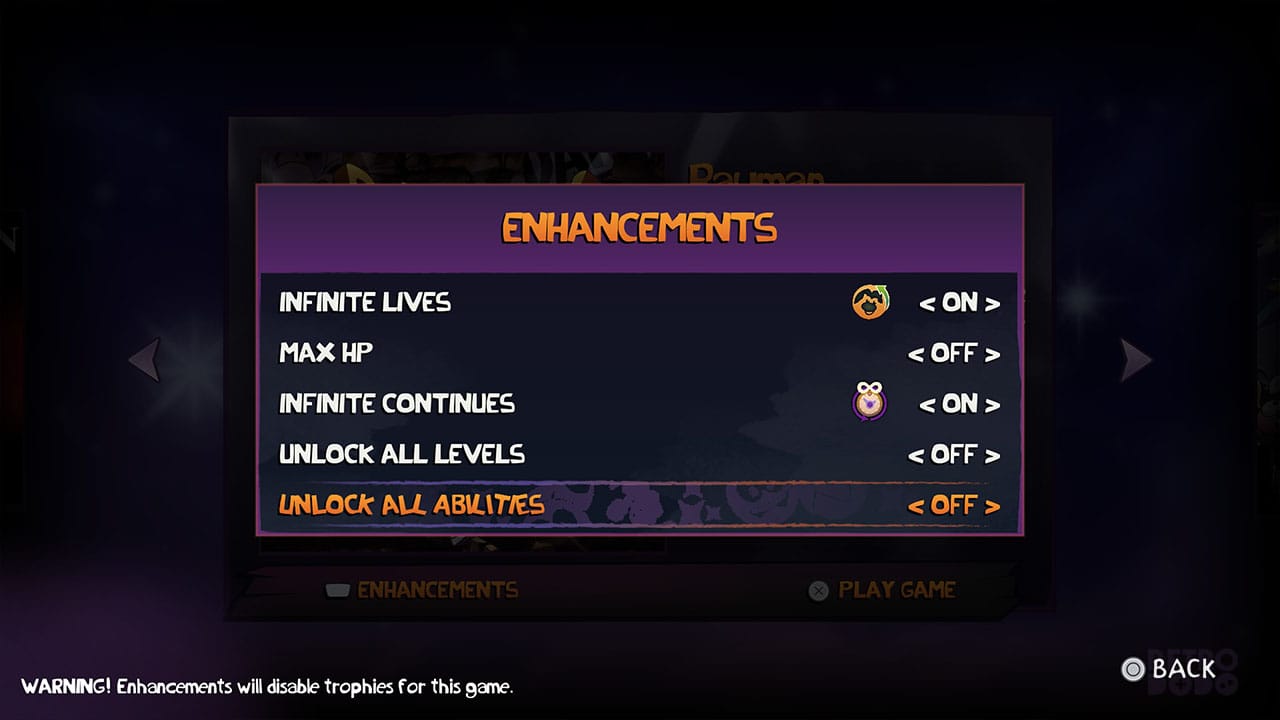
One of the big selling points of this new collection are the gameplay tweaks that make getting through Rayman easier. Infinite lives, max health, and unlimited continues are all welcome additions here, as is the option to unlock all of Rayman’s abilities right from the start.
From an accessibility standpoint, that all sounds great, right?
In theory, yes; however, these enhancements have only been added to the PS1 and MS-DOS versions of Rayman, meaning if you want to play through and experience the gameplay differences in the Atari Jaguar version, you’re going to have to ‘git gud’.
It’s another bizarre choice not to add these much-needed and very welcome optional enhancements to every game in this collection. One consistent saving grace is the new rewind feature, activated by squeezing the left trigger. Much like Ubisoft’s Prince of Persia, death is no longer inevitable, and players can brute-force their way through even the stickiest situation with liberal use of this time-turning trickery.
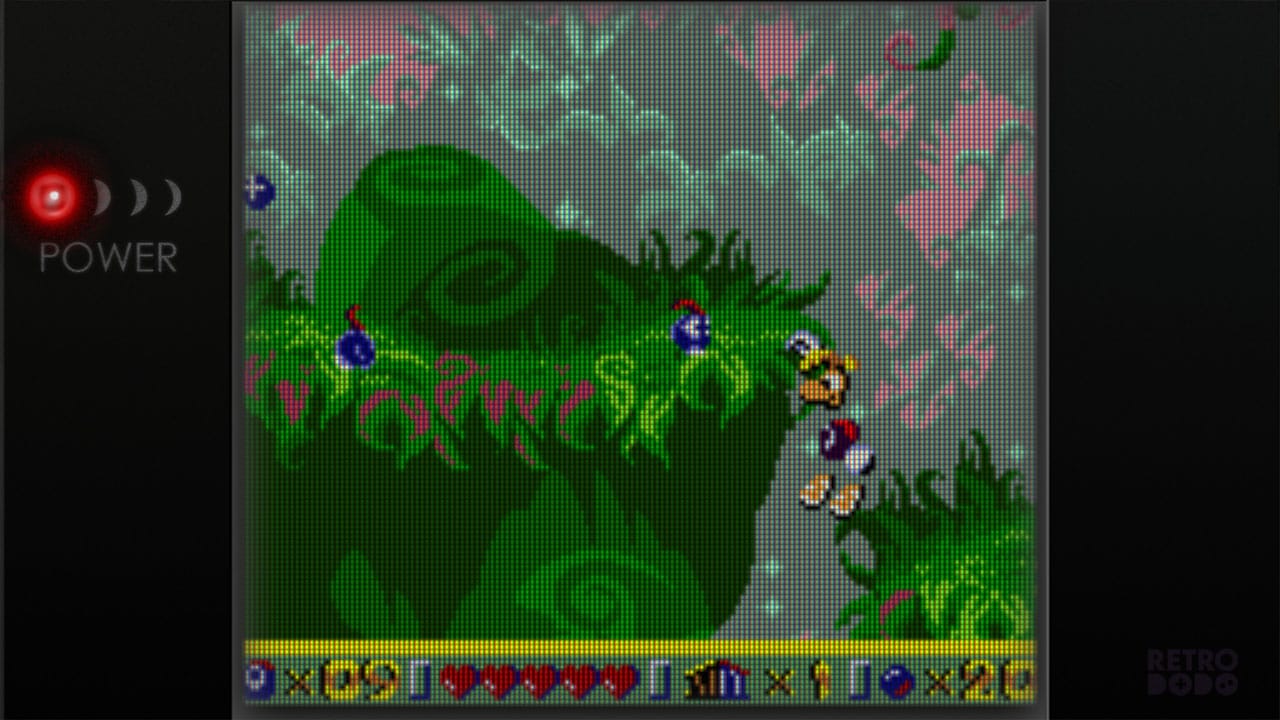
Thankfully, the visual enhancements and options fare better, with every title having a curated menu of options for aspect ratios and filters. The only gripe I have with the aspect ratios is that only the PS1 version seems to make the most of the wide screen option, which broadens the scene with extra visibility to the left and right, whereas other versions just seem to stretch the picture to fill modern displays.
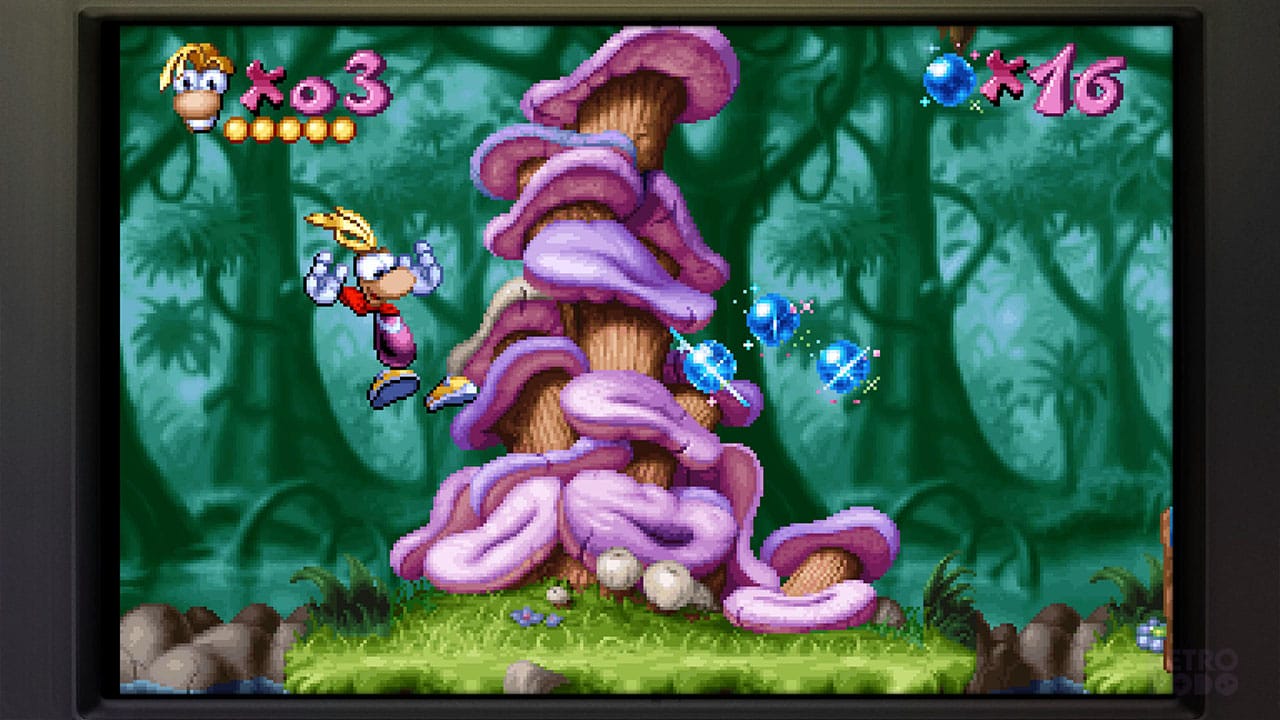
Outside of the PS1 game, it’s best to stick to the original 4:3 or full display options to maintain picture integrity. I adore the presentation of the handheld versions in particular, with a recreation of the Game Boy Colour bezel filling up the potentially empty part of the screen being a nice touch.
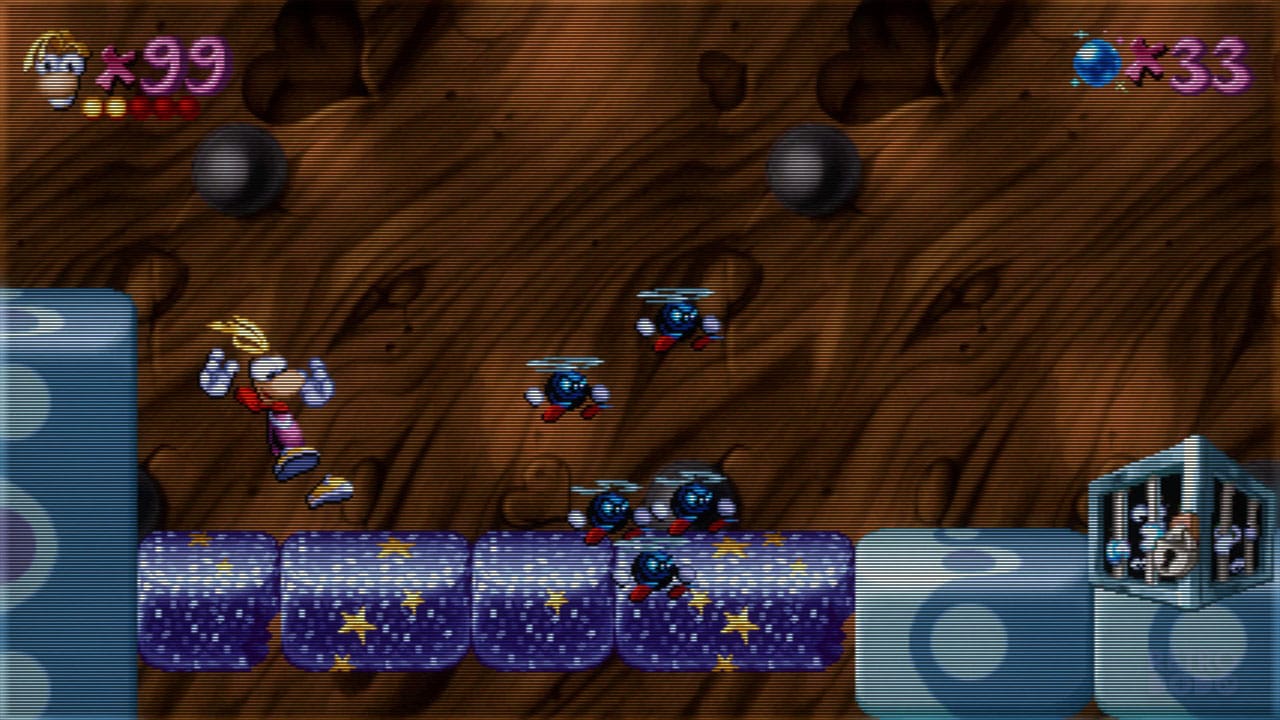
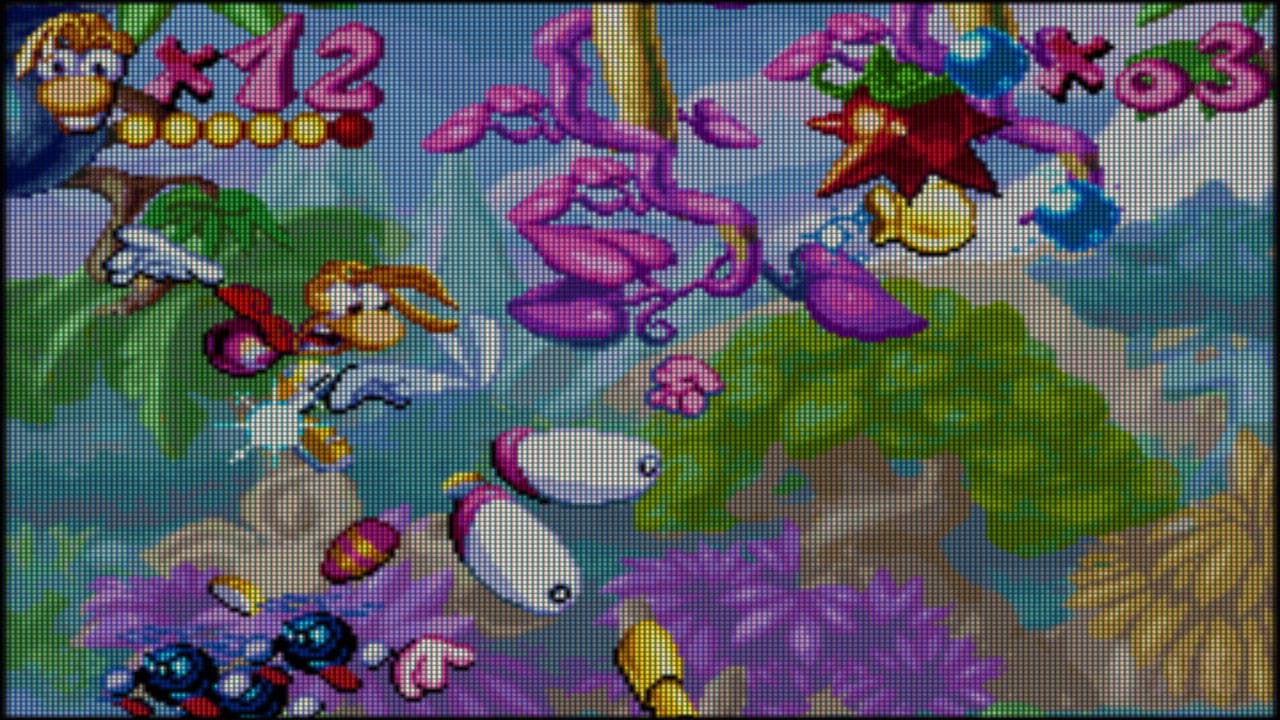
Likewise, the filters work really well. Depending on the game’s original platform, you’ll be presented with options for CRT, Curved CRT or LCD scanlines and filters, and I had a lot of fun switching between these options on the fly and admiring how good each of these games can look. My personal favourite was applying the LCD filter to Rayman Advance. The big, chunky sprites look incredible and pleasingly fill the screen with so much character and personality that I didn’t mind the camera being zoomed in so far to make the gameplay even harder.
L’Histoire de Rayman
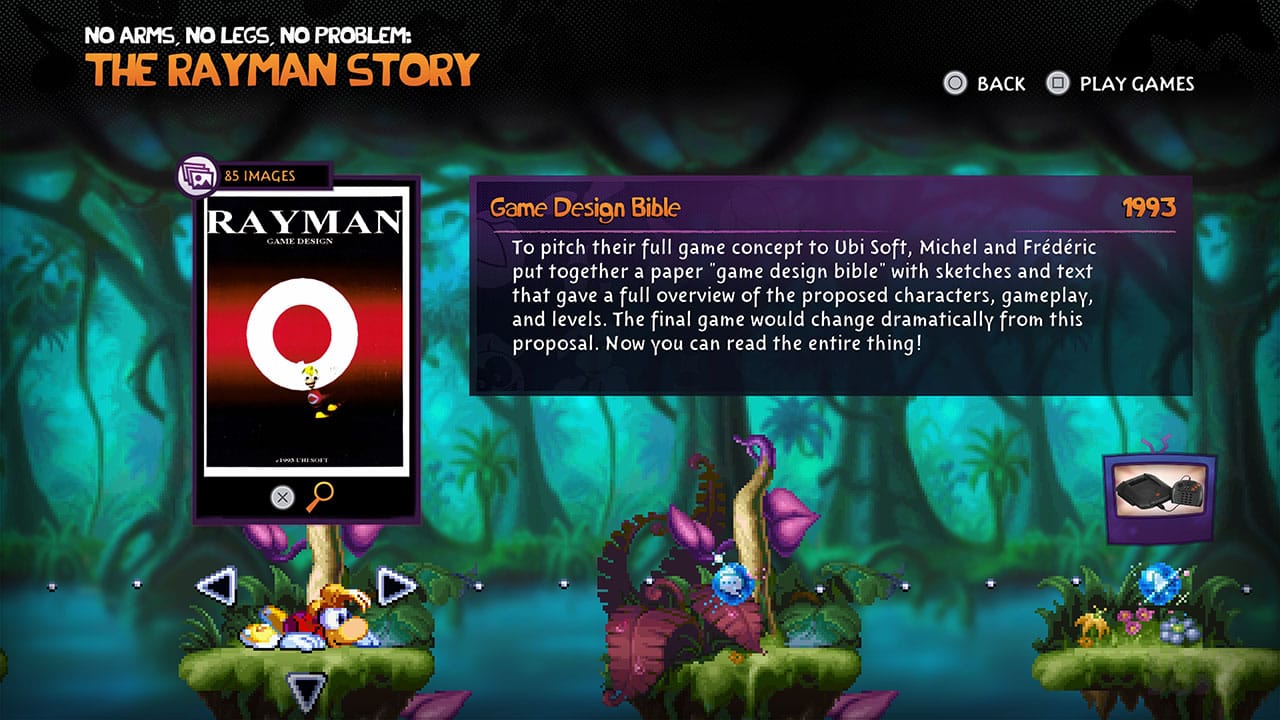
If you’re a fan of video game history (I assume you are, Retro Dodo reader), then you’ll definitely get a kick out of Rayman: 30th Anniversary Edition’s interactive museum. Presented like a level from the Glade of Dreams, the interactive museum guides players through the history of Rayman, from its inception by series creator Michel Ancel right up to the modern day.
The interactive elements are wonderfully curated too, and include some treasures that have never been released before. The highlight here is a long-lost SNES prototype of Rayman, featuring a slightly rounder, red leotard-wearing Rayman exploring a futuristic cityscape. It’s a novelty for sure, and one that most players won’t experience more than once, but getting to actually play these previously lost samples is a real thrill for armchair historians.
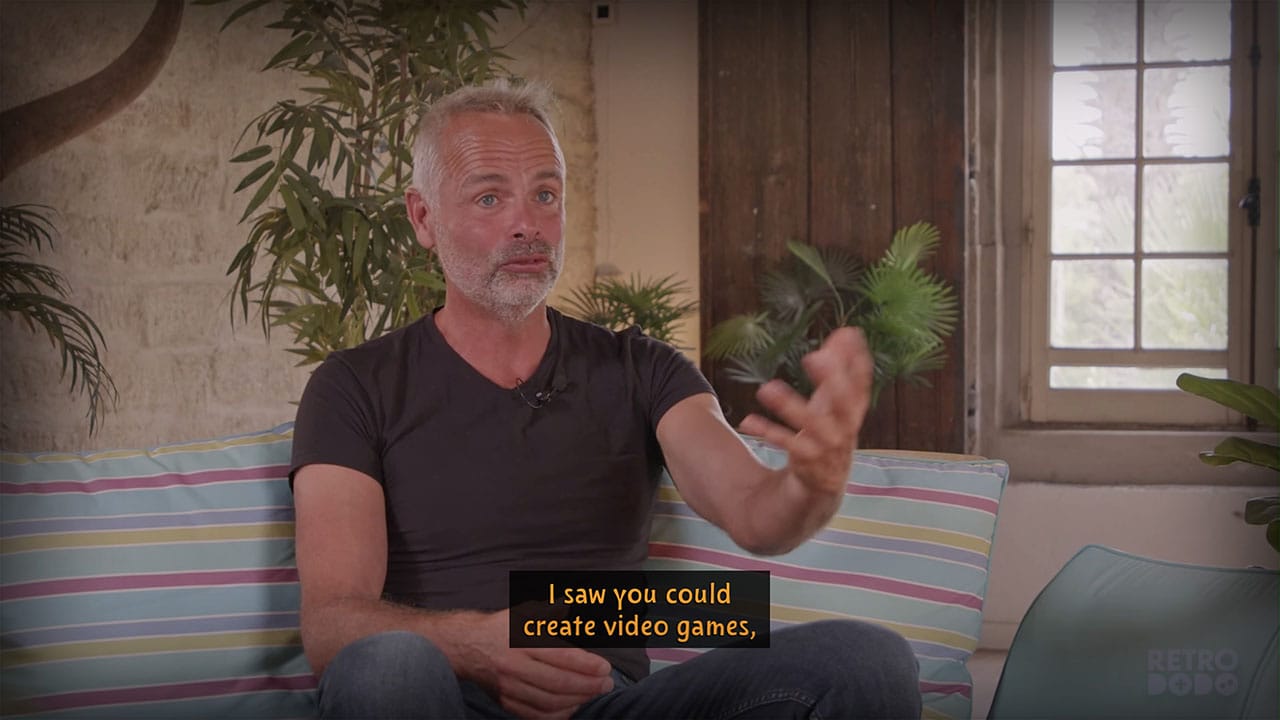
Much like Digital Eclipses' other projects, Rayman: 30th Anniversary features all-new documentary footage. Presented here in short snippets, this exclusive documentary runs for almost an hour and features interviews with Ancel and other members of the original development team behind Rayman. The human stories behind these games remain fascinating and add a lot of value to the collection.
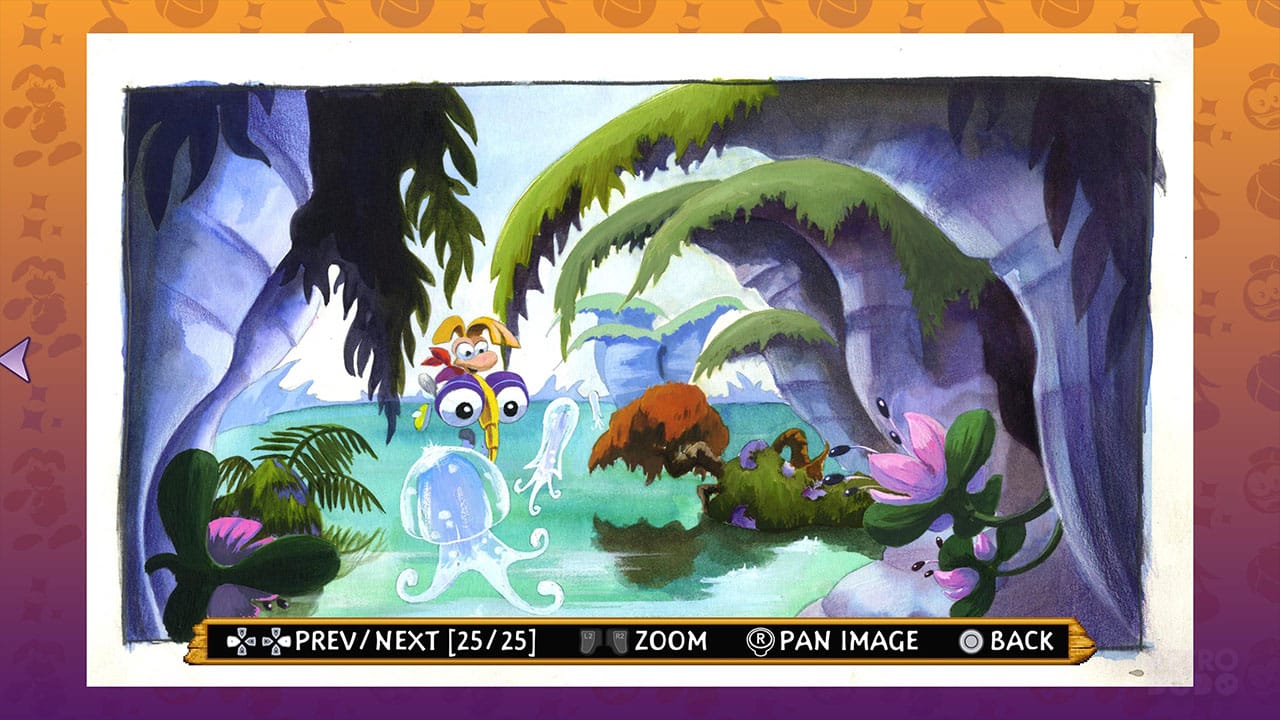
Throw in a gallery of photos, concept art and even the original, 85-page-long design bible for Rayman in its entirety, and there’s a wealth of curiosities here for fans to sink their teeth into.
Overall Opinion
- Quality of life enhancements make the PS1 and MS-DOS games much friendlier.
- Meaningful interactive museum with plenty for fans and newcomers to enjoy.
- Well-implemented visual effects and filters.
- Inconsistent application of enhancements means most games remain exceptionally tough.
- Limited variety in the games on offer.
- The omission of the original soundtrack is a huge letdown.
With his spherical purple body and big nose, I certainly identify more with Michel Ancel’s hair-spinning creation more now than I did back in the 90’s.
My own personal nostalgia for the PS1 original is, in some ways, bolstered by the quality of life enhancements that make playing through Rayman a much more gentle affair, but then the overall package feels incomplete and lacking.
As a fan of the series who is desperate for a sequel to 2013’s Rayman Legends, it’s great to be able to experience the different versions of this classic game in its various forms, and I have no doubt I’ll still be battling my way through those bonus MS-DOS levels for a long time to come.
With that said, and despite some lovingly curated curiosities and welcome enhancements, the inconsistent implementation, along with the lack of the original soundtrack, means Rayman: 30th Anniversary Edition ultimately falls short of its self-proclaimed definitive status.


![All Pokémon TCG Sets In Order [Full English List] post image](/content/images/size/w1600/format/webp/2026/04/pokemon-tcg-sets-list.webp)