


Mangi has been a manufacturer that popped out of nowhere in 2024 and released a handheld called the Air X that impressed many, all thanks to its sub $100 PS2 and Gamecube performance. A handful of PS2 games could be emulated in a category that was known for having difficulties in that area. Somehow, Mangmi pulled it off, and it officially put them on the map.
Then, in 2025, they released a larger, more powerful Android device called the Pocket Max, with excellent PS2 performance at upscaled resolutions on its 7" display, alongside the ability to play most of your high-end Android games at Max settings, featuring a first-of-its-kind modular button layout that excited me and many who had a larger budget of $229.
And now, their third product wants to target gamers who want performance between the Air X and the Pocket Max in a vertical form factor and for those who have a budget of under $200.
This is the Air Y Pro, a vertical retro handheld coming in at $159 - $189 depending on your RAM choice, with good PS2 performance and a nice display, yet I can't help but notice that it misses Mangmi's magic, the very magic that made its previous two handhelds exciting.
- Release Date: 12th August 2026
- Where To Buy: Mangmi's Official Website
- Price: $159 - $189
Mangmi Air Y Pro Specifications
- Processor: Qualcomm SD865
- RAM: 4GB / 8GB LPDDR4X
- Storage: 64GB UFS 2.1 / 128GB UFS 3.1
- Cooling: Active cooling
- Display: 4.2" 1280×960 IPS
- Connectivity: WiFi 6 + Bluetooth 5.1
- Ports: USB Type-C, TF card slot, 3.5mm headphone jack
- Speaker: Dual stereo speakers
- OS: Android 13
- Battery: 5000mAh
- Charging: 18W
- Other Features: Customizable key, Volume wheel, 6-axis gyro
- Size: 144.84 × 94.64 × 23 mm
- Weight: 286g
The Handheld Design & Button Quality
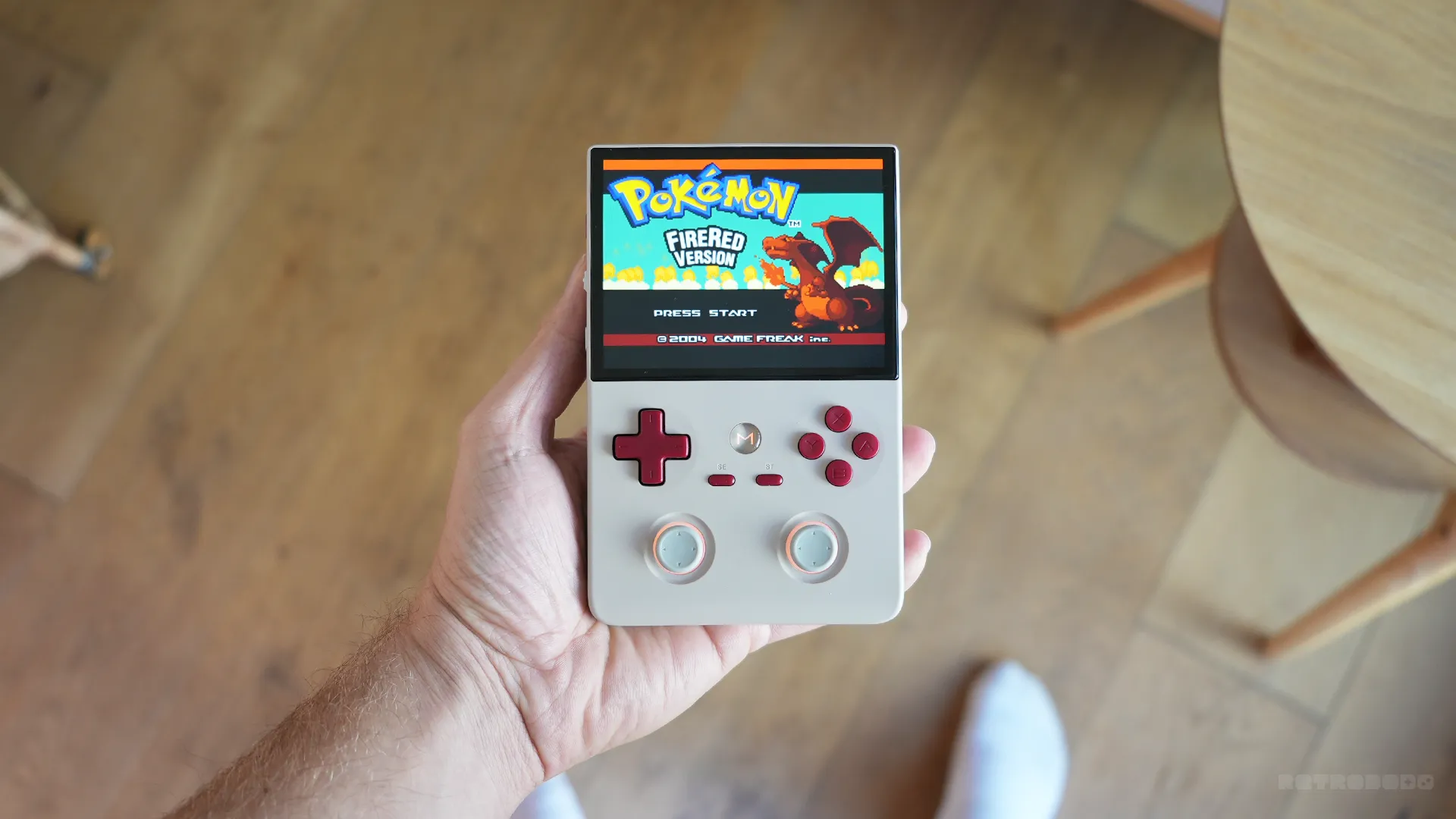
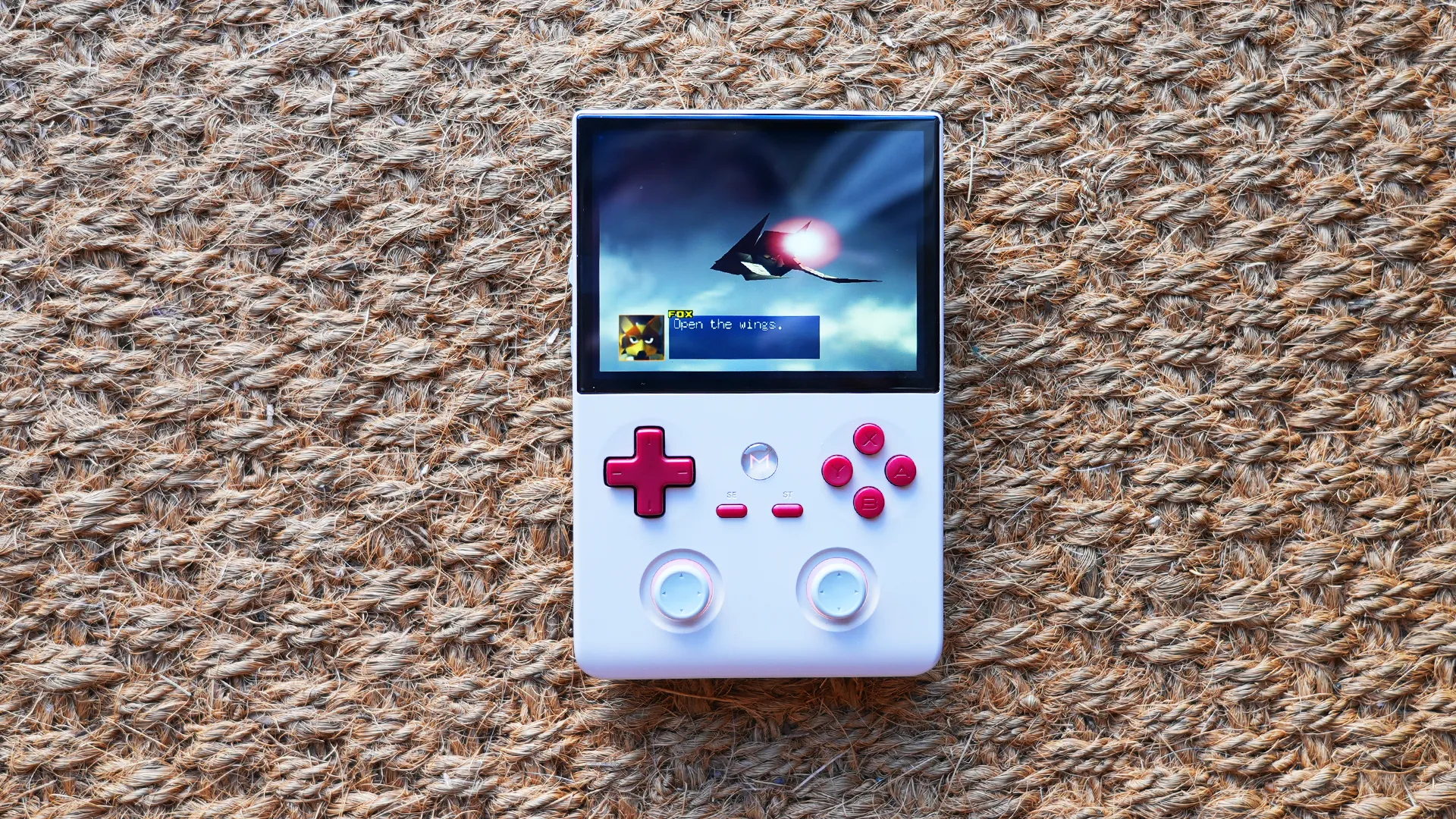
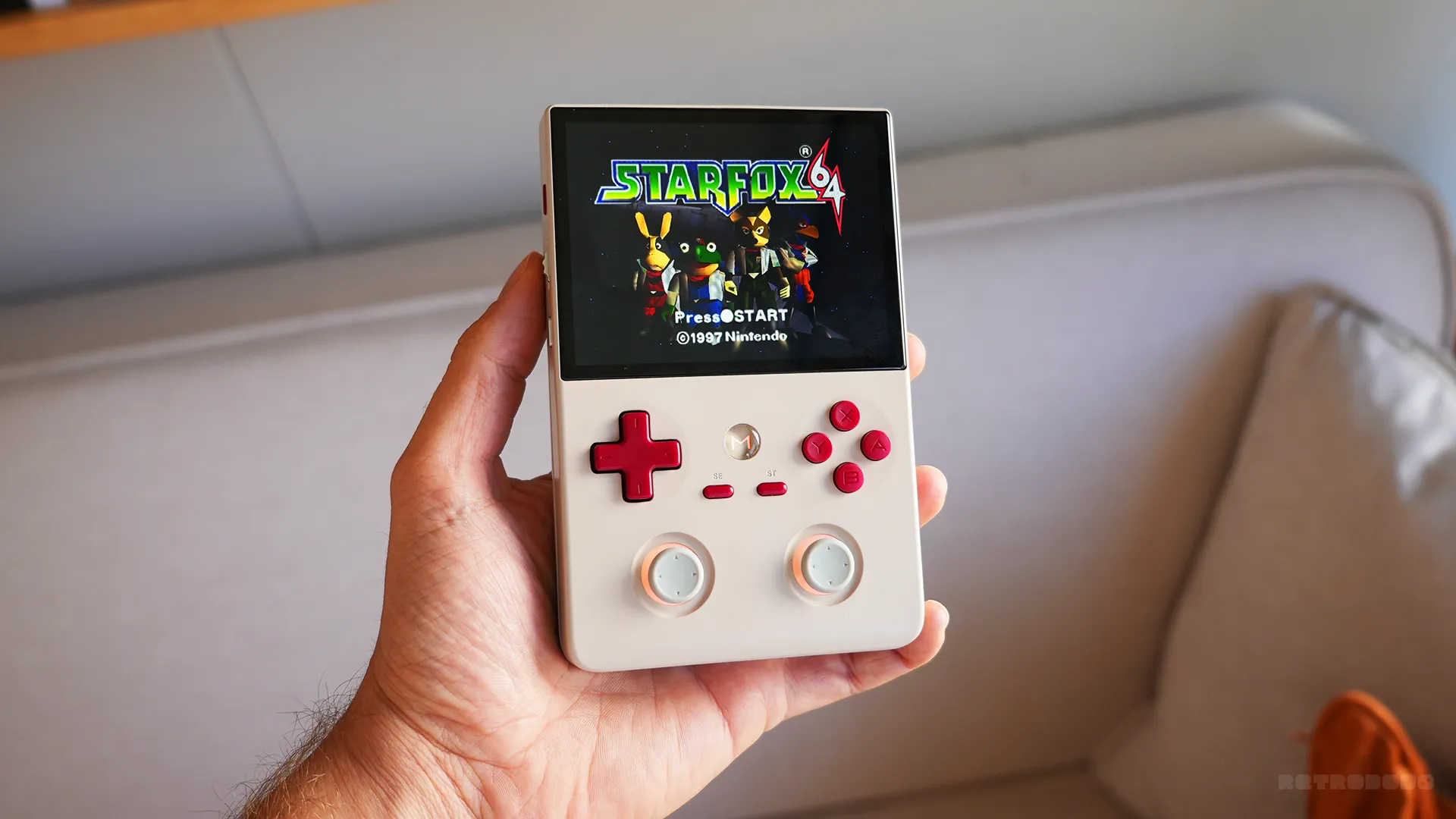
The Air Y Pro looks like a very minimal device. The shell itself is a solid colour, with no engravings, markings or anything that takes away your focus from the game. Plain, some would say, but I think that's been done on purpose; it gives it a sleek look that somehow pairs well with the layout of this device. It comes in three different colours, white, black and retro.
Half of the face is taken up by the 4.2" IPS display, which has a resolution of 1280 x 960, making it a 4:3 display that fits many of your retro games perfectly, maximising the usage of every pixel possible. It comes with minimal bezels and edges that are slightly curved.
A year ago, this display would have impressed me, it's bright, colourful, pairs well with my library of games, but it comes just as I finish my review of the Retroid Pocket Nova, a hadheld that featurs a OLED 4:3 4.5" display that literally blew my socks off, as i said in the review, it's one of the most beautiful displays i've seen in a retro handheld, in all my time reviewing these things. So, unfortunately, it's opened my eyes, literally, to these previously "great" screens. Now they're a little lacklustre in comparison to what Retroid just released, and that's dampened my experience with this device slightly.
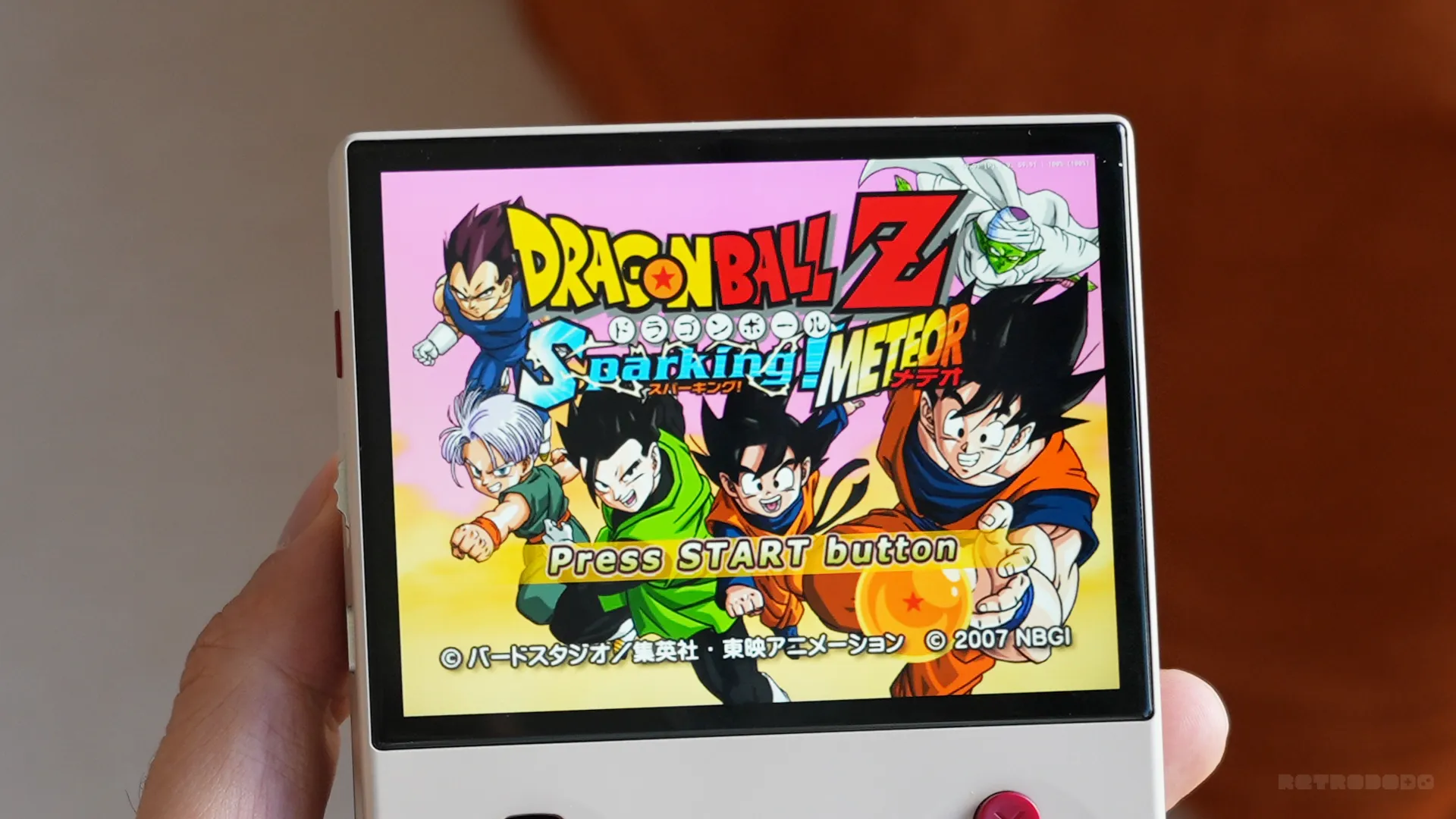
The counter-argument here in terms of the display is that the Pocket Nova costs $239, substantially more than the Air Y, which is completely fair to say, but of all companies, I was hoping Mangmi would do something a little wild in this space, and unfortunately, as you'll see in this review, they haven't.
Below the display, you will find an array of buttons and sticks. The Air Y Pro comes with two hall-effect joysticks, whereas the normal Air Y comes with one, quite simply because it doesn't need a second due to its less powerful specifications. These sticks are nice, have customisable LED backlights, and sit high enough from the bottom to make it comfortable to play on for long periods of time. They have a good range, good motion, removable tops, and do the job well; there are no complaints here.
The action buttons are high quality, the plastic used feels strong, with nice engravings on them, strong presses with feedback and very little movement to them, so you won't hear any rattling. A and B are rounded, whereas X and Y are concave, which is a nice touch. The DPAD for me is a little... long. I don't know how to explain it, but the directions are quite thin, so you do have to feel your way around this DPAD a little more in comparison to larger ones found on competitors' devices. It's not a problem, but this design is noticeably different to many on the market. They work well, though, with good directional separation, but it makes moving your thumb between the directions quickly a little bit cumbersome, so fighting fans won't like this DPAD, I'm sure of it.
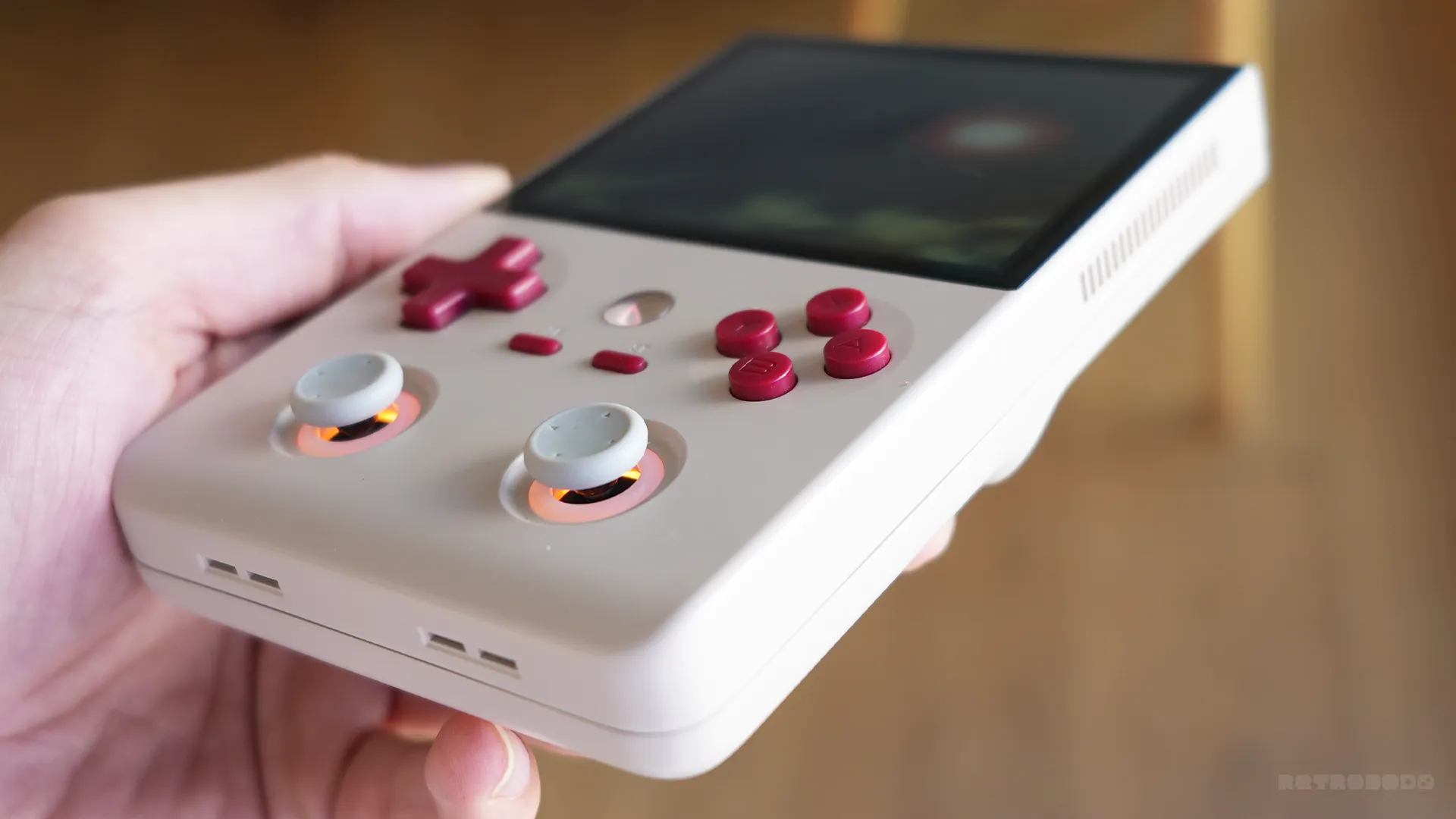
Between them are your small start and select buttons, which feel different when pressed. It must be a inconsitency in the membrane below, but one requires a harder press than the other, and feedback is different between them both. I don't like this; it feels off and feels like a mistake. Then there's the Mangmi button that lights up and features a transparent plastic bowl that feels and looks cheap in my opinion, like one of those cheap plastic keyrings you get for free in a cereal box.
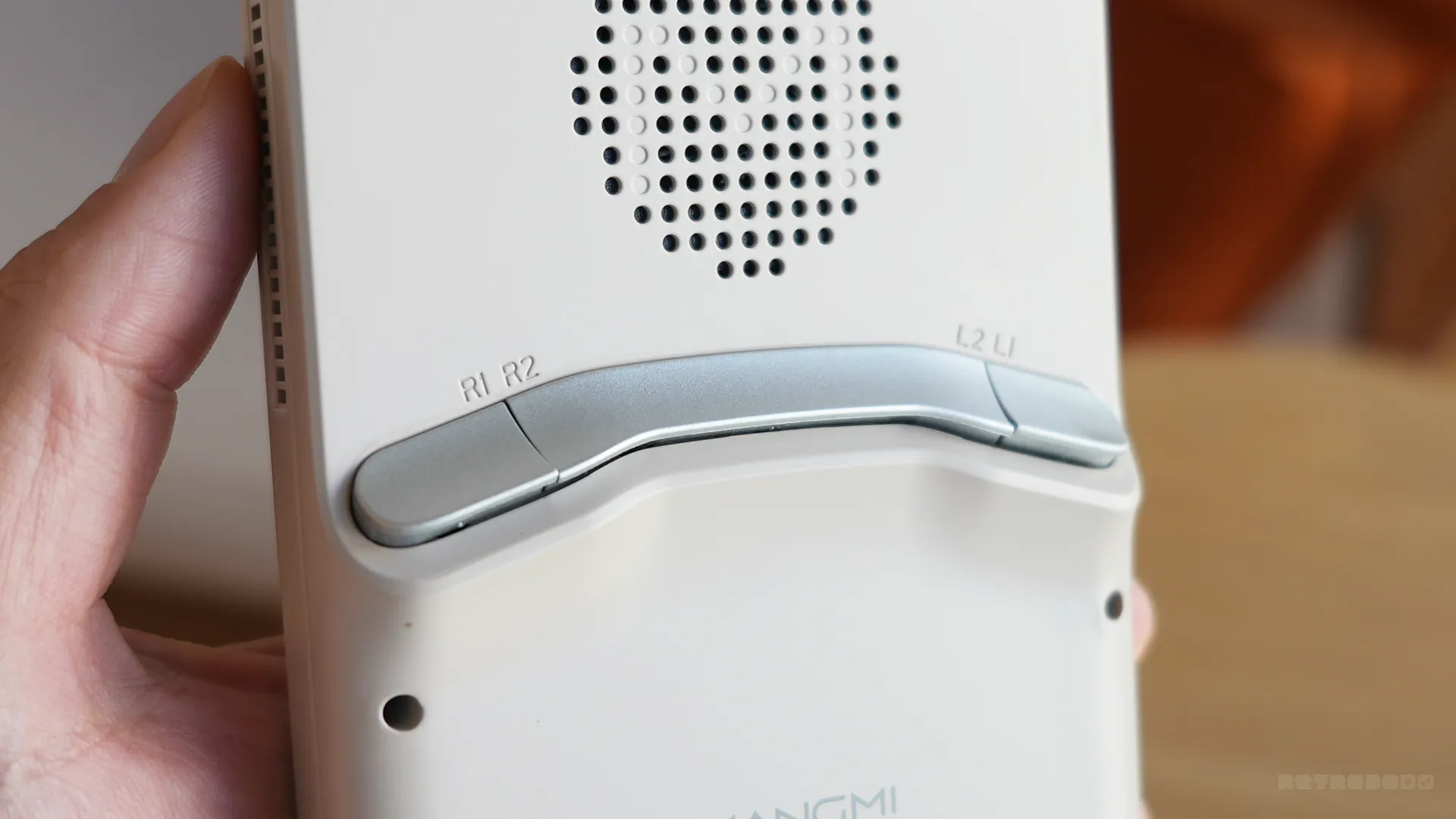
On the back, some of the worst shoulder buttons I have reviewed in a long time. It's a long bar that tilts at the edges for R2/L2, which visually, I really like; it looks sleek, it looks different and gives off a modern look, it reminds me of what AYANEO did on the Pocket DMG. But somehow Mangmi hasn't executed it well; the R2/L2 buttons barely press down at times, the whole bar can be moved if pressed in a certain place, and if you press one side, it lifts the other up higher to make your opposite press inconsistent, making me misspress all the time, or it goes the opposite way and won't press down at all. I honestly don't know how this got through Mangmi's quality checks. It's a terrible choice of shoulder buttons and brings the entire device down when it comes to gameplay quality. R1/L1 are just about usable, but R2/L2 are awful.
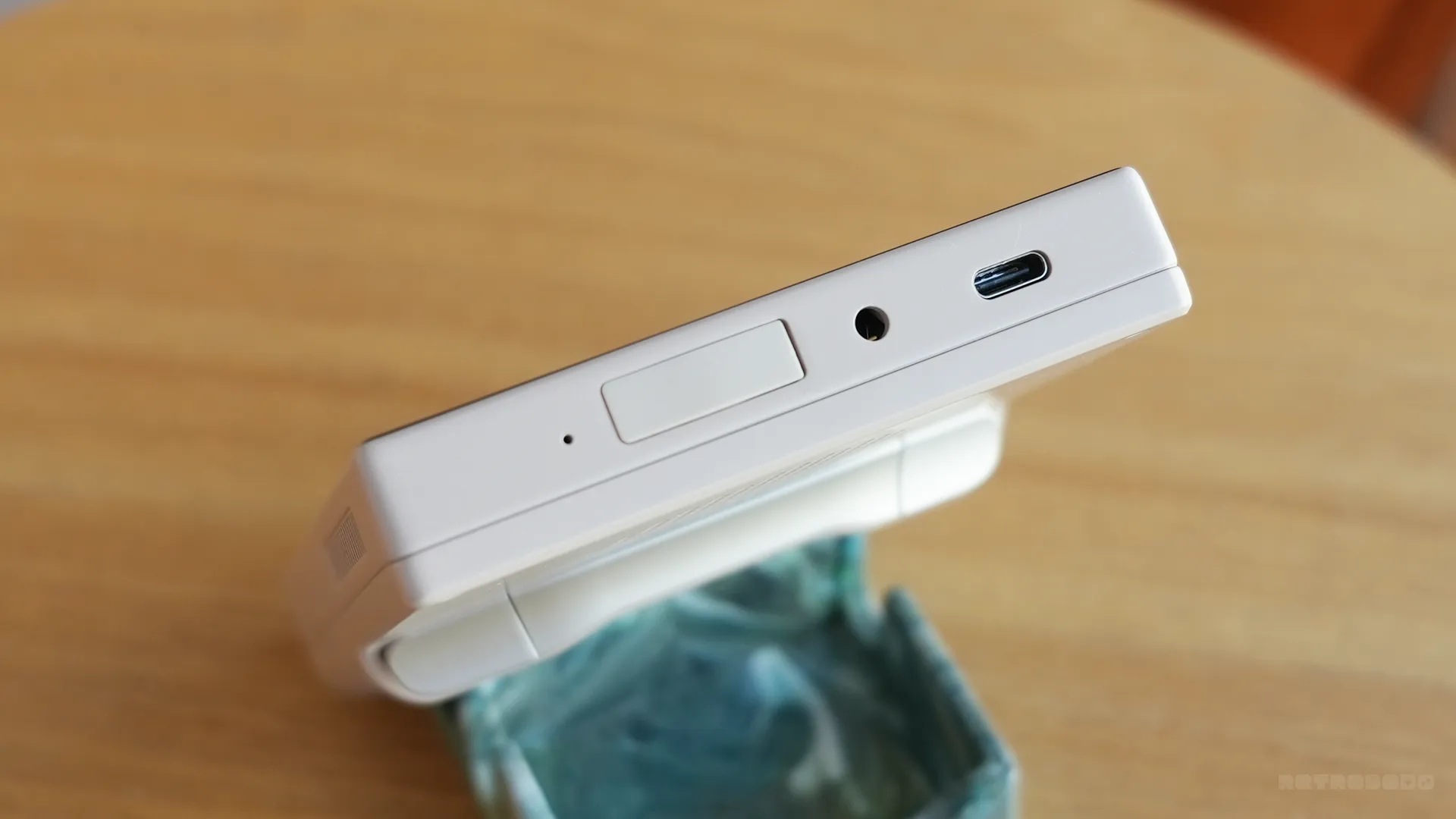
Finally, around the edges, Mangmi has organised the buttons well, featuring a volume wheel which works well and feels nostalgic; this can also be pressed in to mute the console. I prefer this over buttons, which I know is a little bit contradictory in the space, as wheels can be accidentally moved. There's an on/off button, a headphone jack which I'd prefer on the bottom, a mappable button, a USB-C port, an SD card slot with an awkward cover that doesn't fit perfectly, and on the bottom two very discreet speakers that are of great quality, even at max volume. Speaker choice was good here, and just like the Pokcet Nova, I feel like the industry has found a new supplier for this, offering better quality in most new handhelds of this price range.
OS/UI
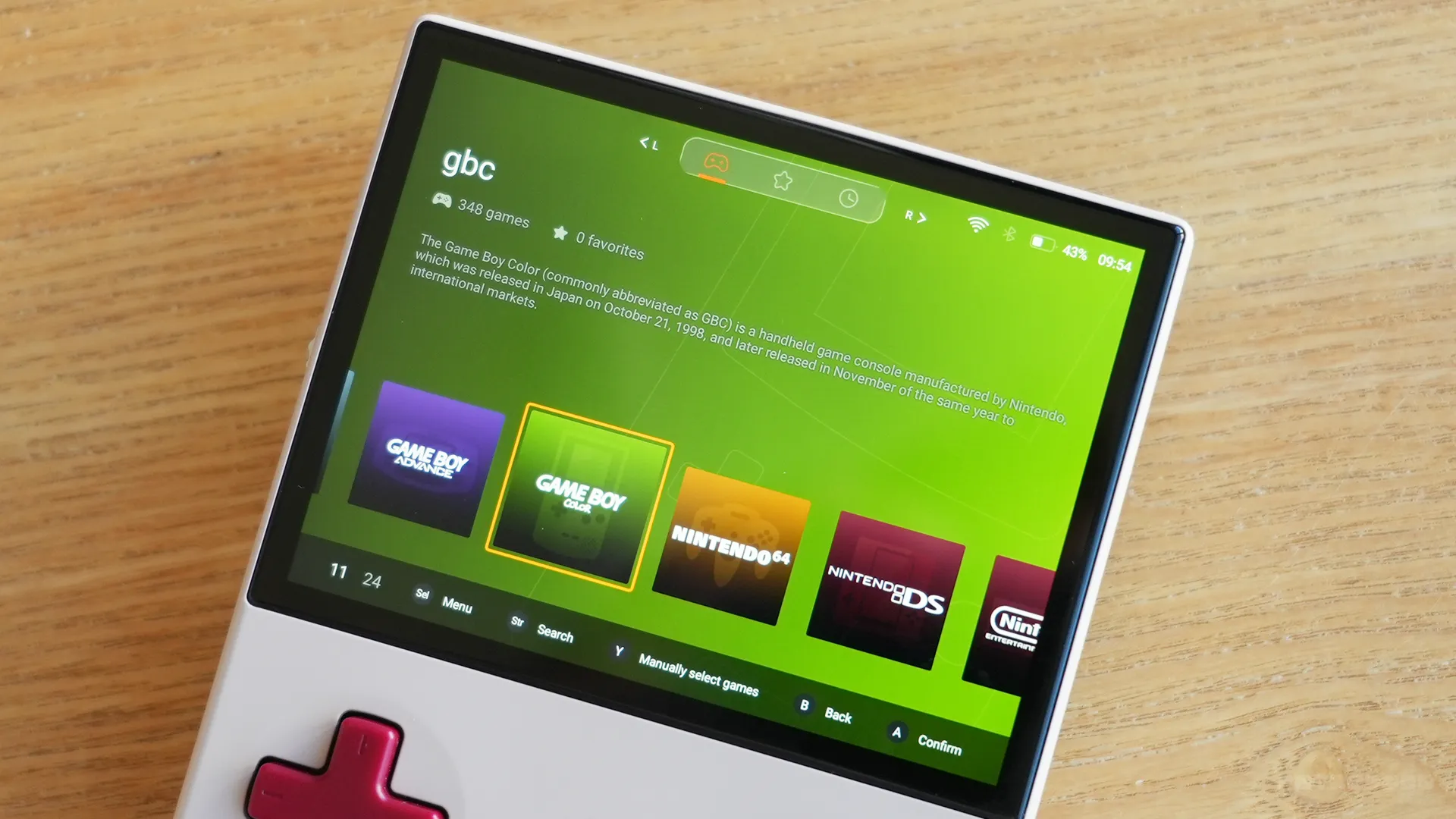
The Air Y Pro runs on Android 13, a very common yet old OS for retro handhelds of this chipset. It allows for deeper customisations in comparison to Linux, better performance and offers Android apps, games and emulators to work flawlessly, turning this not only into a retro games console, but an Android one too.
Mangmi has created their own launcher, and visually it's very sleek, minimal, offers some internal customisations and is a pleasant way to visualise your ROM library. It kinda looks like the Nintendo Switch UI in a way, but unfortunately, I have been having some minor issues with this launcher.
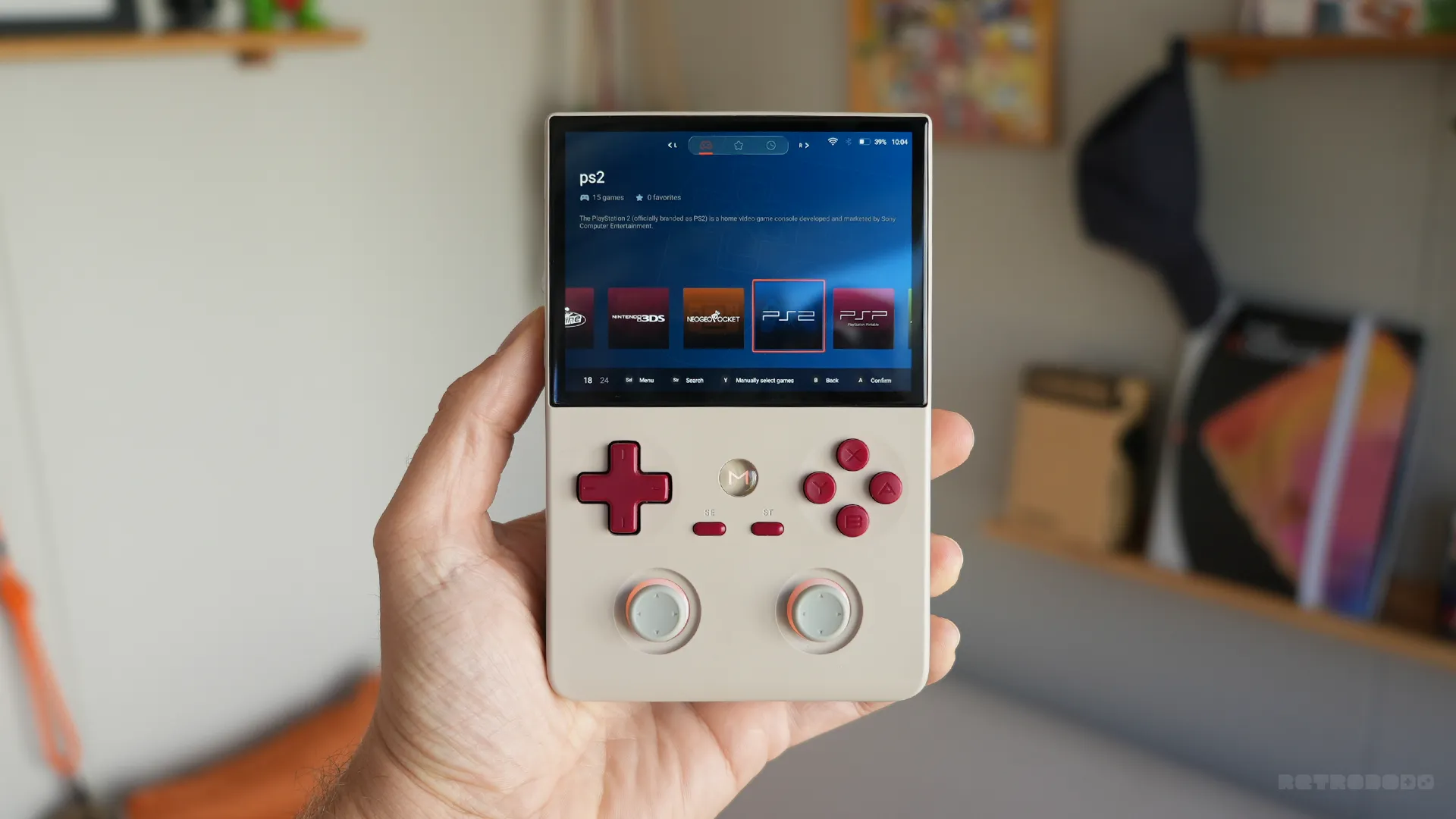
The first is that it couldn't automatically retrieve all of my ROM library, some would go missing, and secondly, the most annoying part is that there's some kind of bug on my unit that will open the game using RetroArch and then three seconds later it crashes, forcing me back to Mangmi's launcher without opening the game. I am not sure what caused this issue, but with every other handheld I have reviewed over the last year or two, this has not happened, so I believe there is an issue with Mangmi's launcher not pairing well with RetroArch when it automatically tries to open a video game via its library. I eventually fixed it unknowingly by moving around some ROMs, and manually syncing the folders, which has sorted it, but it wasn't an easy task, and I even met with some Chinese text in the English menus.
This has forced me to open up the applications and games outside of Mangmi's frontend, and to also download my own frontend like Socket, making it completely redundant. This happened in two different software updates. So, for those wanting it to automatically source and manage your ROM files out of the box, you may be disappointed. This requires tinkering and manual setup straight out of the box, and it's a shame Mangmi didn't see these issues, because it will certainly put off newcomers. There's no doubt they'll fix this with an update, and likely by the time it has officially launched on the 12th of August, but I am reviewing my device as is, and the launcher is super buggy.
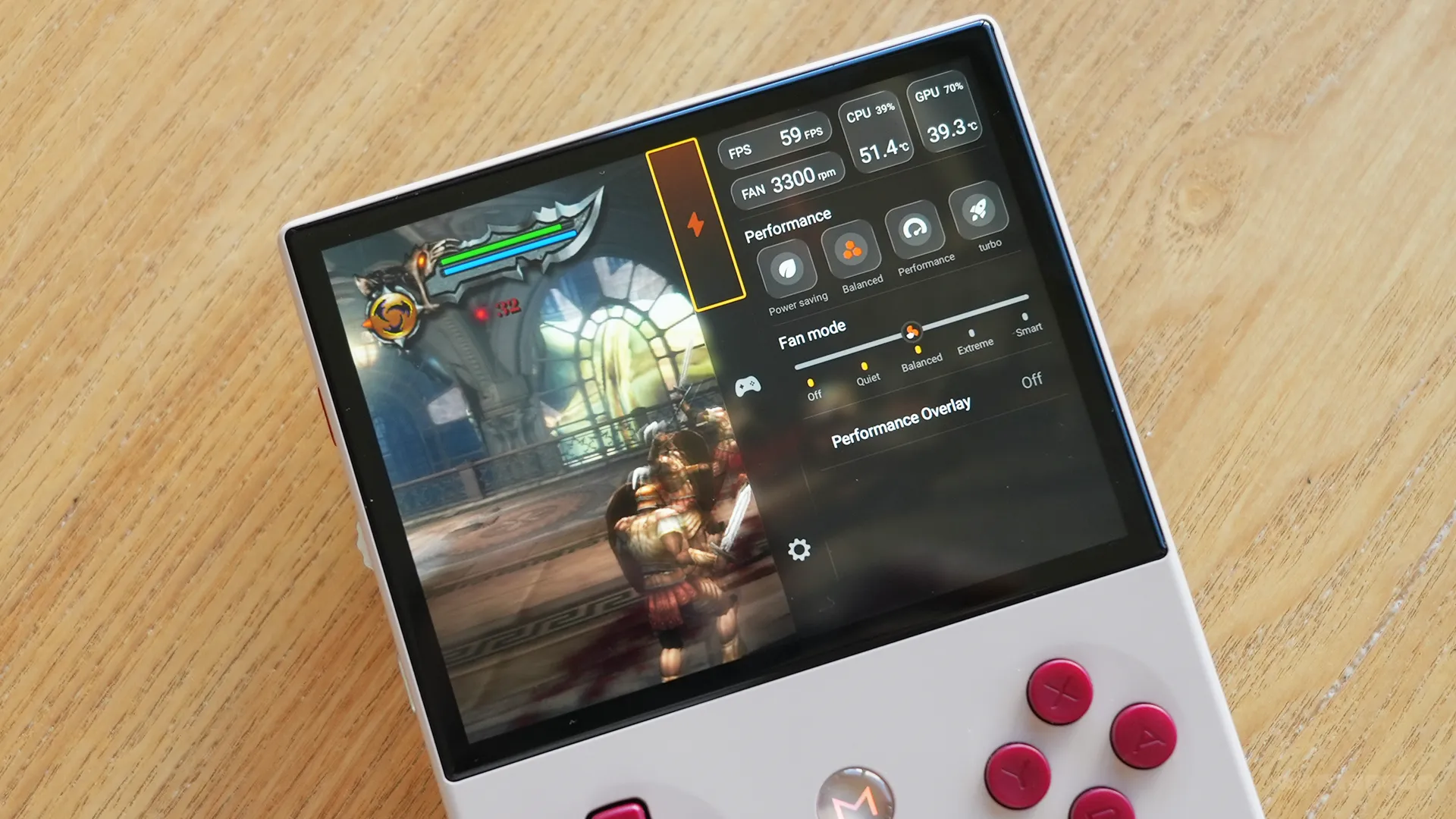
There is a sidebar menu that can be accessed by swiping down on the display or long-pressing the Mangmi button. This will quickly show FPS, fan speed, CPU/GPU usage, and allow you to switch between performance modes on the go.
Emulation/Gaming Performance
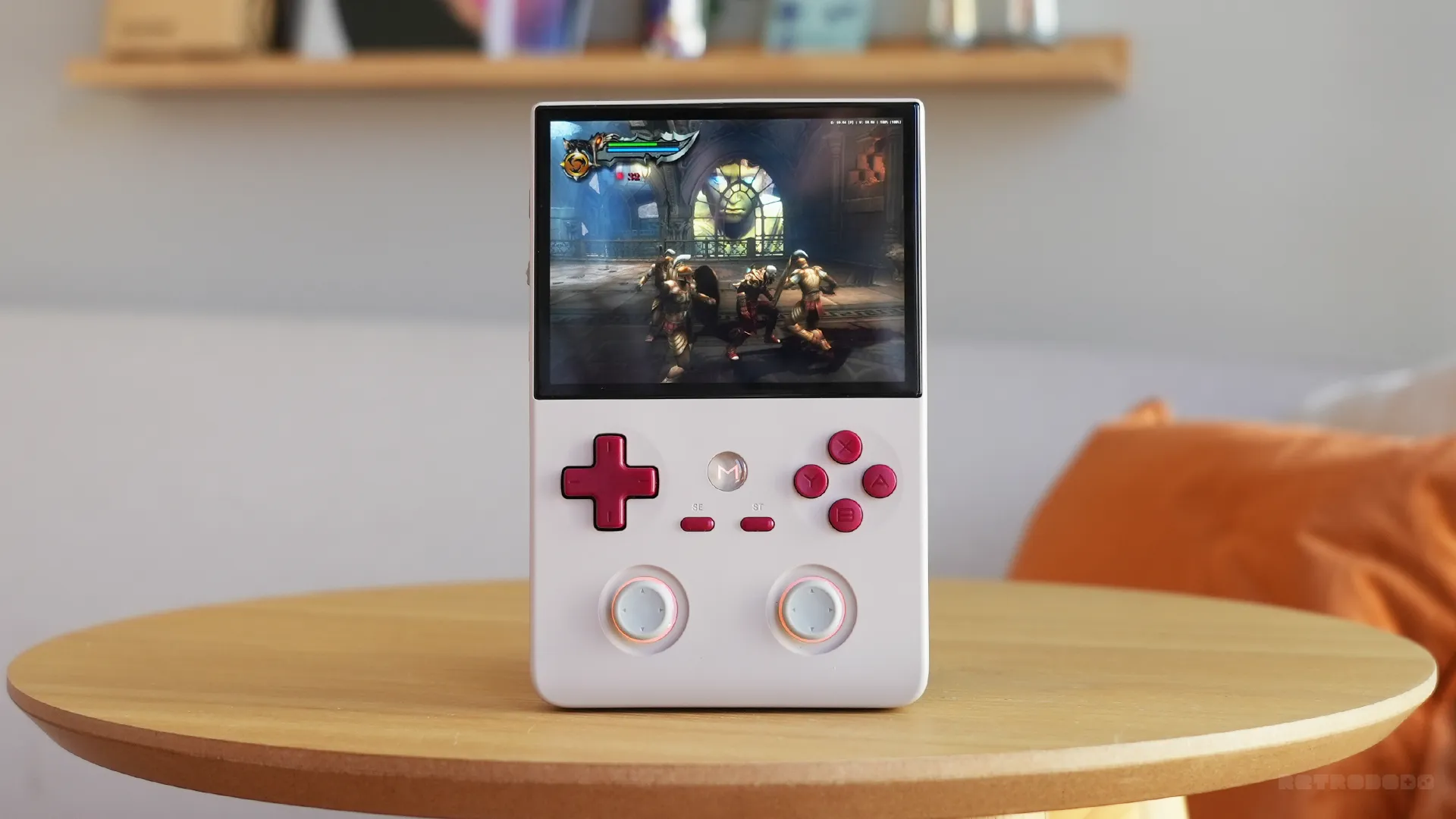
Mangmi have always made well-performing devices, and the Mangmi Air Y Pro is another one to add to the list. I've had a bunch of fun playing higher-end games on in here in a vertical format that can actually handle upscaled PlayStation 2 games. My 8GB Air Y Pro is an absolute beast and is one of the most powerful verticals I have reviewed in a long time.
For example, it's so powerful that I was playing Need For Speed: Most Wanted on here at 1.5x native resolution very comfortably, which is impressive on a device of this size. The vertical format is very comfortable too, thanks to the curved edges and button placement, and if you ignore R2/L2 it's a very pleasant gaming experience overall.
And that means Gamecube, Dreamcast, PS1, Nintendo 64, Nintendo Wii and more work incredibly well at upscale resolutions on this 4:3 display that's justa bout big enough to not feel cramped, and smaller and games such as PS2 and GameCube would not be as comfortable, so I'm glad Mangmi went for a large 4.2" display on here.
It has to be mentioned that there is some very, very minor ghosting on here, only seen in old consoles such as GAME BOY and the NES. It's unnoticeable to many, but it is there, and it can be seen in games such as Pokemon Yellow, where some areas of the game, such as paths, grass and water, look a little jittery or animated when you move around the display. Mangmi attempted to fix this with a software update, and although it improved, it's still there, so I can imagine this will likely be ironed out at launch, but if not, that's a bit of a bummer, because as many of you know, I am a big GAME BOY Color fan and play many of the games on that console frequently. It's not a big issue, but it's there.
You can also just about dabble in some Android games on here, although games like Diablo Immortal and higher-end games mean very small text due to the screen size, so I think many users will pick and choose depending on what feels natural on the screen. Performance on most Android games is great, which is to be expected on a $180+ Android handheld.
Battery Life
This comes with 5000MAH of battery, which is fairly normal in the industry at the moment. This offers a wide range of lifespans, all dependent on what you are emulating. For example, if you're just using PS2 emulation, it'll last around 3 hours on a single charge, sometimes less if you're really pushing it. However, if you're using it for lower-end stuff like GAME BOY and NES, you'll get over 8 hours out of it. So the range is very considerable.
You will find yourself managing the battery life if you do emulate higher-end stuff, especially if you're taking it out for more than a couple of days. The size of the battery forces these vertical handhelds to be on the wider size; that's just the sacrifice we have to make. My Air Y Pro has 18w fast charging too.
Overall Opinion
- Impressive Emulation Performance
- Comfortable Design
- Competitively Priced
- A Nice Sized 4:3 Display
- Terrible Shoulder Buttons
- Buggy Frontend Launcher
- Does Nothing Unique Like Mangmi's Previous Devices
Overall, this is a very powerful vertical handheld, one I know many vertical enthusiasts will enjoy if they're happy to tinker past the buggy frontend entirely. The display size is great, the design makes it comfortable for long periods of time, and it can handle most of my higher-end retro gaming library, proudly.
Mangmi has always nailed performance; they're a brand I can trust in this area. However, it's disappointing to see that they've let a few things fall through the cracks, such as the low-quality shoulder buttons, the buggy frontend launcher and small areas of the buttons that don't look great, such as the Mangmi button and the cover for the SD card slot. I trust that Mangmi will iron out the software issues pretty quickly.
This device is almost great, and is priced reasonably considering its power, size and specifications in comparison to the competition, though it's going to be a hard one to market in my opinion because it does nothing uniquely. The industry is craving something different, hence why the RG Rotate did well, and the Pocket Nova too, with its 4:3 AMOLED display. I'm slightly disappointed that Mangmi played this one safe, whereas their previous devices took a risk and did something different, and it's why I fell in love with them.
If you want a very powerful, reliable vertical Android handheld, this is one of the best on the market, but if you're after something that is unique, fun and different, you're better looking elsewhere for now.


