


Video game adaptations - they've not always been great, have they? We've had some stinkers, it's true, but there have been some diamonds in the rough along the way that have made small pockets of fans happy, even if they have infuriated critics in the process.
When I think about video game movies, my mind instantly goes back to Super Mario Bros. I know, I know, some of you might not want to think about it, but we're going to have to for a little while, because that's where our story will begin. I know, I'm probably going to give you all nightmares about getting shrunken Goomba heads, but trust me - it'll be worth it.
In this article, I'm going to look at the evolution of video game movies over the years. I'll be looking at where the directors and writers went wrong, why they failed, and why we're now in a golden age of video game adaptations that are making billions of dollars!
Super Mario Bros. Kicked It All Off
I've done a lot of research into The Super Mario Bros. Movie of late. It's one of those movies that I remember watching as a kid and thinking, 'What the heck is going on here?' I definitely think that I had the mindset of 'This isn't Mario...', but then again, the film was never really made with kids in mind. And yeah, that was probably where they went wrong.
You have to remember that back in the 90s, there hadn't been a video game adaptation before. I know that's wild to think about, but when Rocky Morton and Annabel Jankel took the film on, there hadn't ever been anything like this done before. How was someone supposed to take a game with very little premise apart from 'save the princess' and turn it into a movie? There wasn't much storyline, and to be honest, compared to now, Mario was pretty new in the grand scheme of things.
This movie tells the 'true story of the Mario Brothers' before a Japanese gaming company got hold of the story and adapted it into a video game.
Producer Roland Joffe did some magic in getting hold of the Mario brand to make a movie from, essentially undercutting every other studio and telling Nintendo that they should go with him because they would end up having more creative control. I'm not sure whether they just liked his moxy or whether they just wanted to save money and go with a smaller company, but Joffe ended up taking the rights to Mario to make a movie... something that he probably wishes he hadn't done now, in all honesty.
Morton and Jankel had decided to try to make a movie that would have a darker tone to it, calling in David L Snyder of Blade Runner set designer fame to create a world that would bring a more adult tone to the moustachioed plumber's adventures. One thing that's important to remember is that the whole ethos behind the idea was that this movie tells the 'true story of the Mario Brothers' before a Japanese gaming company got hold of the story and adapted it into a video game. Essentially, Morton and Jankel were trying to create the lore of the Mario Bros. Movie to convince us that this stuff could be real, a little like Tolkien creating The Silmarillion to back up The Lord of the Rings.
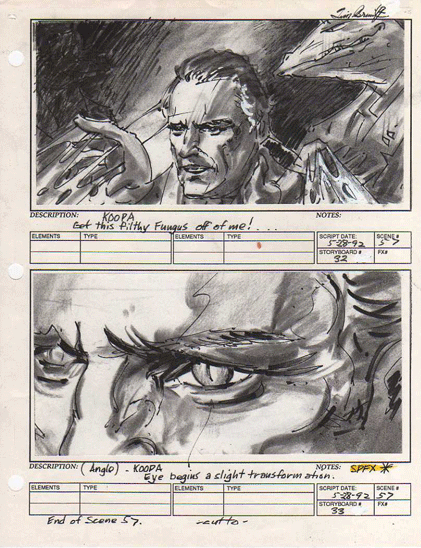
That's why there's so much emphasis on science in this movie, on certain scientific approaches on as to 'why things could be plausible' as opposed to just accepting that they are there. Nowadays, people know what Goombas and Bowser are, but remember, this wasn't supposed to be a kids' movie, so I suppose having strange 'dino strippers' in Dinohattan, people being turned into Goombas, and Dennis Hopper simply being Dennis Hopper doesn't really make for a movie that kids would be interested in.
I suppose there's no wonder why this darker version of Mario doesn't transfer well with the idea of the Mushroom Kingdom, and the moodier, grittier tone as opposed to the colourful visuals of the games felt a little confusing. It's a film that fans my age now can appreciate, but at the time, I just think the world wasn't ready.
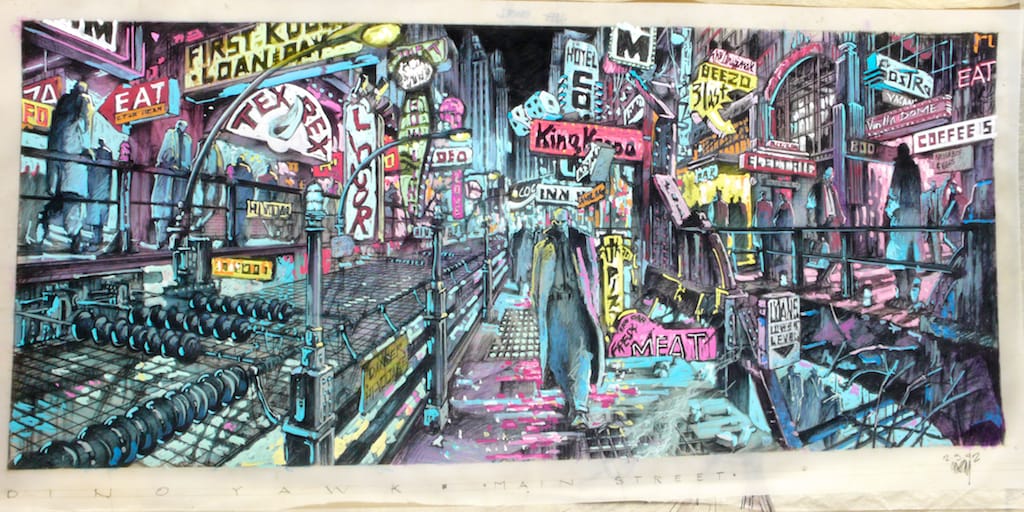
Needless to say, the film was a complete dud, despite the costume and set design being fantastic. The first script, written by the writer behind Rain Man, was named 'Drain Man' because of how utterly boring it was. The script would then get passed from pillar to post, being adapted, made funnier, then more adult, and then more family-friendly. Then there was the whole controversy of the script being changed after the actors had signed on and them being presented with a completely different story.
I could talk about this movie all day long because it's incredibly fascinating. Instead, I advise you to check out two of my favourite resources for this film to find out more. The first is the What Went Wrong Podcast episode that features all of the trials and tribulations of making the very first video game adaptation. The second is the Super Mario Bros. archive, which features every storyboard, every script, and every nugget of information on this film.
The Downfall Of Double Dragon
Rather than being put off by the problems Morton and Jankel faced bringing Mario to the big screen, director Jim Yukich decided to try to turn Double Dragon into a motion picture. This was his first time as a director, and to be honest with you, after watching the film, I felt like it might have been his first time ever checking out the Double Dragon game too.
The film was a complete flop, with a script that was undoubtedly worse than the Super Mario Bros movie. Whereas Morton & Jankel wanted to create a film that would give Mario a more serious edge, Yukich turned Double Dragon into the kind of thing you might see children acting out during a Karate lesson. Double Dragon is supposed to be a beat-em-up in a gang-ridden city. It should be gritty, uncertain, filled with a sense of injustice. Instead, Yukich went fully down the child-friendly route with a film that was more silly than serious. It's a little slapstick in places and just looks poorly made.
The one saving grace, and I use that phrase lightly here because it doesn't really save it all, is the special effects used in the film, mainly glowing lights that give off a feeling that something big is about to happen. Even then, the dialogue is cheesy and doesn't feel very well thought out. I can appreciate the dialogue in Super Mario Bros. and small nods to the series like the way the themetunes are played in throughout the score, but Double Dragon just felt like a way to make a quick buck... or lose millions of them.
Double Dragon cost $7.8 million to make and had a return of 4.1 million at the box office. It remains one of the worst video game movies of all time, and James Yukich has seen much more success in the music video world than he did with this poor imagining of the arcade classic.
A Brief Victory For Street Fighter & Mortal Kombat
In the space of two years, we had had two films based on video games that had K.O'd before they had really begun. Super Mario Bros. had very little input from Nintendo, bar how much they could make on merchandise sales, but when it came to Street Fighter, Capcom wanted to make sure that every element of the film went through them.
In all honesty, I think that's a much better move. Street Fighter was, and still is, a huge name and earner for Capcom, and they wanted to make sure that their IP translated well to the big screen. I suppose when you're also putting most of the budget in, a reported 35 million dollars, that you also want to make sure it works too.
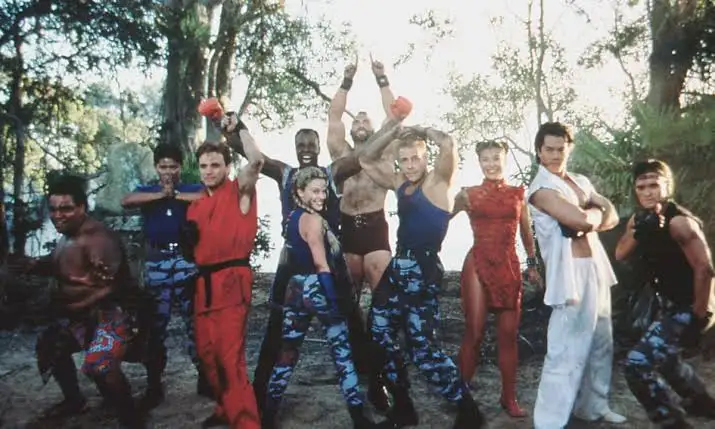
The film's director, Steven E. de Souza, was a big fan of Street Fighter, which to me is a big tick when it comes to putting someone in charge of bringing a franchise into a different medium. He was also the man behind Commando and The Running Man, two of my favourite Arnie films, so he knew how to create action movies with big names. And in the early 90s, names didn't come much bigger than Jean Claude Van Damme.
From what I've read about this film, Van Damme was a bit of a liability, turning up to set late after taking all kinds of different substances, racking up bills of $10,000 a week to feed his habit. Despite all that, his portrayal of Guile is legendary (if not always for the best reasons), and turned out to take up $8 million of the overall $35 billion. Add Kylie Minogue and Raul Julia into the mix, and you've got yourself the start of a stellar cast.
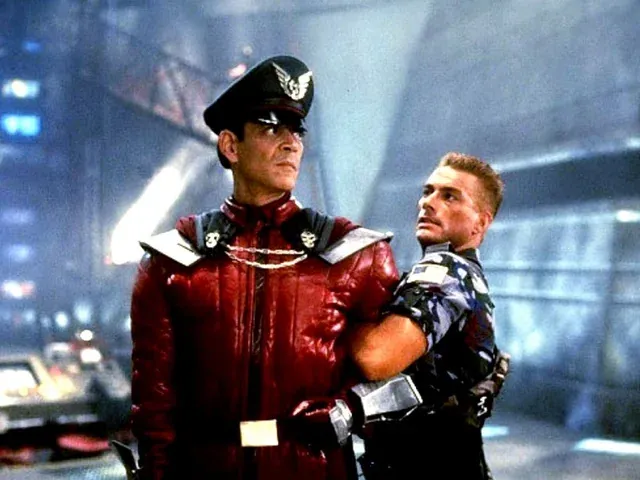
I also love the fact that, even though Raul Julia was battling stomach cancer while cast as M. Bison, he took on the role as his kids loved the games, and he wanted to leave something for them to watch back when he was gone. M.Bison was his final role, so it makes his performance feel even more poignant.
The most important factor here is that de Souza took notice of Morton and Jankal's mistakes with Super Mario Bros. He chose not to tie in any supernatural elements or make it too close to the games and created a different plotline for the film. It had the characters, it had the general feel, but it felt more like its own entity rather than just being a straight brawler. I think with his work on the likes of Commando, it was always going to feel like a war film, and it worked. The film made $99.4 million of a $35 million budget.
1995's Mortal Kombat, the fourth video game adaptation ever made, was the first to break $100,000 at the box office, bringing home $124.7 million off a $20 million budget. Yet despite this success, the film still sucked.
If it wasn't for the hype of Mortal Kombat II releasing and fans of the movie flocking to the cinema to revel in their favourite game coming to the big screen off the back of the games imediate success, I don't think it would have done well at all. Again, the film was given to a new independent director, Paul Anderson, who was keen to show his skills. And if it wasn't for the epic martial arts and production, it would have been a total flop.
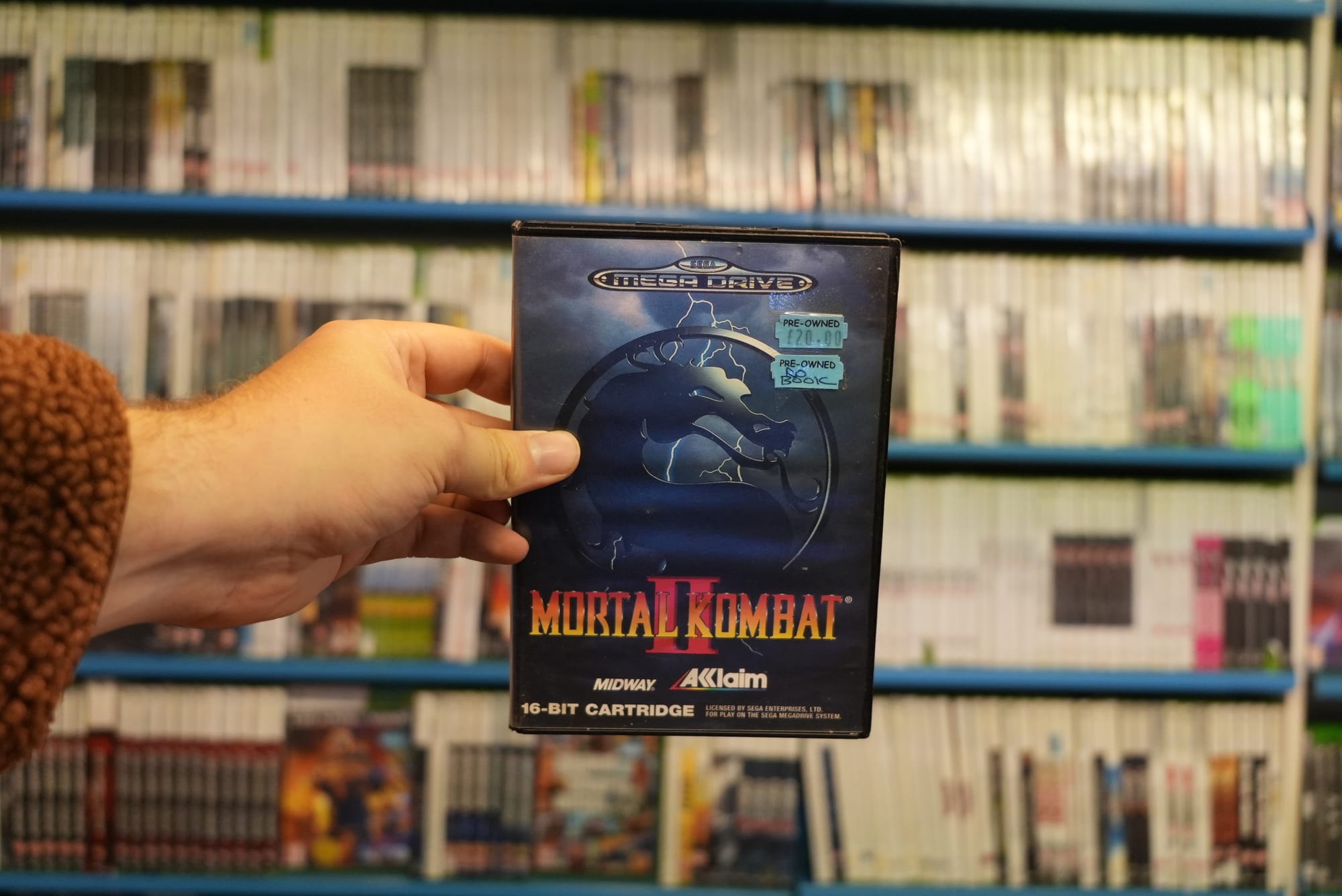
The main problem, yet again, was the narrative. We're on our fourth video game adaptation, and with the exception of Street Fighter, which let's face it, was just a war movie with Guille in it, and we haven't had a good storyline. The dialogue in Mortal Kombat is what lets it down, and that's fully down to writer Kevin Droney. It's just like writers didn't know how to translate what we were playing into something engaging. Or perhaps they just didn't care, relying on the fact that the game sales would be enough?
In Kevin's defence, Mortal Kombat is a game without dialogue or a premise more in-depth than 'fighters entering a tournament.' He didn't have much to go on, just like Morton and Jankel didn't have much to go on with Mario, far less than we have now, at any rate. There were no Easter eggs to put in either because there had only been a couple of games. But as a writer, I just can't excuse a poor story with no imagination!
The Pokémon Boom
Everything changed with the arrival of Pokémon: The First Movie in 1998/99. It managed to make $172.7 million off a $5 million budget, essentially because it was just a longer episode of the already established Anime series. I loved that movie, and I loved all of the merchandise that came with it too. My bedroom was filled with posters and toys, and it was one of the main things we talked about on the playground.
I can still remember going to the cinema in my nearest city for Andy Cooke's birthday party (if you're reading this, Andy, then thanks for the invite). Seeing Mewtwo breaking free from the laboratory and causing havoc for the first time was amazing, especially as the game came out a month after we all started playing Pokémon Red/Blue here in the UK. Let's not forget that Pokémon Red and Green came out years before in Japan and spawned the anime series, so while that gap might seem small for us, it had been a couple of years between film and game for Japanese gamers.
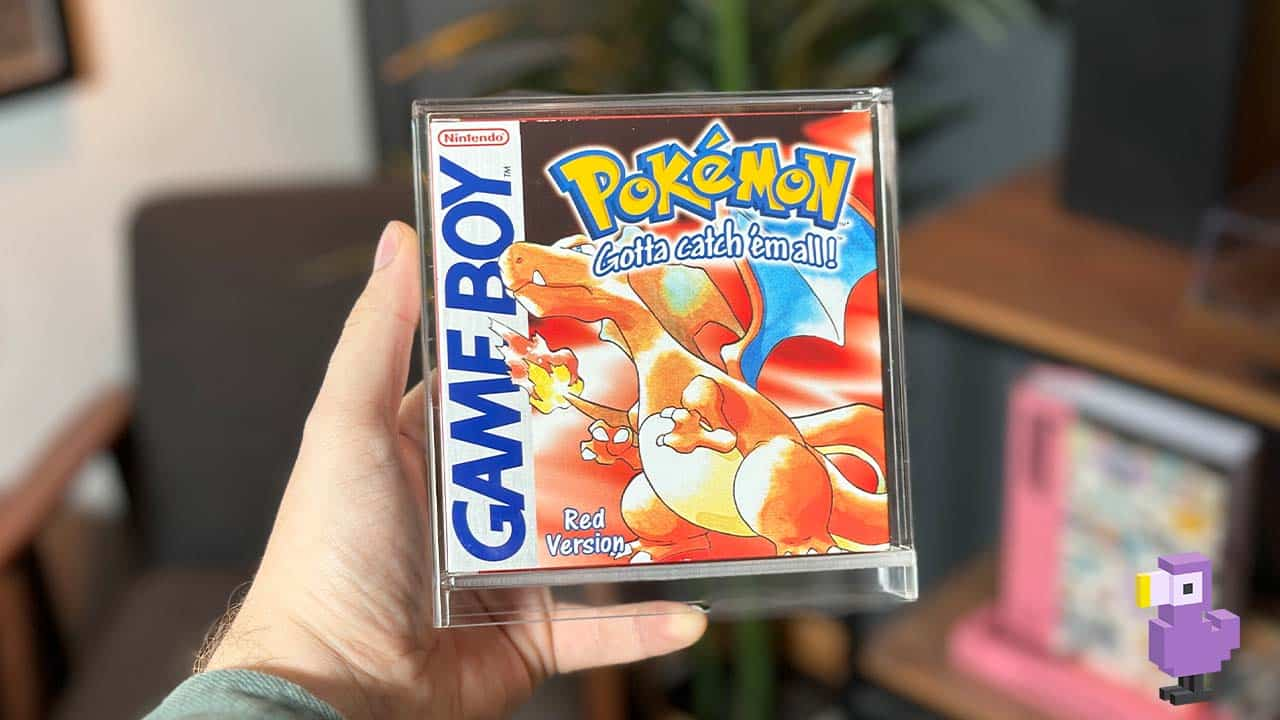
I was going to say that this is probably the first example of a video game being made solely for children, but then I remember seeing adults playing Pokémon games on the train, and who can forget everyone running like idiots with their phones when a Vaporeon had spawned in Central Park on Pokémon Go. Pokémon has always been for everyone, and the message of existentialism in the film definitely was more food for thought for adult audiences than it was for younger fans.
I was far too young to spot this as a kid, but Mewto having trouble determining what his purpose is and accepting his right to exist is pretty heavy going when you think about it. That's Mewtwo's M.O from the very start of his creation - a creature that exists for monetary gain and evil purposes that has a right to a life that it chooses, rather than the one made for it. I might have to go back and watch it again to fully appreciate how deep this is!
Tomb Raider & Resident Evil Turned Things Around In The 00s
Admittedly, as a teenage boy in the early 2000s, I would have watched anything with Angelina Jolie and Mia Jovovich in it. The fact that they were the stars of movies that were based on two of my favourite games was a bonus. Tomb Raider had a few writers working on scripts, including de Souza of Street Fighter fame. Scripts were adapted after being classed as too gory and too sexy (Jolie actually pushed for more nudity in the film but got denied). The artifacts and destinations were also changed multiple times as well throughout different treatments, with Paramount Pictures and Eidos Interactive, the creators of the game, again paying close attention to what went into each treatment and having a say about what elements, 'made a Tomb Raider game.'
Simon West was eventually signed on as director of the film and picked pieces of all the treatments as well as his own insights into how the film should look. It seems like the lessons of Morton and Jankel were starting to be made clear through the industry - take your time with a video game IP and don't rush the narrative, because if it doesn't please the fans, it's not going to be a success.
For me, the casting of Jolie was perfect as she looked like Lara Croft. She still maintained that the scenes weren't sexy enough after filming had finished, with multiple script ideas that were rejected having scenes where Lara used her breasts to either escape from death or deal with dangerous monsters. Eidos Interactive were very keen on keeping the game a little more PC than that, however, despite the sexualised nature of the character that Jolie wanted to portay.
Commercially, it was a great success, bringing in $274.7 million against a $115 million budget. But again, critics felt the storyline was a bit of a letdown. The actor was right, she had the right look, but it seemed like she was carrying the film just like Van Damme did with Street Fighter.
Resident Evil felt a little bit the same. The same buzzwords come up for every review - loud, cheesy, and chaotic. It's exactly why I don't like the Transformers films - there's not a lot that happens apart from explosions and loud noises, and the plots aren't great.
Resident Evil grossed almost 103 million off a 33 million budget, which is still a success in terms of the figures we've been dealing with so far. Like Street Fighter, it took elements from the game and carefully input them into the film without actually shoehorning things into the mix, but I think it tried to get too many elements of the film in to wow fans.
To me, there's a difference between writing a carefully crafted story based on a video game rather than just trying to wow everyone with lots of different features. It was praised for bringing in elements of the first three games and linking to key features of the series, but it wouldn't be until eight years later that director Paul W.S Anderson would see some real return on his ideas and bring the biggest profit on a film since 1993 when the first ever video game adaptation jumped through a warp pipe onto cinema screens.
Resident Evil Afterlife had a budegt $60 million and made $300,228,084 at the box office, the biggest profit to date. If you take the figures of all three films that Paul made in this time period, there was a return of $852,489,758 off a budget of $165 million!
Prince Of Persia: The Sands Of Time
I've always loved Prince of Persia. It's one of those games that I've grown up seeing and hearing older family members talking about, and it was one of those stories that felt like it had just come straight from the pages of 'One Thousand And One Nights'. Plus, it's a Disney movie, so you know that the budget was going to be obscene.
Disney had a budget of $150-200 million and brought back a return of $336.3 million, making this a success at the box office. It's a good movie that feels very much like how a live-action Disney movie should feel, but once again, it feels like it's just dabbed itself into the Prince of Persia game pool and taken a few parts of it without really immersing itself as a video game film. To me, it's almost like it didn't commit enough, which is a real shame.
We spoke to Jordan Mechner about how surreal it must have been to be on set with Jake Gyllenhaal and the rest of the cast, bringing the game that he brought to life back in the 80s (and you can check it out in the video above). He said it was an incredible experience, and he undoubtedly is very proud of the film.
My view of Sands of Time - it was a step in the right direction. Gemma Arterton and Ben Kingsley were also great in the movie, and with the might of Disney behind it, it was pumped out into all the right places with enough marketing to entice people in. Fans of the game will have enjoyed the Sands of Time element, but there wasn't a lot of substance to it in terms of first-time viewers.
Let's Quickly Talk About DOOM
I just want to touch on DOOM for a brief moment before we carry on, because it's another disappointing take on maybe one of the most played and loved IPs in the Retro Gaming world. And unfortunately, the movie tanked.
Director Andrzej Bartkowiak didn't manage to break even on the movie, making a return of around $58 million on a reported budget of $60-70 million. The cast of Dwayne 'The Rock' Johnson, Rosamund Pike, and Karl Urban should have stolen the show, but once again, the general audience perception is that it didn't feel like a DOOM movie. The story was wrong, the acting was cheesy and the narrative didn't fit. So many people have said that the best part of the film is the FPS section where you feel like you're in the game, and that doesn't have any acting in it... which says a lot!
Time For An Intermission
Critics look at films often without playing the games. Directors often don't include enough elements of the game, but films can't be made just for video game fans. Herein lie the main problems.
Are you starting to see a pattern forming? While a lot of the films we've covered so far have genuinely been disappointing, I honestly don't think that critics help with our perception of films. That's why I tend to check out the 'Popcornmeter' on Rotten Tomatoes, because if a fanbase or audience likes a movie, then I'm going to tend to listen to the people who have paid their hard-earned money to see something and truly love the medium, rather than someone who says there is comparing something like Super Mario to The Notebook or Captain Corelli's Mandolin.
Most of the time, the general public just want to pay to go and watch a movie that allows them to switch off and forget about their problems for a little while. It's a chance to escape, to immerse themselves in different worlds where bills and food shops don't exist. They don't necessarily care that a zombie film didn't have the emotional challenges of a period drama, or that an action film didn't touch on topics like environmentalism. But if you're a gamer, you're going to pick up on every wrong detail of a film based on your favourite game, just like as a prolific reader, I hated the Eragon movie because it didn't follow the book at all.
I get that I'm a videogame critic and that everything is perception - I might play a game and hate it when you, the reader, love it. I also get that just like janky controls, terrible graphics, and a story that doesn't engage the player, critics can comment on bad acting, terrible CGI, and a plot that doesn't engage you.
What matters is finding the sweet spot. When looking at video game adaptations, there has to be some sort of formula that works for everyone. Critics look at films often without playing the games, so they don't know what to look for when it comes to Easter eggs or references. Directors often don't include enough elements of the game because they either can't fit them all in or they're too confusing for first-timers to the franchise they're covering (or they don't understand them). But at the same time, films can't be made just for video game fans because they have to appeal to everyone if they're going to make a big return. Herein lie the main problems.
The Rock On A Rampage
When I saw Rampage was getting a film, I couldn't quite believe my eyes. A film based on a game whose main premise was to just smash things, getting a major motion picture... It just didn't add up to me. I mean, I played Rampage World Tour on the N64, and there was no plotline at all, which meant that there certainly wasn't a plotline in the original 1988 game. Yet here were Warner Brothers Pictures pushing 107 minutes on a film based on a gorilla smashing everything in sight.
So how did it end up making $428 million against a budget of 120-140 million? The answer - Dwayne The Rock Johnson.
Thankfully, things got a lot better for Dwayne after DOOM. I don't see anyone watching him laying the SmackDown on Cody Rhodes in WWE and saying 'That's the guy from that terrible DOOM movie.' They say, 'The Rock is awesome in everything,' before singing songs from Moana to the person next to them.
Johnson loved playing Rampage as a kid. Twinned with story writer Ryan Engle's love of Monster Movies as a child, you actually get a plot that captures the essence of the video game while giving you this narrative that everyone can get on board with. I truly think that for the first time, Engle managed to create a film that everyone could enjoy no matter whether they understood the source material. The three main animals grow to massive sizes just like in the games, and they have to be stopped.
Is it because the premise was so simple that it managed to work? Is this the first time we've had a game so simple with so little going on that the film could just take the idea and run with it? Or is it the actors' and team's love of the game that shines through here? The comedy is great, the action is perfect, and for a film that I thought would just be another 'throwaway video game adaptation,' it got so much right!
Little lines like The Rock saying 'All that's missing is a giant crocodile' remind you of his love of the game, and the narrative of him loving George the Gorilla and being invested in his survival despite him causing carnage alongside his newfound monster friends is something that is easy for everyone to understand. For the first time, you didn't really need to understand the game; you could just view it as a monster movie.
It also helps that CGI has improved greatly over the years, too, and when you're working with a film that has a gorilla in it, there's only one company you call - Weta Digital. Not only did they absolutely smash the effects in Lord of the Rings, but after working on King Kong and all the Planet of the Apes movies with Andy Serkis playing the formidable Ceaser, they knew exactly how to make this movie a smash hit.
Sonic, Super Mario, & The Animated Era
I know there was that whole controversy about Sonic looking a little more like a human and the Cookie Monster had combined in some sort of weird chamber back when the film was first showcased, but they sorted that out in the end, and we've got no hard feelings.
It seems like Sega and Nintendo learned from the mistakes of the early 90s and wanted to make sure they didn't repeat them. I'm a 36-year-old man who has played Sonic and Mario games for most of his life, and I've loved all of the animated Sonic and Super Mario Movies. Equally, my partner and her little girl have been to see the Super Mario movies without having any real knowledge of the games, and they have loved them too. It seems like we've finally found the sweet spot of pleasing die-hard fans and casual viewers - who would have thought that a compelling story was the key, huh?
The Sonic the Hedghog movies have been incredible from the very beginning. The mixture of live action and animated characters is fantastic, and Jim Carrey playing Dr. Robotnik is a stroke of pure genius. Paramount Pictures & director Jeff Fowler have stayed true to the comedic, fast-paced stylings that we know and love from decades of Sonic games. They introduced characters in the perfect way, drip-feeding little Easter eggs to the fans to keep them happy while creating a story that you don't need to know anything about the video games to be happy with. It doesn't matter if you've never played a Sega Mega Drive in your life - you can watch this movie and get a feeling of what Sonic is about, and that's very important.
They're funny movies too - Idris Elba's portrayal of Knuckles is great, and Keanu Reeves was the perfect voice actor for Shadow. If you have played the games, then you get a real sense that Jeff Fowler is looking at all of the source material and using it carefully to craft his stories in a way that everyone, gamer and non-gamer, young and old, will enjoy. The story is compelling.
So far, all three films have made a grand total of over $1.2 billion dollars at the Box Office, with a combined budget of around $320 million to make all three, a huge success for Paramount and Sega.
But to discover the most successful video game adaptation of all time, we have to come full circle back to the Mushroom Kingdom and our favourite mustachioed plumber. The Super Mario Bros. Movie and the Super Mario Galaxy Movie have defied all odds, bringing Mario back to the big screen in the best possible way.
Aaron Horvath and Michael Jelenic have made cinematic history with these films. The Super Mario Bros. Movie made $1.3 billion off a $100 million budget, which is one of the best returns in movie history. The Super Mario Galaxy Movie cost a little more to make at $110 million and is currently just shy of making $1 billion at the time of writing.
So what's changed for Mario? Well, it helps that we have way more source material to work off these days, not to mention all of the different Mario spin off games. We've got more characters than you can shake a stick at, Mario Kart gimmicks, different power-ups, more idea about who Princess Peach is, the Donkey Kong connection, and lots more to work with.
Like Sonic, these Mario movies can just be enjoyed as animated movies. But for the fans, they're an absolute treasure trove. An animated Mario movie can do so much more than a live-action one simply because it can recreate the likes of Bullet Bill, Dry Bones, warp pipes, power-ups, and a proper Bowser instead of Dennis Hopper's weird character. Little parts like Mario walking past a second-hand stall with old items from previous games, seeing levels from different games in the Mushroom Kingdom, and references to all of the games that we've had over the years, games that dropped after Super Mario Bros. from 1993, make it a feast for the eyes.
Final Thoughts
I feel a little sorry for Morton and Jankel. They were given an impossible task that was only ever going to be absolutely brilliant or utterly terrible, and the odds were stacked against them. If you watch this movie from the point of view of someone who knows nothing about Mario, it's still weird as heck, but it makes it slightly better. It's not a terrible movie, it's just not a Mario movie.
I think we've finally hit the sweet spot when it comes to telling a story that is easy to understand with deeper nuances for the fans to pick up on. It will be interesting to see if the live-action Street Fighter revival and the new Legend of Zelda movies will continue the hot streak Sonic and Mario have created, or whether they'll do another Morton and Jankal and take us right back to the beginning again.
The critics are there for the 'everyman', to let someone who doesn't know what the game is whether the film it's based on has heart or comedy in it, but just remember that their views are subjective. The critic reviews for the first Super Mario movie has 59% from critics on Rotten Tomatoes, so maybe take those reviews with a pinch of salt and look to what audiences are saying instead. Though when it comes to DOOM, just ignore it altogether, alright?


