


The RG Vita has turned a lot of heads since it was first announced by Anbernic, mainly due to the fact that people are wondering how on earth they've got away with making this thing look like a PS Vita and actually putting 'Vita' in the product's name. Despite the fact that Anbernic tend to get a little heavy with style borrowing when it comes to creating their handhelds, I'm a big fan of their products, with the RG35XXSP still being one of my favourite emulators for kicking back and playing GBA games on.
There's no doubt that the RG Vita looks the part; it's a beautiful handheld. But if you're here reading this article, then you'll no doubt be wondering two things: can it play my games well, and is it worth the money?
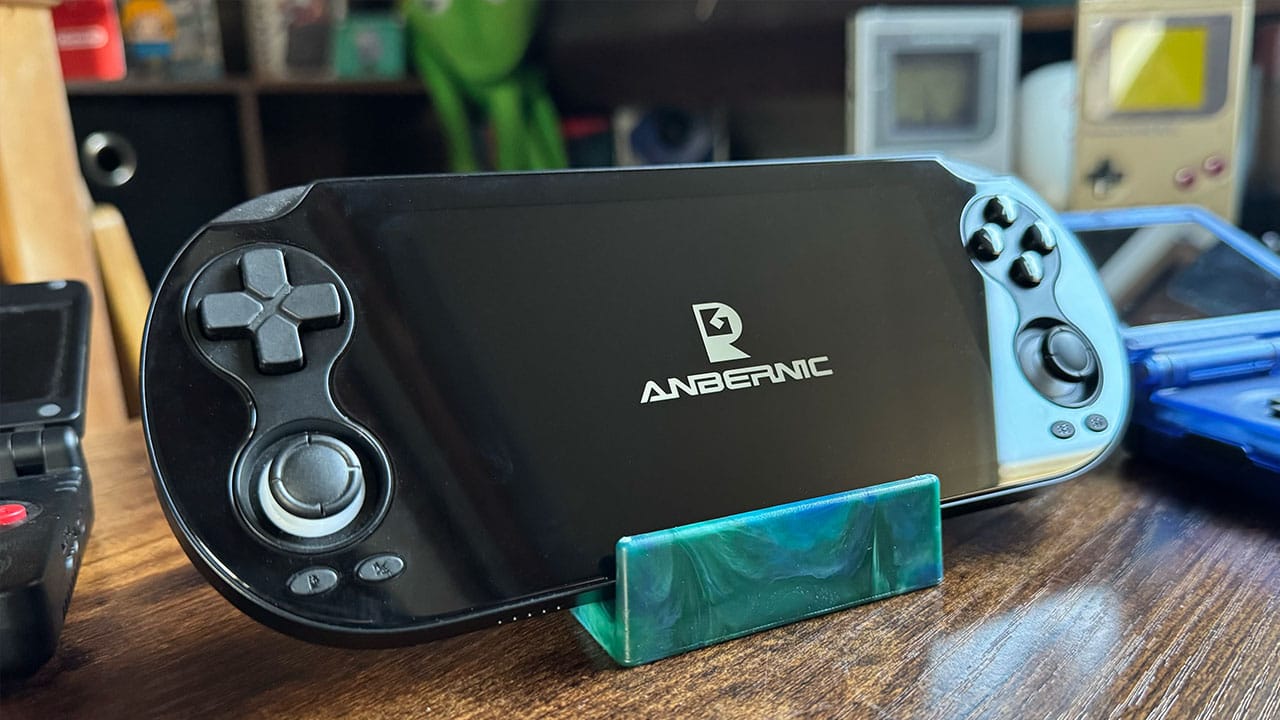
I've been playing with the RG Vita for a couple of weeks now, getting to grips with the console and figuring out what makes it tick, what its strengths and weaknesses are, and how it compares to the likes of other similarly priced consoles like the Mangmi Air X. Take a look at my thoughts below!
The RG Vita is a sub $120 handheld with a nice-looking OS and the ability to emulate up to PS2 and GameCube games, though with results that vary dramatically. It's great for everything up to N64, PSP, and Dreamcast, but struggles with some of the more powerful consoles, effectively prompting users to spend the extra cash and buy the RG Vita Pro instead.
- Release Date: March 20262
- Price: $109
- Available From: ANBERNIC.com
Take A Closer Look
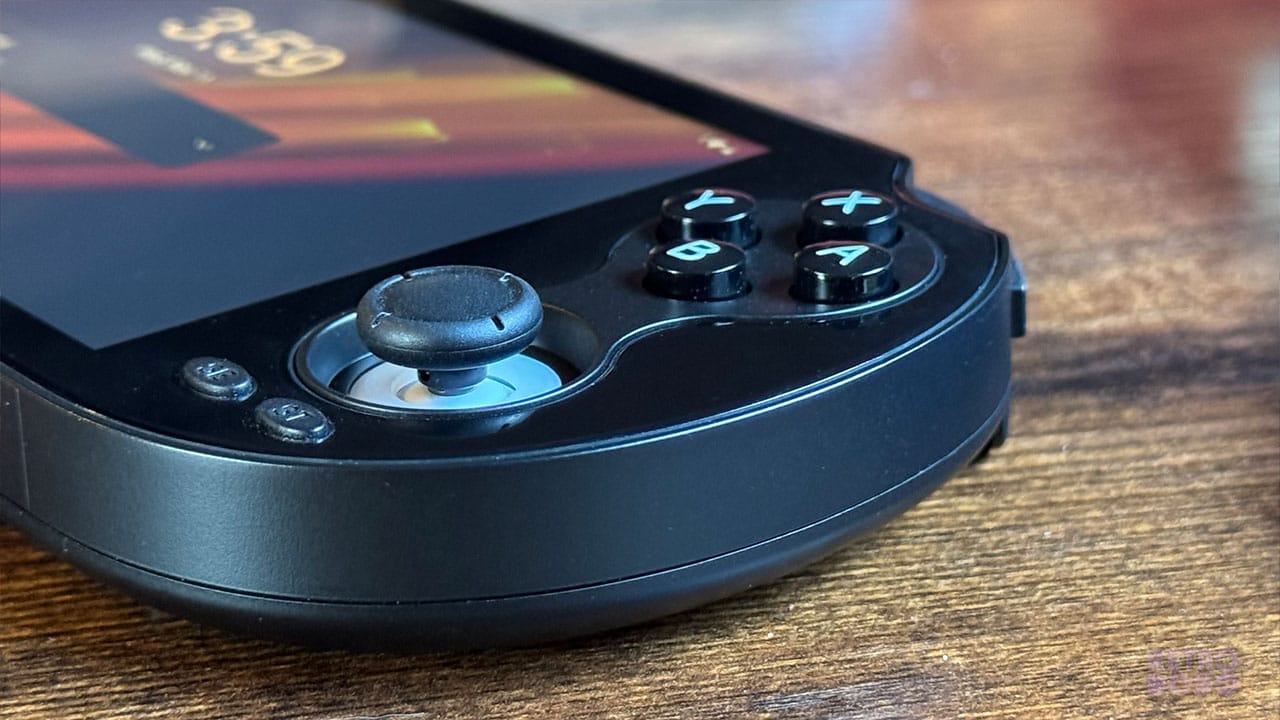
As you might have guessed from Anbernic being Anbernic and 'Vita' being in the product name, the design and style of the RG Vita is very much the same as the Sony console it takes inspiration from. You'll find two Hall-effect joysticks in a symmetrical layout as per Sony's usual go-to with their controllers, both of which act as L3 and R3 buttons, which come in handy when running or crouching, etc. As they're Hall-effect sticks, they're very smooth with zero resistance or lag, and they have multiple LED light settings for the rings around their edge. I chose to turn these off because I found them annoying, but you can pick a variety of options from rainbow colours to plain white, or lights that follow the movement of your sticks whenever you push in a specific direction.
The action buttons on some handheld emulators feel a little clicky and too small for my large Italian thumbs, but I've not had any problems with carrying out commands on this device.
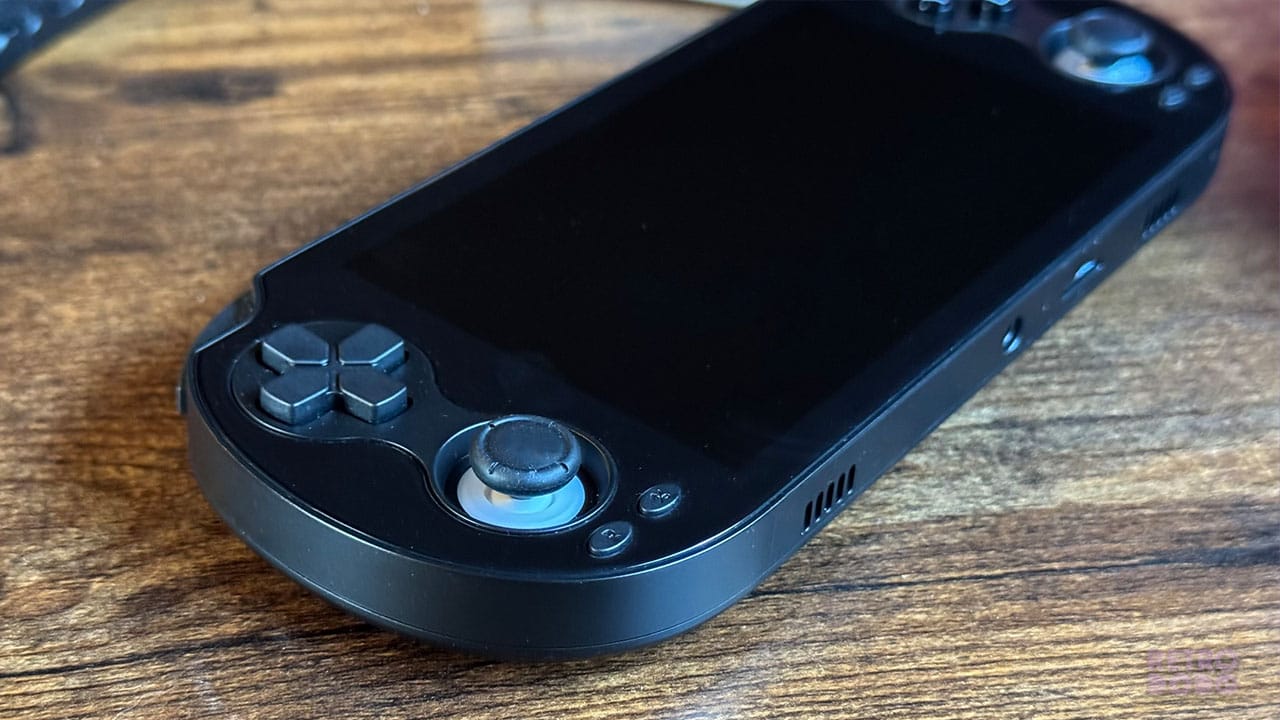
On the other side of the handheld, you've got your D-Pad and left thumbstick. In addition, you'll find your Home/Return and the button for the RG Launcher game library system (spoiler alert, I didn't bother using this) on the left side, and your Start and Select buttons on the right.
Other than these buttons and their respective bowls, the entirety of the front of the handheld is glass. The RG Vita has touchscreen capabilities, so you can navigate through emulators with a swipe of a finger as well as using touchscreen controls if you wish, but it does mean that the whole thing is a massive smudge magnet, and you'll probably end up wiping it down once a day to get rid of the fingerprint marks.
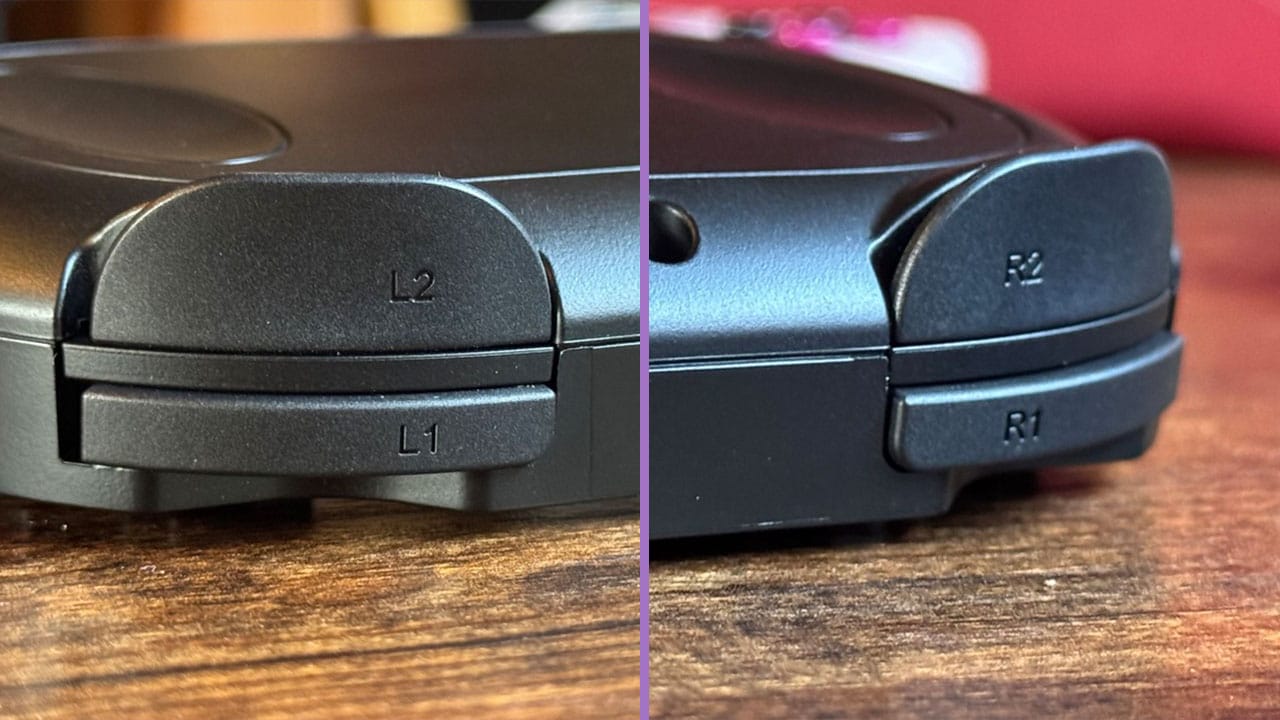
Anbernic have always been a hit and miss when it comes to their shoulder buttons on their consoles, and I feel like they've almost nailed it with the Vita. I really like the L2/R2 triggers; they both have the same resistance (which a lot of handhelds don't manage to grasp), and they're super responsive.
The L1/R1 buttons have a slightly higher profile so that you don't accidentally touch the triggers too, which I really like. They are a little too thin for my liking, however. I know I might be being pedantic here because there's only so much space to work with, but they're just a tad too thin. They do sink down with a satisfying click, however, and again, they're very responsive. If they were a little thicker, I would have said they were perfect. Will it keep me awake at night? No, but it's something I wanted to mention.
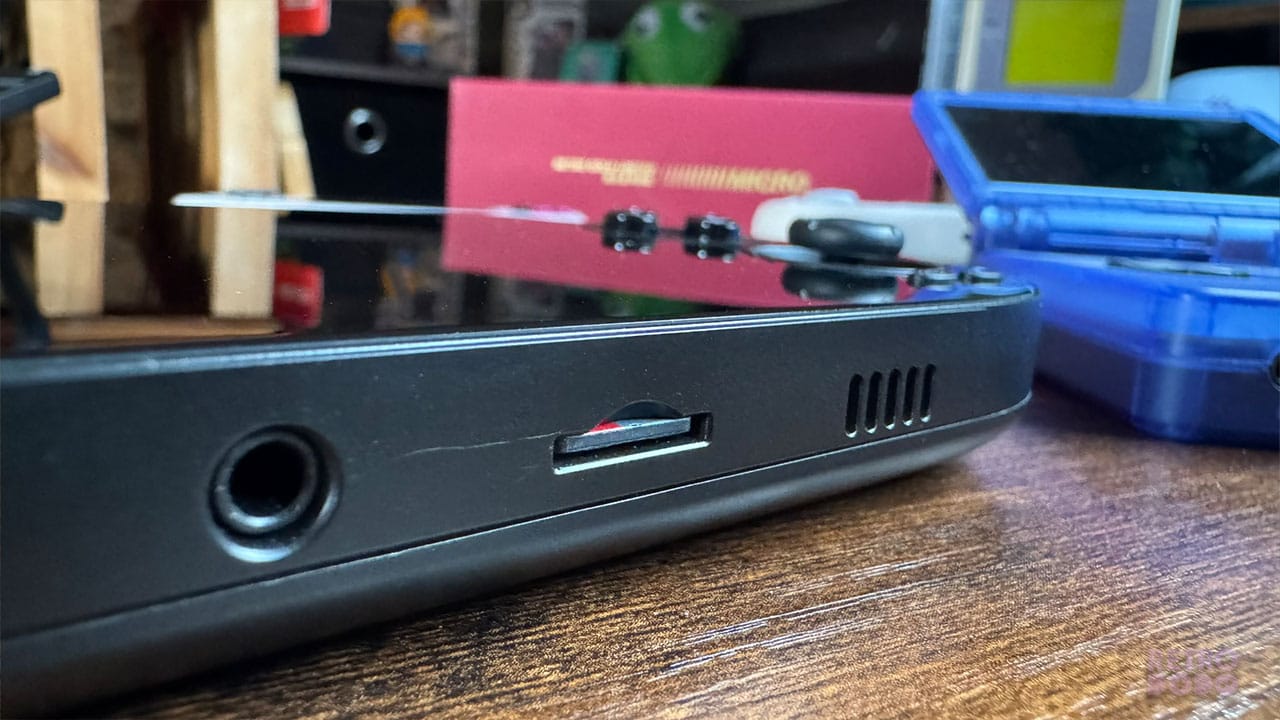
The RG Vita has speakers at the top and bottom of the console, and I've got no complaints when it comes to sound. I do have a slight complaint about the scratch that was on the bottom of my unit where the microSD (or TFT card, depending on where you're reading this from) slots.
The top of the console is where you'll find your power button, volume controls, and another button that brings you back to the home screen. It's also where the USB-C charging slot is. With a USB-C to USB-A cable plugged into my desk, it says it will take 2 hours to charge up the 5,000mAh battery to full, but that time will decrease significantly if you're using a fast charger.
The Display
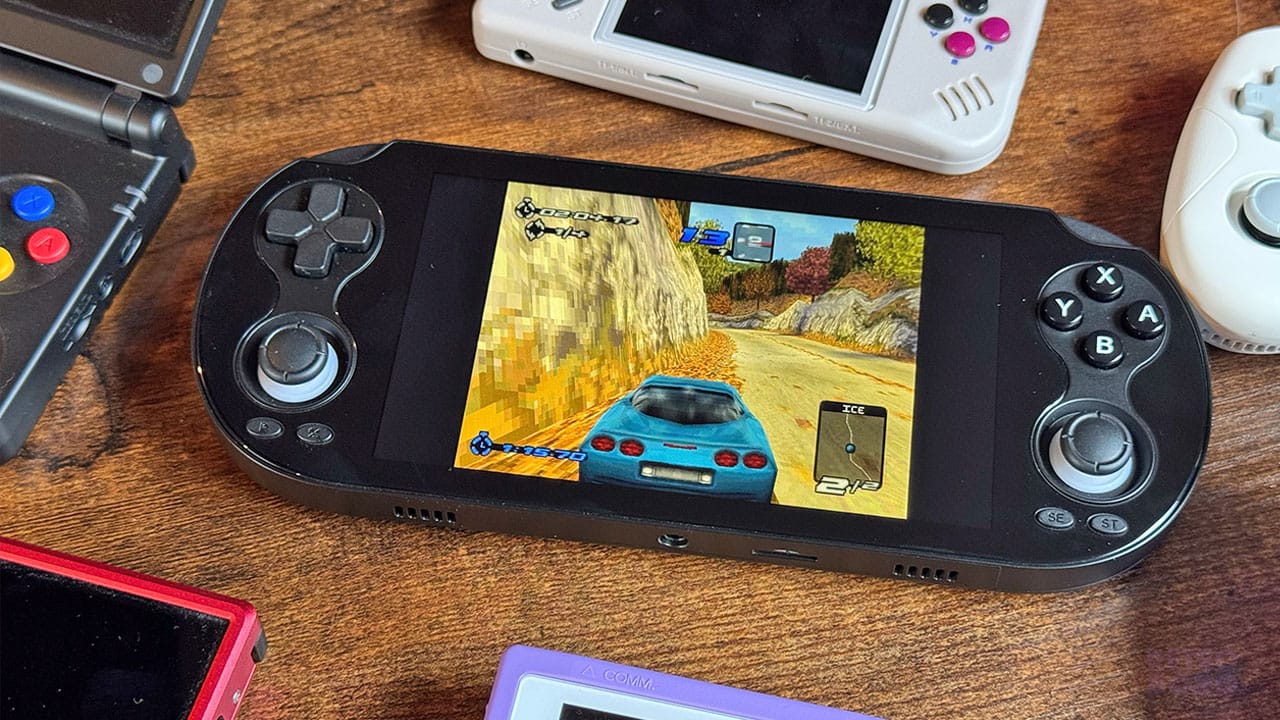
The 16:9 ratio display is one of the features that Anbernic have ridden with as being the piece de resistance of this handheld. At 5.46", and with a resolution of 1280 x 720 (the Pro version has a 1080p display), it's perfect for games up to GameCube and PS2 (though with varying success rates, as I'll get onto soon). Older games for your CRT-friendly consoles like the N64 and PS1, as well as handhelds like the GBC, will just have black lines to one side, but that's par for the course with emulators that cover more than one system.
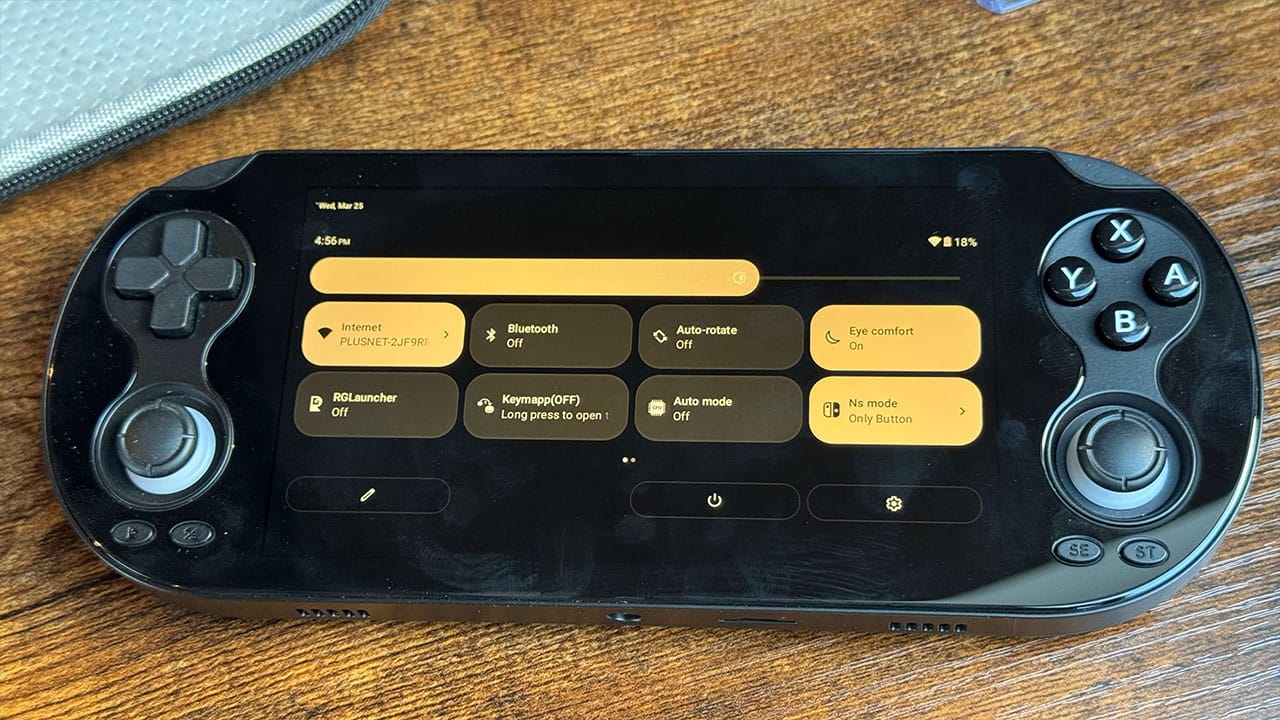
Swiping down from the top of the screen brings up some of the most-used internal settings. As you can see above, I've got my screen brightness on just over half, and I'm currently using the Eye-comfort setting, which reduces the amount of blue light as I've been looking at screens all day. The screen is plenty bright enough, and it's one of those displays where I can see what's going on no matter where I hold the device and even in bright sunlight.
Let's Talk About Specs
- Chipset - Unisoc T618
- CPU - Cortex-A75
- GPU - Mali-G52 Mp2
- GPU Clock Speed - 850 MHz
- RAM - 3GB LPDDR4X
- CPU Cores/Threads - 8
- OS - Android 12
- Storage - 64GB
- Battery - 5,000 mAH
It's a little odd to me that a handheld releasing in 2026 is using a chipset from 2019, but that's how Anbernic have managed to keep the price down to $109. It does mean that the results you'll get when it comes to some of the more demanding consoles like the PS2 are going to be a little hit and miss, but that's the trade-off for the lower price tag.
Android 12 also came out at the back end of 2021, making it almost 5 years old now. Everything about the Vita says 'old parts in a new shell', but for $109, it's what we expect. It looks and feels nice, but underneath it all, it's a little underwhelming.
User Experience
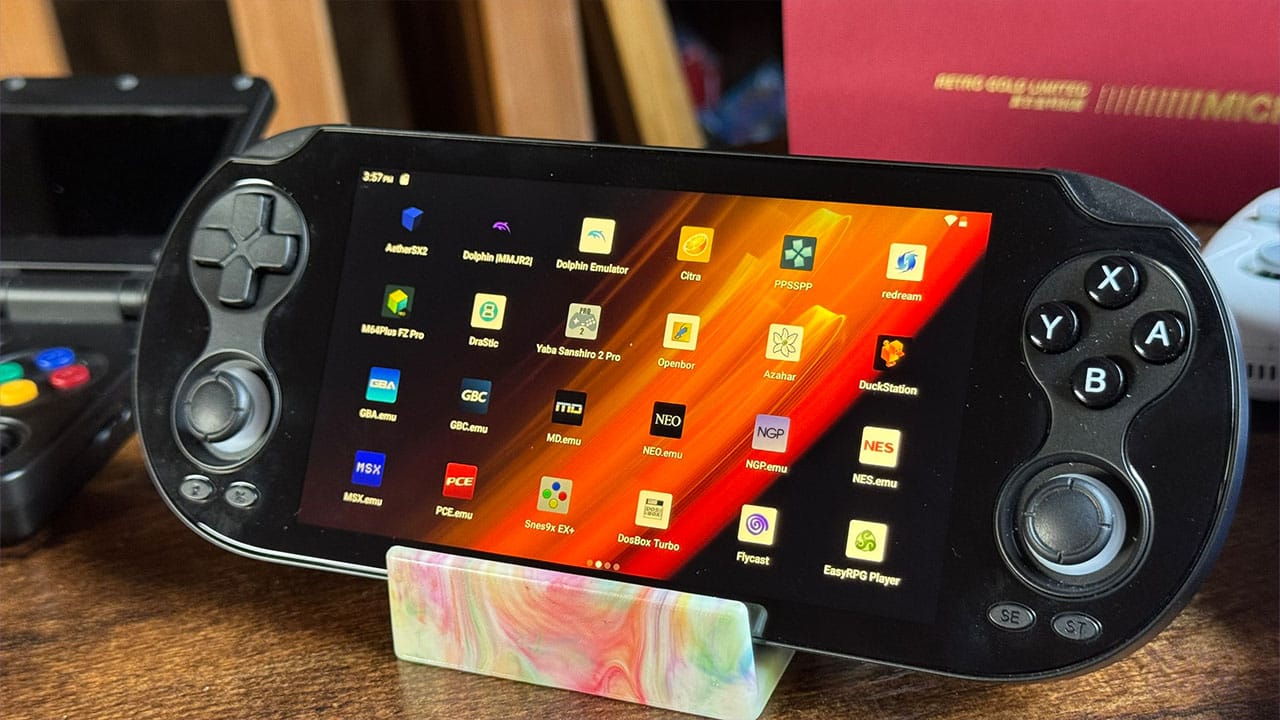
Some emulators require you to go on and download apps/programs from the Play Store or external sources in order to get your games up and running. I had to do this with AetherSX2 on the Mangmi Air X after I accidentally deleted it (don't ask), and it was a massive pain. The RG Vita comes pre-loaded with all of the emulators you could possibly need to get gaming. What it doesn't come with is ROMs; you'll need to add your own legally acquired ROM files to the handheld in order to play games.
I'll say right now that the 3DS emulator Azahar just refuses to open. As it's a branch of Citra and Citra opens anyway, it doesn't make a massive difference to my gaming experience. Still, I wanted to mention it early doors. The RG Vita isn't powerful enough to run 3DS games in my opinion anyway, but more about that soon.
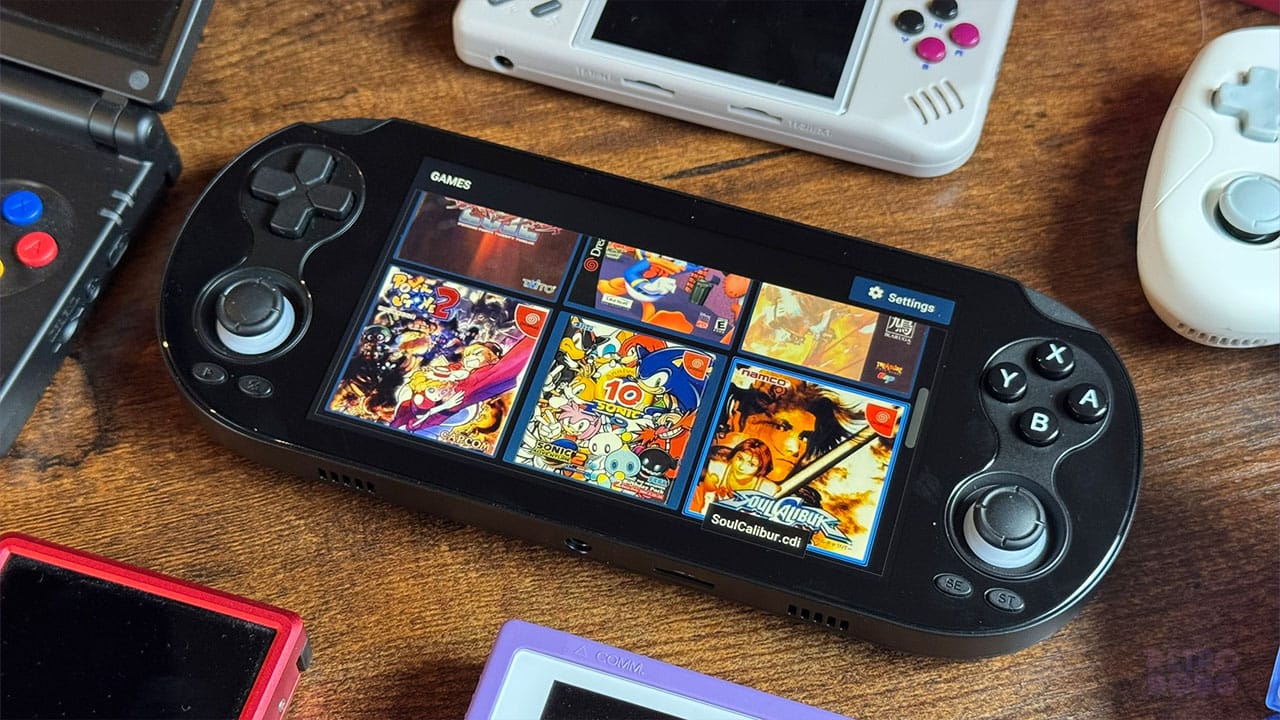
Everything is set out really nicely on screens you can swipe through, with other applications like sound recorders, calculators, and video players (which I personally have no need for) available should you want to work on some maths equations or watch some films on this thing.
The emulators themselves work brilliantly once open (or at least the ones that open do, at any rate!). Flycast is one of my favourite emulators when it comes to displaying artwork and games in an easy-to-navigate way, and all the artwork automatically shows up without me having to do anything. Other emulators like RetroArch that require a higher degree of tinkering aren't as exciting to look at, but as we all know, RetroArch is the Swiss Army Knife of the emulator world, so I can forgive it for looking a little more utilitarian.
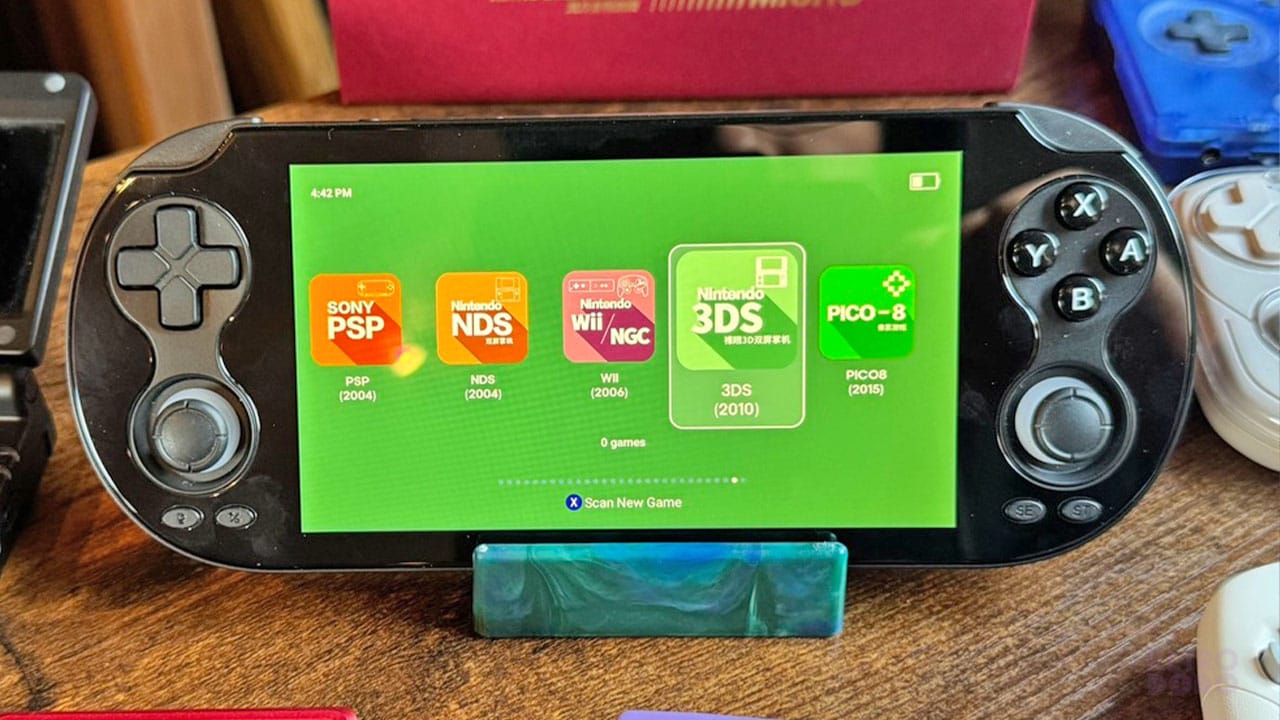
Then there's the RG Launcher, a setting that's supposed to be a hub for all of your ROMs and puts them in console order in an attempt to make your life easier. Honestly, I found this very unresponsive. It just didn't seem to link up to any of my ROMs at all and made things much more laborious when it came to picking games.
I do tend to find that Anbernic handhelds have a lot of functions that aren't really needed, apps that just take up extra space. RG Launcher is definitely one of them, as is the Anbernic AI app. Most of you will already know my thoughts and feelings on AI, so it's not something that I've wanted to put much time into. Plus, the fact that when I click on the AI Translation tool, it comes up with a lot of terms and conditions in Chinese means I'm not really sure what I'm agreeing to, and I wonder why the app is in English but the important features aren't. Obviously, I could learn to speak Chinese, but for now, it's something I'll avoid.
Is It Comfortable To Play?
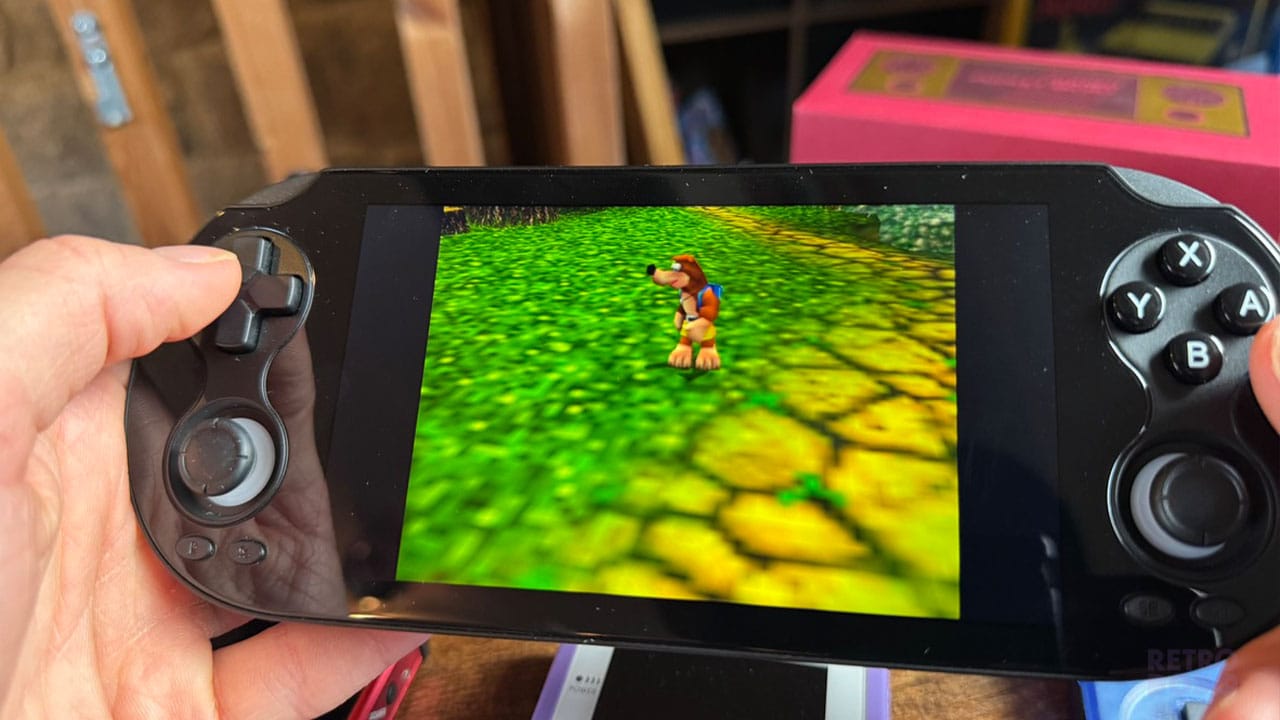
When it comes to ergonomics, it's a really nice console to hold. It's also really light, too, at 274 grams, which is just over half a bag of pasta, the obvious choice of weight for an Italian to use in a handheld review.
The RG Vita is a perfect shape, well-rounded, and fits in your palms comfortably. The buttons are spread far enough apart from each other to not cause any finger cramp, and it all makes for a handheld that you could sit and play on for hours quite easily.
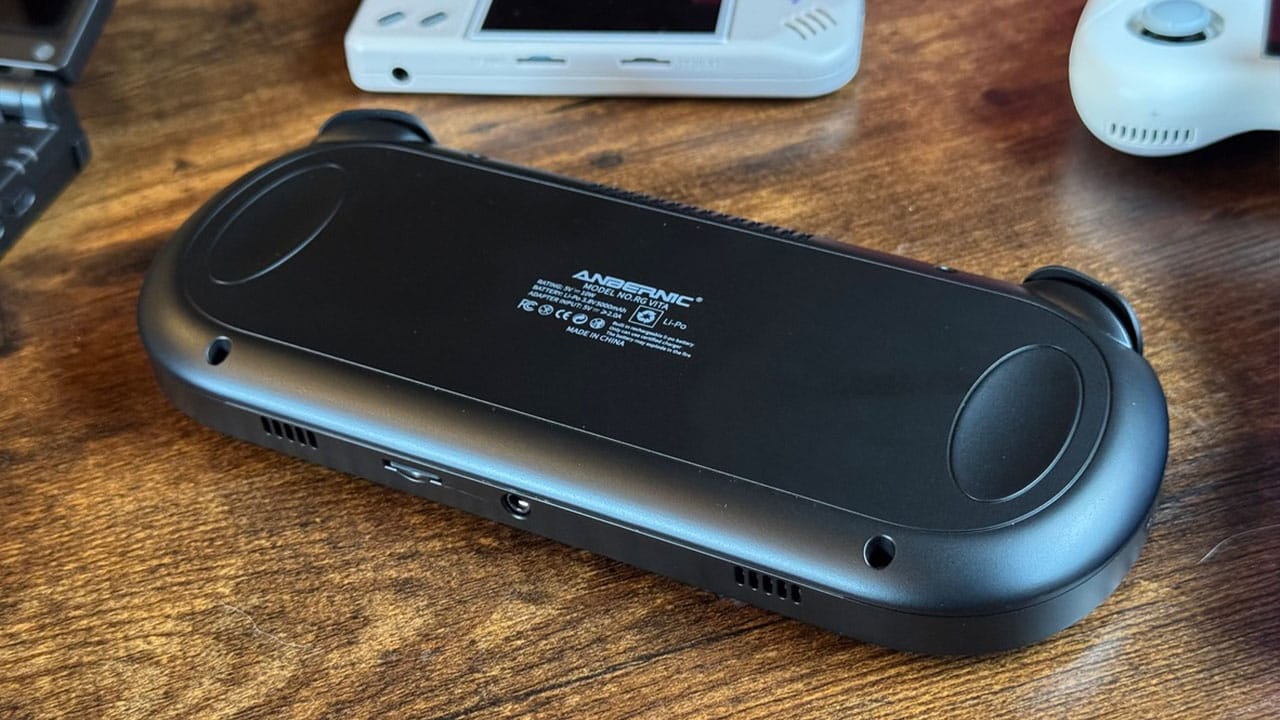
Design-wise, the Vita is a beautiful-looking console, and those small depressions in the back are perfectly placed for your third and fourth fingers to rest against. Not only do they give you a little more grip on the handheld to stop you from dropping it, but they're a comfortable place for you to rest your fingers without you sticking them out at odd angles and getting that same kind of ache you get from holding your phone.
Emulation Performance
As you might imagine, the RG Vita Pro has no trouble with any of the earlier consoles, the 'usual suspects' that retro gaming fans go to when they want to relive their favourite consoles. Everything from the NES to the N64 runs perfectly, as does Game Boy, Sega Mega Drive/Genesis, Sega Saturn, Arcade titles, etc.
But the RG Vita professes to allow emulation up to Wii and 3DS. Here are my findings.
PS2
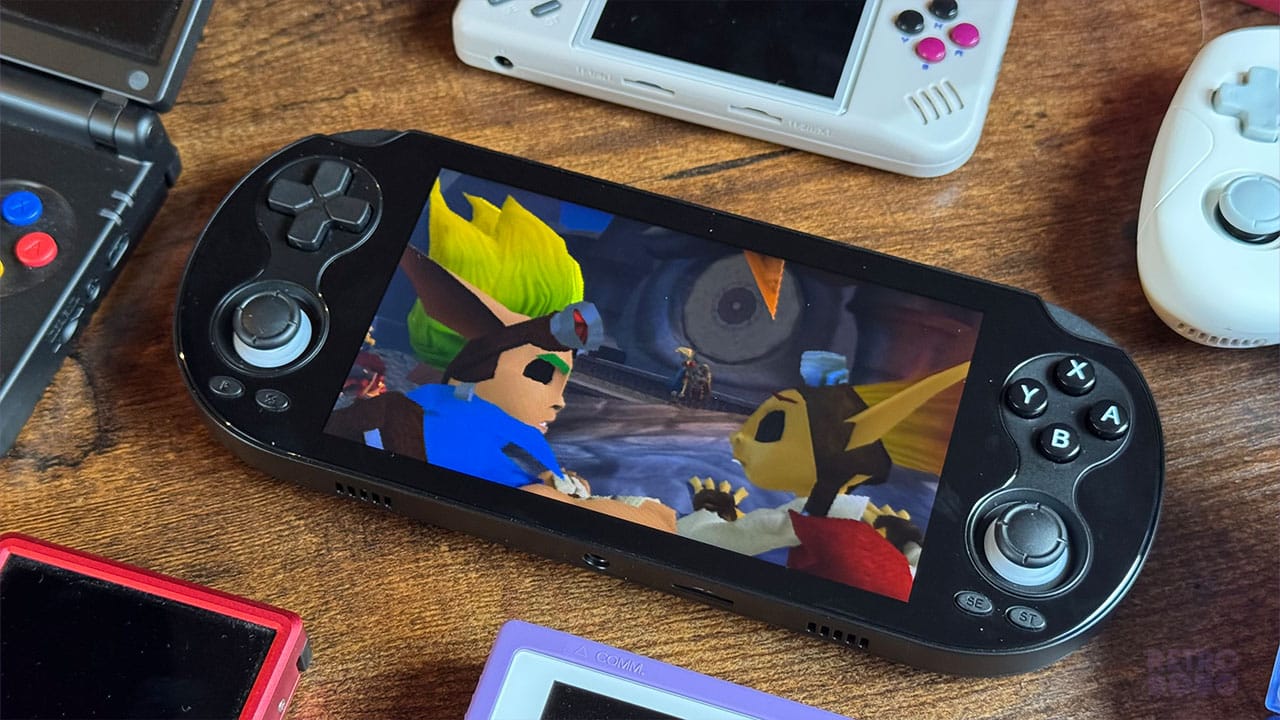
I'm going to start with PS2, as, understandably, this is what a lot of you will be wanting to pick this handheld up for. I'm going to compare a lot of my findings with the Mangmi Air X too because, as I've already mentioned, it's a similarly priced console that really impressed me.
While the Air X has a newer chipset, albeit not as powerful as the RG Vita, it coped with PS2 games much better. For some reason, the same Jak and Daxter ROM that I used on the RG Vita took away all of the eyes from the characters, leaving them with black holes that looked like portals through which their souls had escaped. It was all a little creepy to say the least. Apart from that, the game was very much playable at native resolution, but it was something that I really couldn't ignore.
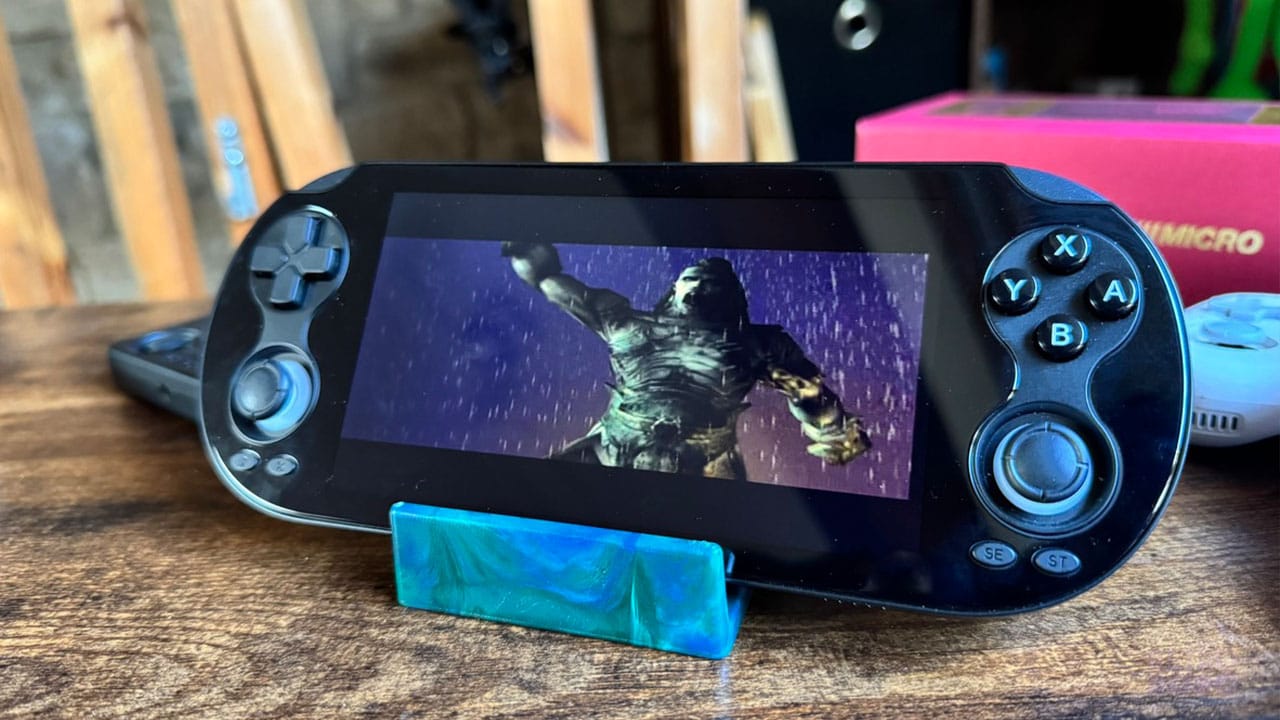
Games like Need for Speed Most Wanted: Black Edition didn't even start, which didn't surprise me. It's a massive game and only works on higher-spec handhelds, but it's a game that I try on all handhelds that claim to cope with PS2 titles, as it's one that really pushes systems to their limits.
I had more success with The Two Towers, however, or at least I did for a little while. The first time I played, the cutscenes from the movie played, and I had some good success with the opening sequence, where you play as Isildur. The second time I tried it, the cutscenes just wouldn't show, giving me only sound.
As I said, PS2 is really hit and miss, and more miss than hit if I'm going to be honest. The RG Vita Pro will undoubtedly be much better suited to PS2 games, but I cannot recommend picking this up for PS2 emulation, it just isn't reliable.
Wii
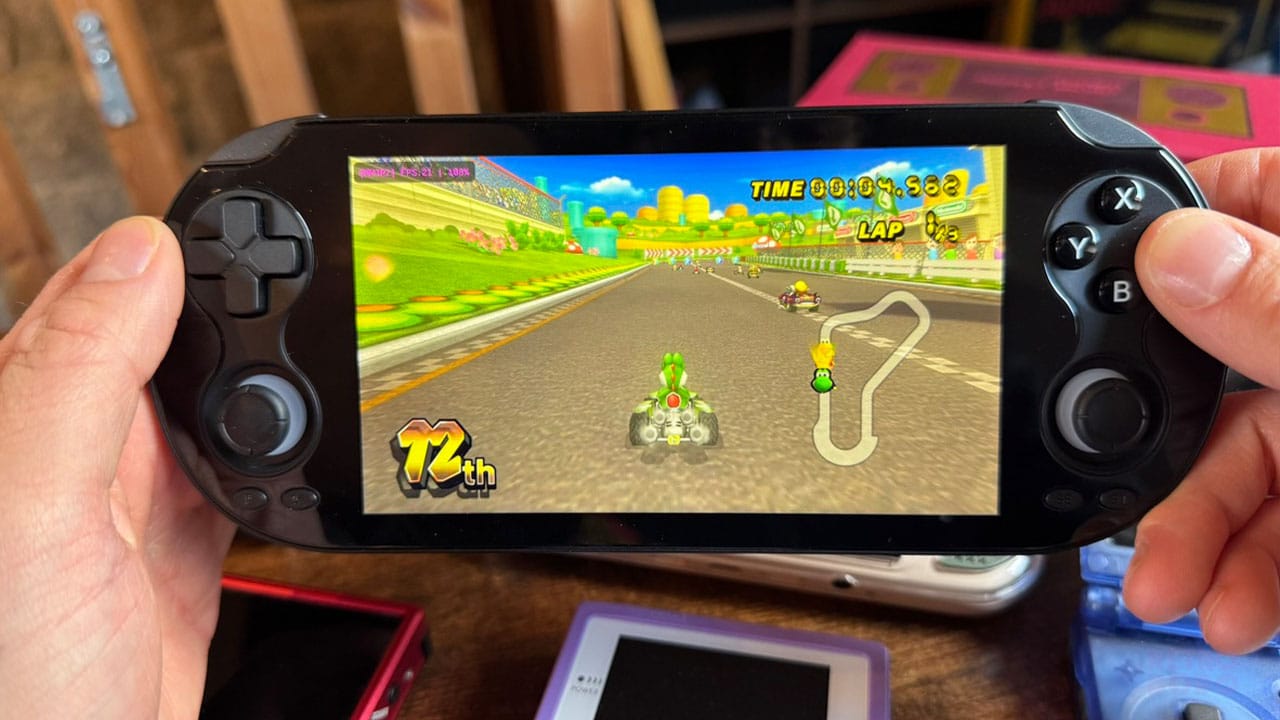
I had high hopes for the Wii, but I was unfortunately disappointed once again. Mario Kart Wii loaded up with a soundtrack that sped up and slowed down, and all of the 'selection stages' where you choose your character and levels were very slow. Parts of the karts didn't show up, both when choosing cars and on the race track itself, and the race itself was painfully slow with Yoshi moving at a snail's pace.
The RG Vita couldn't keep up with the Wii's emulation demands, unfortunately.
GameCube
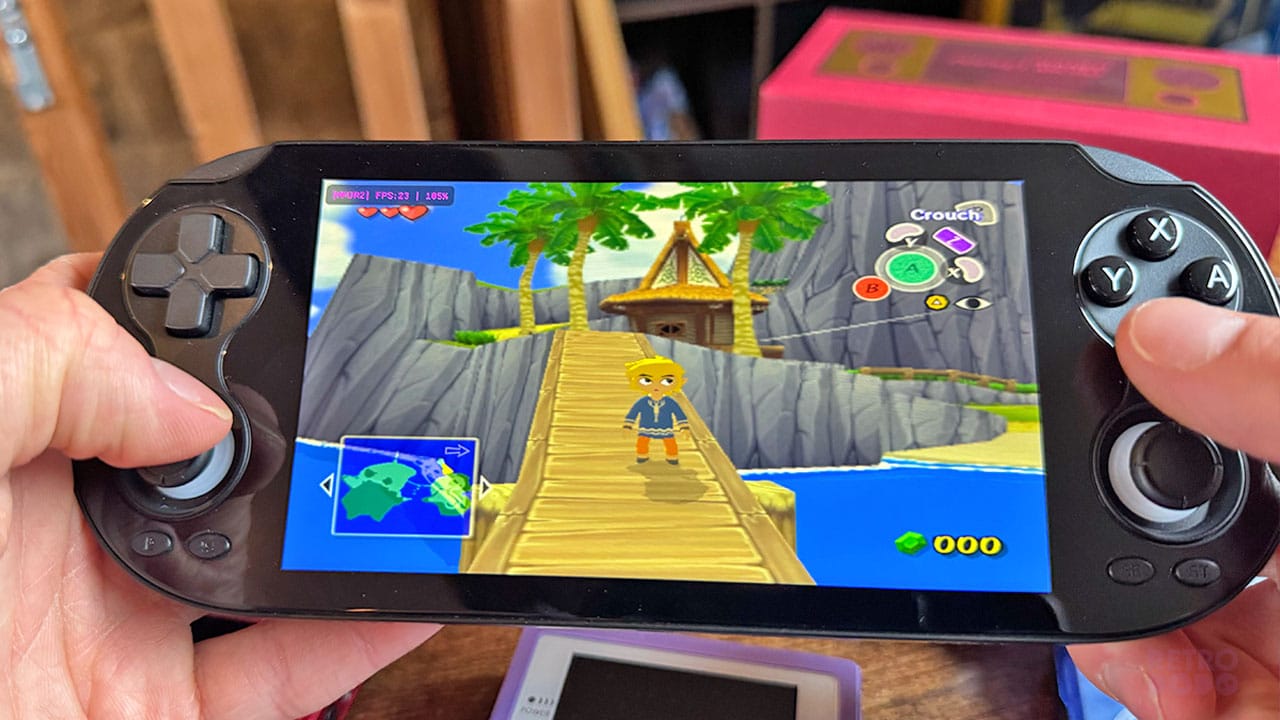
GameCube emulation was much more promising. There are two Dolphin emulator apps on the RG Vita - the official Dolphin Emulator, and Dolphin MMJR2. I had much better results with MMJR2, with Wind Waker running much smoother and with a better FPS. It played perfectly in widescreen, too, which is something that annoys me about the Nintendo Switch 2 version on NSO. Other titles like The Simpsons' Road Rage worked flawlessly, so I can recommend this for GC lovers.
PS1 & Dreamcast
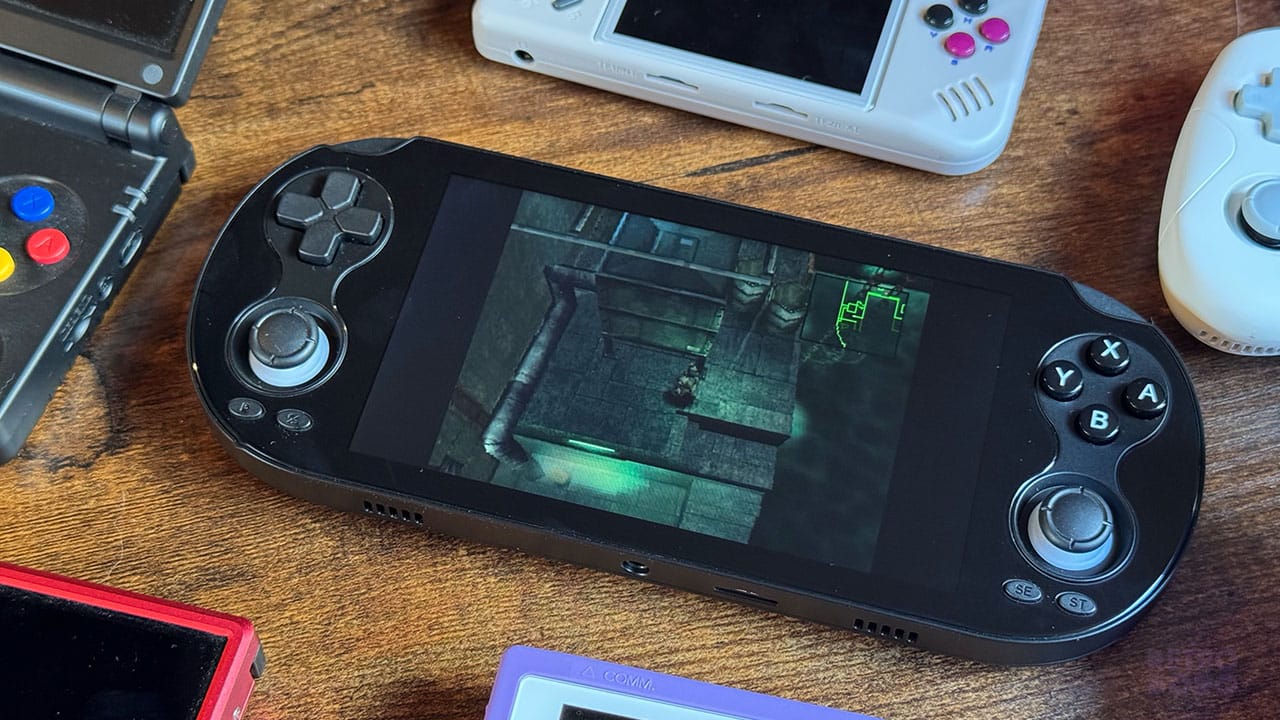
The PS1 has one of the best back catalogues of all time, so it won't be any surprise to you that I spent a long time testing out my PS1 ROMs to see how the RG Vita handheld them. It ran titles like Metal Gear Solid, Crash Bandicoot, Spyro the Dragon, and Final Fantasy 7 brilliantly with no trouble. All of the controls worked perfectly without any mapping.
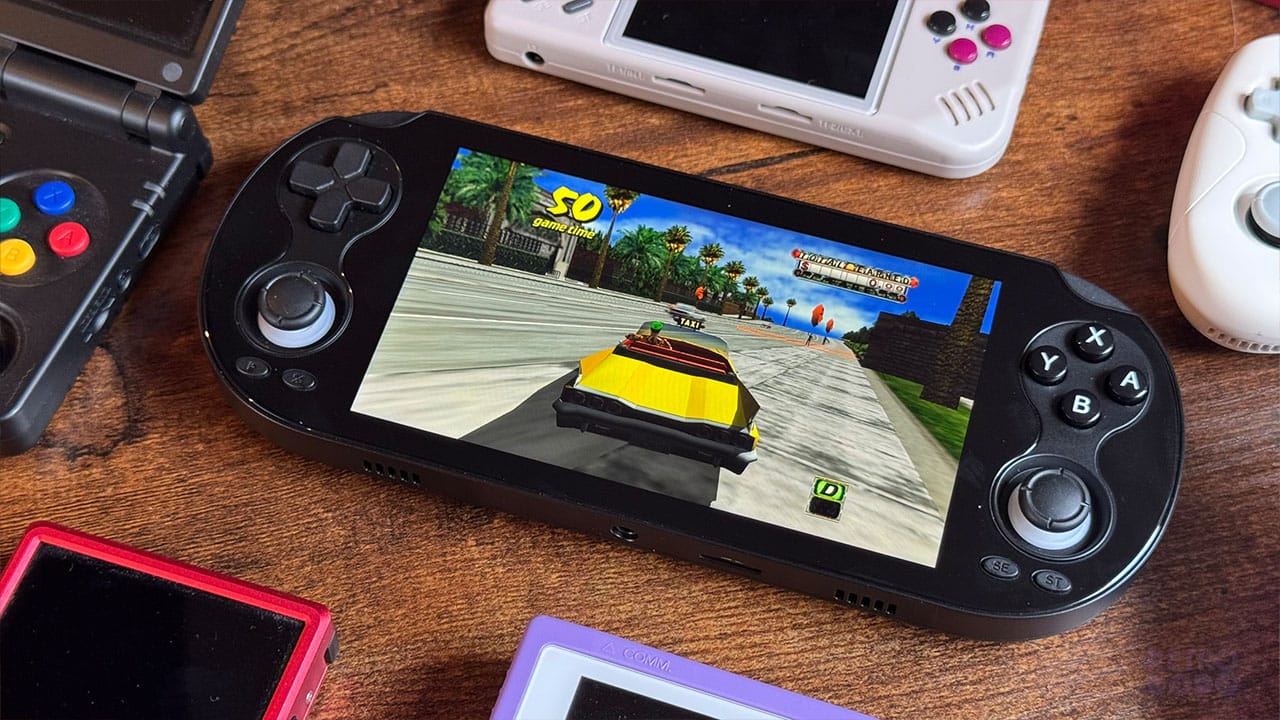
The same goes for the Dreamcast. Crazy Taxi and Sonic Adventure 2 ran like an absolute dream at 2x resolution with smooth, crystal clear graphics. It definitely ran the best out of the Gen 6 consoles available on the Vita.
Nintendo DS
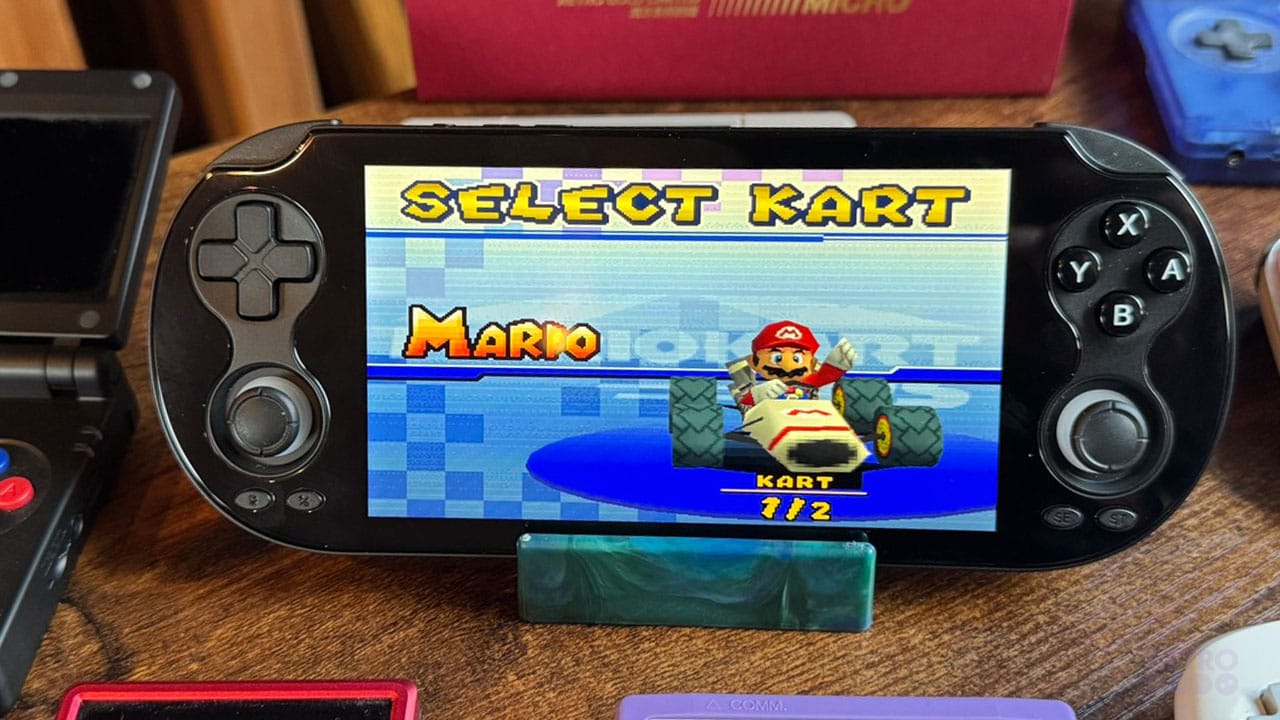
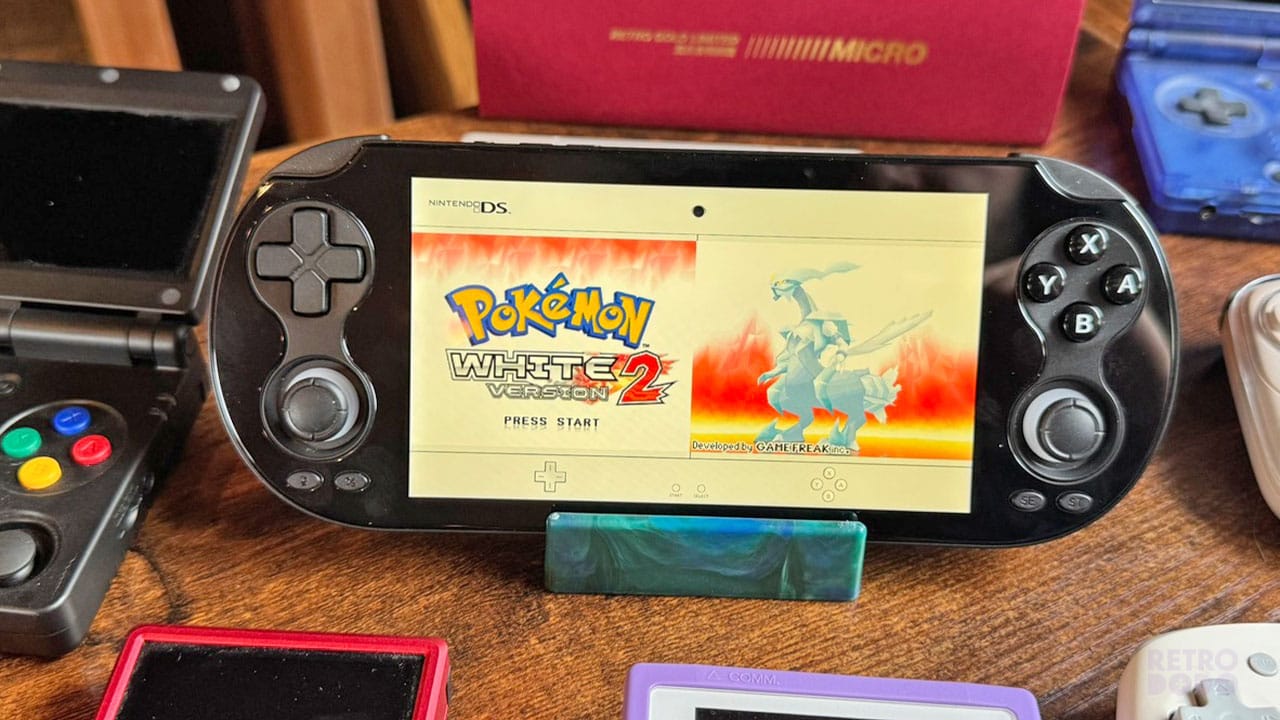
DS games run with ease on the RG Vita, and I love playing games like Mario Kart DS in widescreen. There are multiple options for how you have your screens, swapping between the game screen and touchscreen with the tap of a shoulder button or having both on the display at the same time.
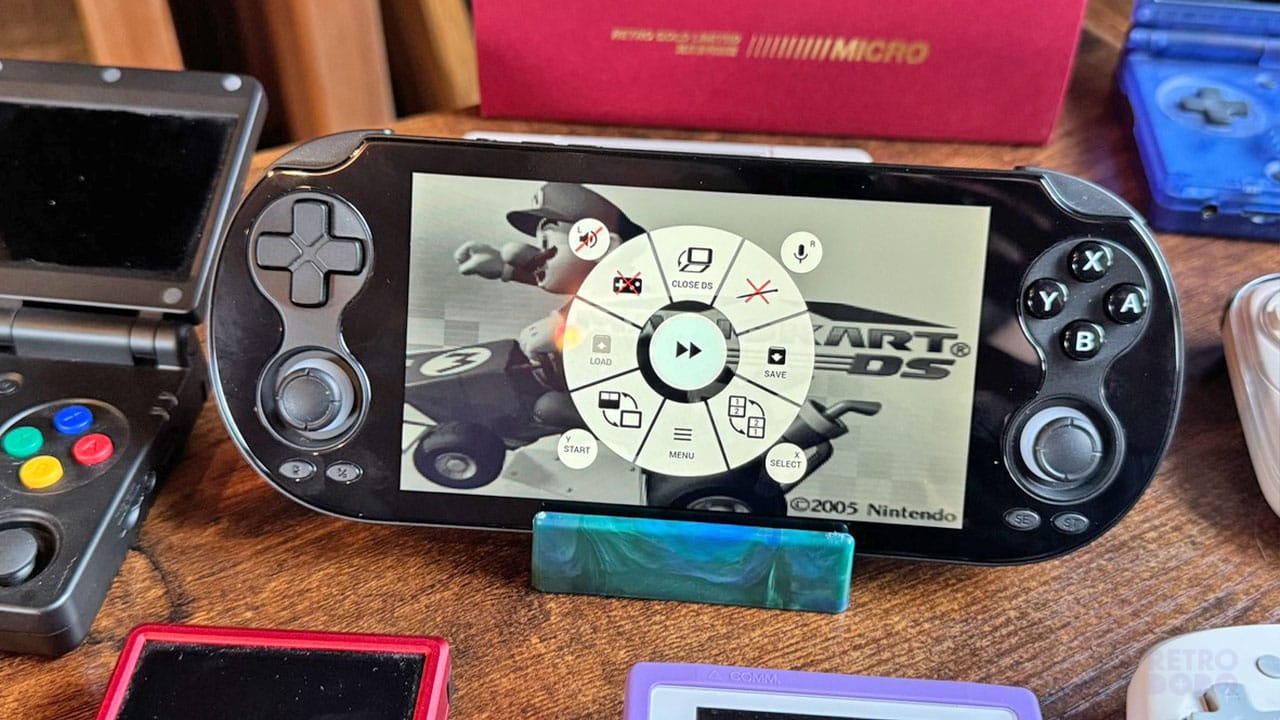
Honestly, I don't really mind either setting, and DraStic is a super-easy emulator to use with a brilliant interface. It's easy to make save states and swap between screen orientations. The only thing that didn't work was having the handheld in vertical mode, but I can't imagine why you would ever need that feature anyway.
Nintendo 3DS
Azahar and Citra are both on the RG Vita's App selection screen, but neither of them is very effective at loading 3DS games. Azahar point-blank refuses to open, and while Citra opened up Luigi's Mansion: Dark Moon, it isn't powerful enough to get past the game loading screen.
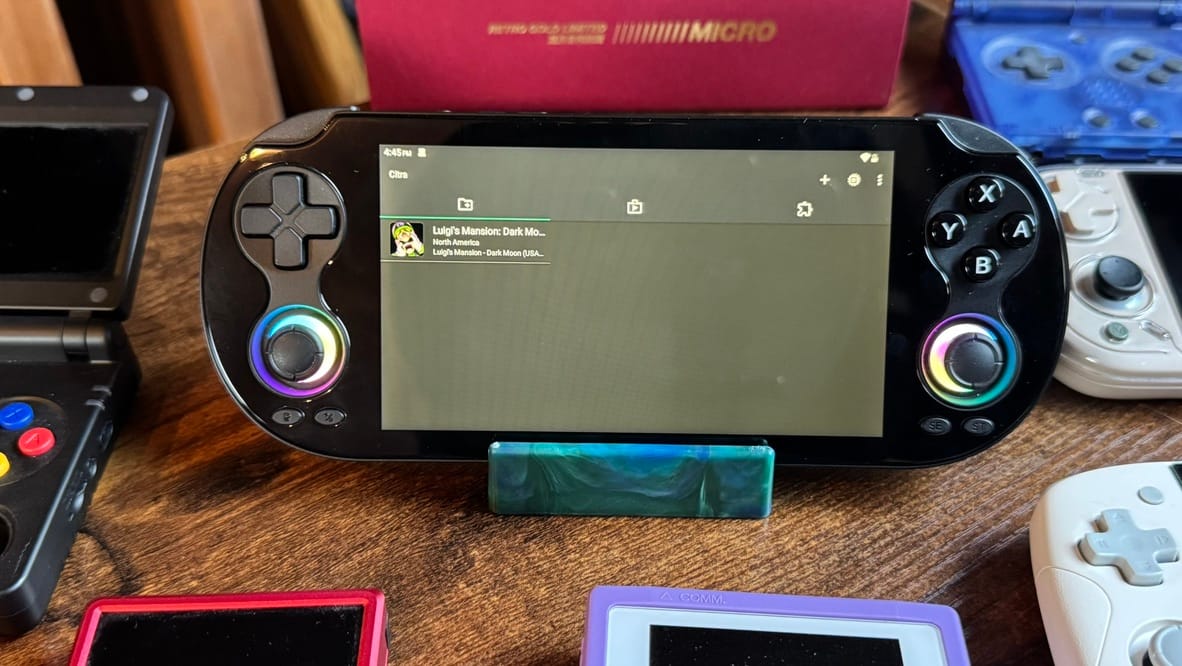
The RG Vita Pro also has a 50% success rate with 3DS games, according to other mediums and creators. All in all, I wouldn't recommend the RG Vita for 3DS gameplay. It would be easier and less stressful to just buy a 3DS.
PSP
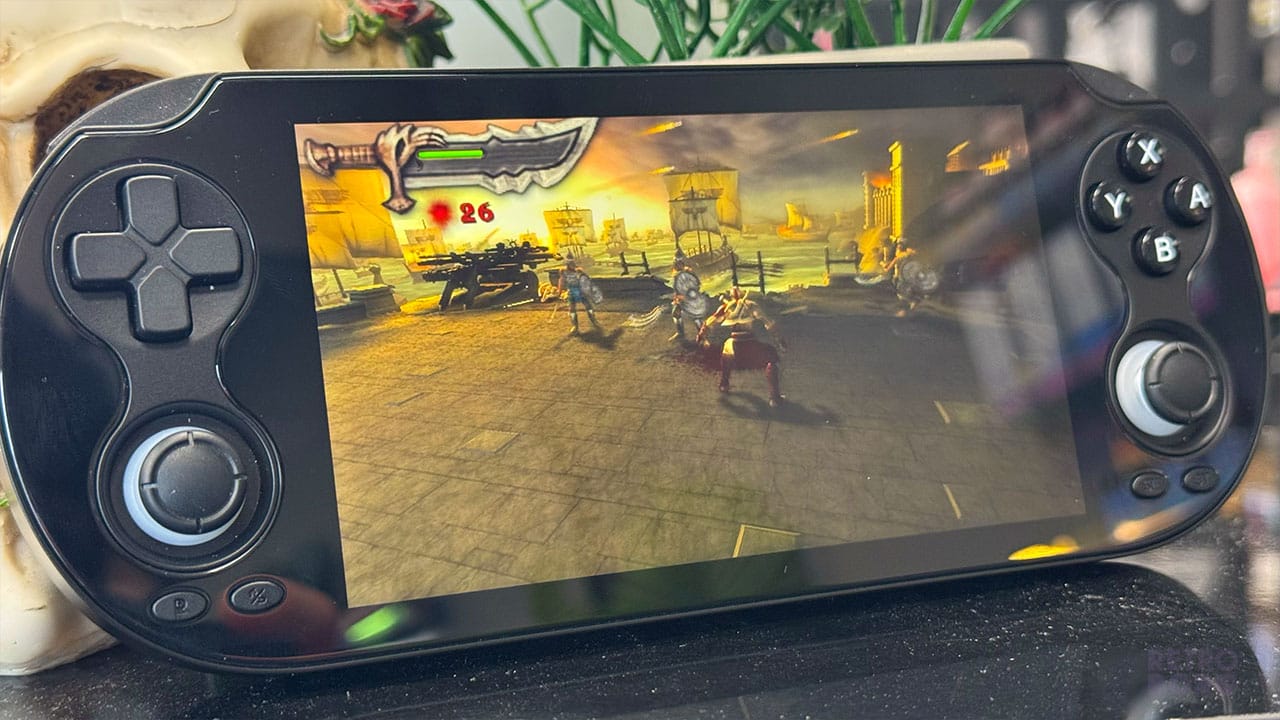
Let's finish on a high; the RG Vita emulates PSP games brilliantly. I've been playing Chains of Olympus on here with zero problems at native resolution. And to be honest, it looks great on the RG Vita without actually needing to upscale the resolution. The cutscenes are slick, the gameplay is smooth, and it feels just like I'm playing on my PSP.
So What About The PS Vita?
I know the RG Vita looks like the PS Vita, but it doesn't make it easy to play PS Vita games. For starters, there isn't a dedicated app for Vita emulation, leaving you to go to the Play Store to download a Vita emulator with early access. It's quite a farce to actually get Vita ROMs up and running, too, with the app not finding any of the files I've uploaded and actually getting them to play. For all intents and purposes, this PS Vita clone doesn't actually come ready to play PS Vita games.
If I'm honest, PS Vita emulation is still in its infancy, with the likes of Vita3K being an 'experimental emulator', so it's not a massive surprise that it doesn't come ready to roll with PS Vita game accessibility. Still, if the RG35XXSP wasn't able to emulate GBA games when looking exactly like a GBA SP, I would have found it odd, so having a Vita-esque console that can't play Vita games might rub potential buyers up the wrong way.
Final Thoughts
- Nostalgic design that Sony fans will love
- Brilliant display
- Shoulder buttons are some of the best I've used on an Anbernic handheld
- PS2 emulation is hit and miss
- The system isn't powerful enough to emulate Wii or 3DS games, despite having corresponding emulators as available apps
- It comes with a lot of unnecessary features like Anbernic AI
- Price difference isn't enough from the RG Vita Pro to make it seem like much of a deal
The RG Vita is a good-looking console, there's no denying that. It's light, has shoulder buttons that are some of the best I've felt on an Anbernic handheld, and it comes with all the emulators you could need pre-loaded for you to get gaming straight away.
It's the performance that doesn't really impress me much. Yes, it can play some PS2 games, but I don't understand why Anbernic have made a handheld with an early-bird price of $99 and then released a more powerful model with an early-bird price that's just $30 more. I know they want to compete with the likes of the Mangmi Air X and the Ayaneo Pocket Air Mini, but it feels like they've released the RG Vita just for the sake of it and just to compete. The RG Vita Pro feels like the obvious choice for me here - better specs, better emulation, and all for $30 more, but I have yet to review it.
If you're happy with Dreamcast, PSP, and GameCube emulation and some PS2 games running well and are after a handheld on a strict budget with a Vita-like design, then the RG Vita will suffice.


