


The last time I reviewed a product from Arduboy was back in 2018. Since then, I've got engaged, bought a house, bought a dog and had two children.
So when I heard Arduboy are back making a new edition of their FX handheld, for some reason, I got all nostalgic as it reminded me of the early days of me reviewing handhelds, and it made me realise just how long these guys have been in the handheld game.
Although the FX-C had some minor delays, it's finally here and like the previous Arduboy, it's bloody thin and bloody hard to buy.
The FX-C has no standard editions left in stock at the time of writing this review (only the founders edition and multipacks), and if you've been wanting their other devices in the past, you'll likely know they're usually sold out due to the limited stock and high demand.
So, it may mean that by the time you are reading this, the FX-C is already sold out, and I honestly have no idea when or if it will be back in stock. This is because it's a very small team behind this project, and it's not mass-produced. Purchasing this means you're supporting an independent tinkerer named Kevin Bates from the USA.
Arduboy FX-C Specifications
- Processor: ATmega32u4 (same as Arduino Leonardo & Micro)
- Memory: 32KB Flash, 2.5KB RAM, 1KB EEPROM, 16MB eXternal Flash
- Inputs: 6 Momentary Tactile Buttons
- Outputs: 128×64 1Bit OLED, 4 Ch. Piezo Speaker & Blinky LED
- Battery: 180 mAh Thin-Film Lithium Polymer
- Connectivity: USB-C 2.0 w/built-in HID profile, i2c Link Cable Support
- Programming: Arduino IDE, Arduboy Game Loader, GCC & AVRDude
- Available for $79.99 - $99.99 on Arduboy.com
The New Look & FX-C Name
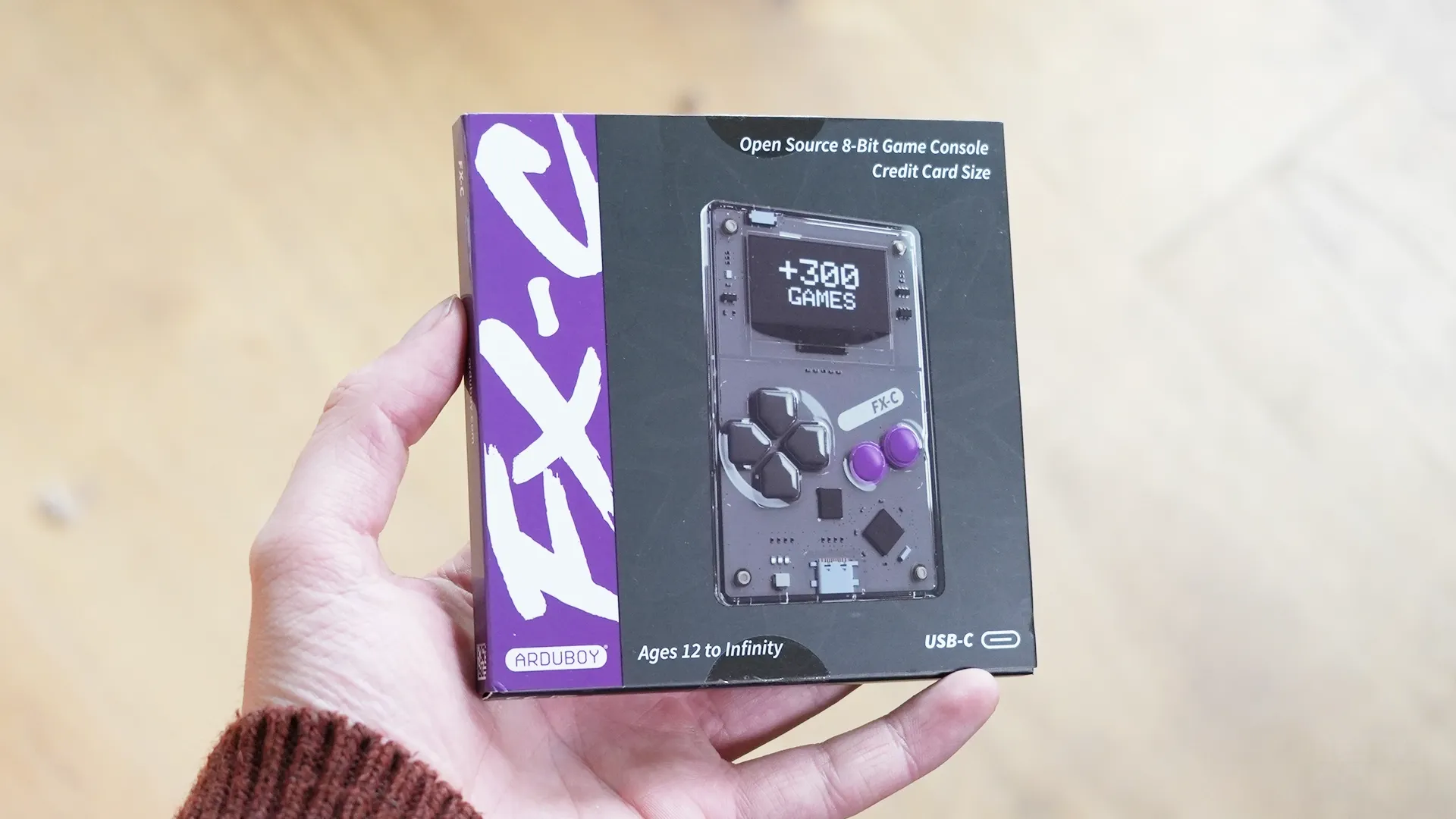
This is called the Arduboy FX-C; it's a pretty large upgrade from the original FX. The "C" in the name primarily indicates the addition of the USB-C port, the ability to connect to another FX-C using a link cable, added 16mb external memory and a new facelift alongside 300 Arduino-based games for you to explore.
It starts at $79.99 for the standard edition, or $99.99 for the Founders Edition, which I have purchased. This Founders Edition comes with purple buttons (instead of Green) and a serialised backplate alongside some of the revenue going towards supporting the Arduino community.
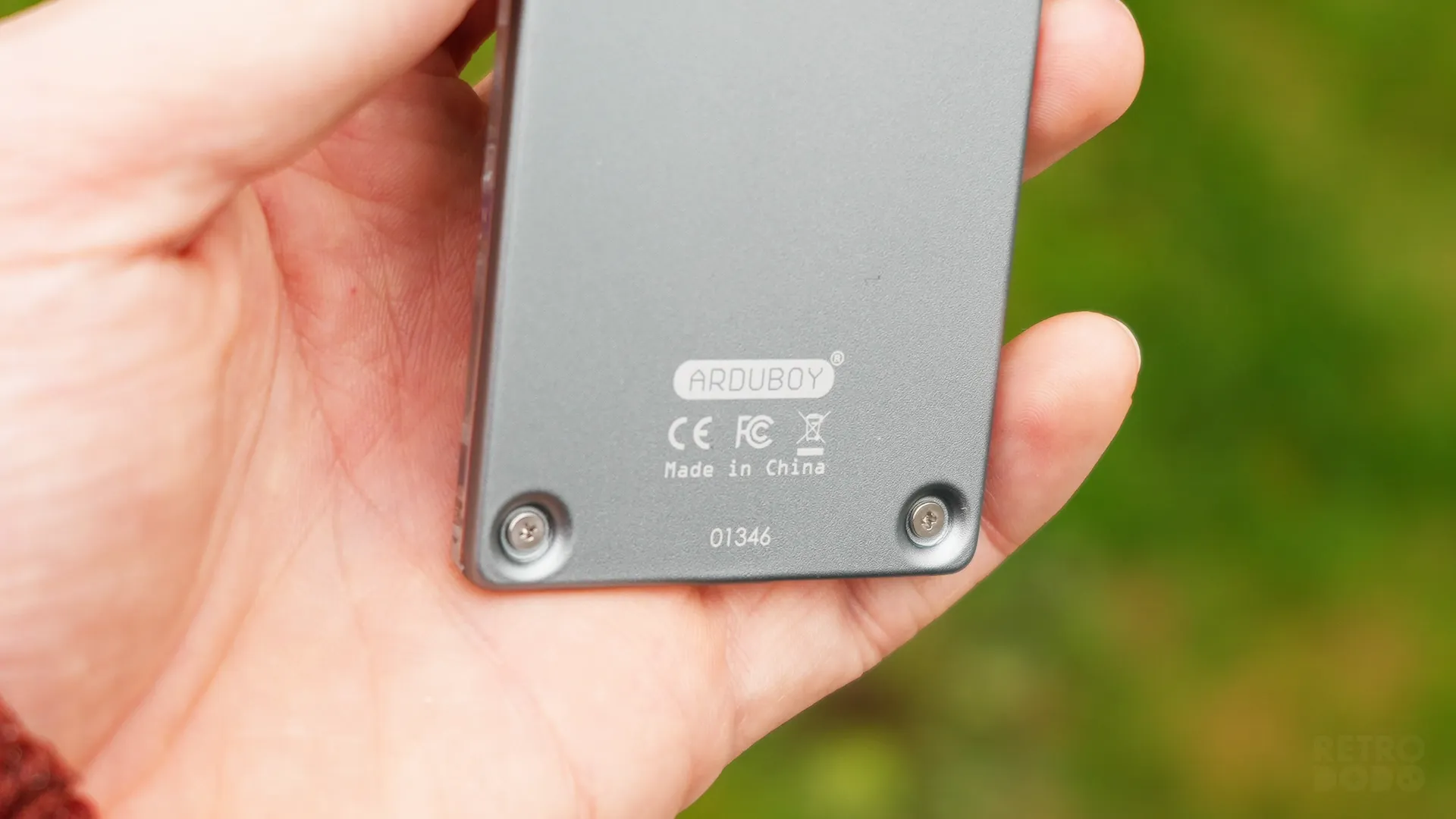
According to Arduboy, only 1000 Founder's Editions have been made, and as of the writing of this, only 400 of them are left. But for some reason, my unit has the serial number 01346, indicating that more than 1,000 were made?
This is the only way to get the device at this moment in time, which I admit is a little disappointing, as this is a fun device that I think many of you will enjoy if you're happy to pay the price.
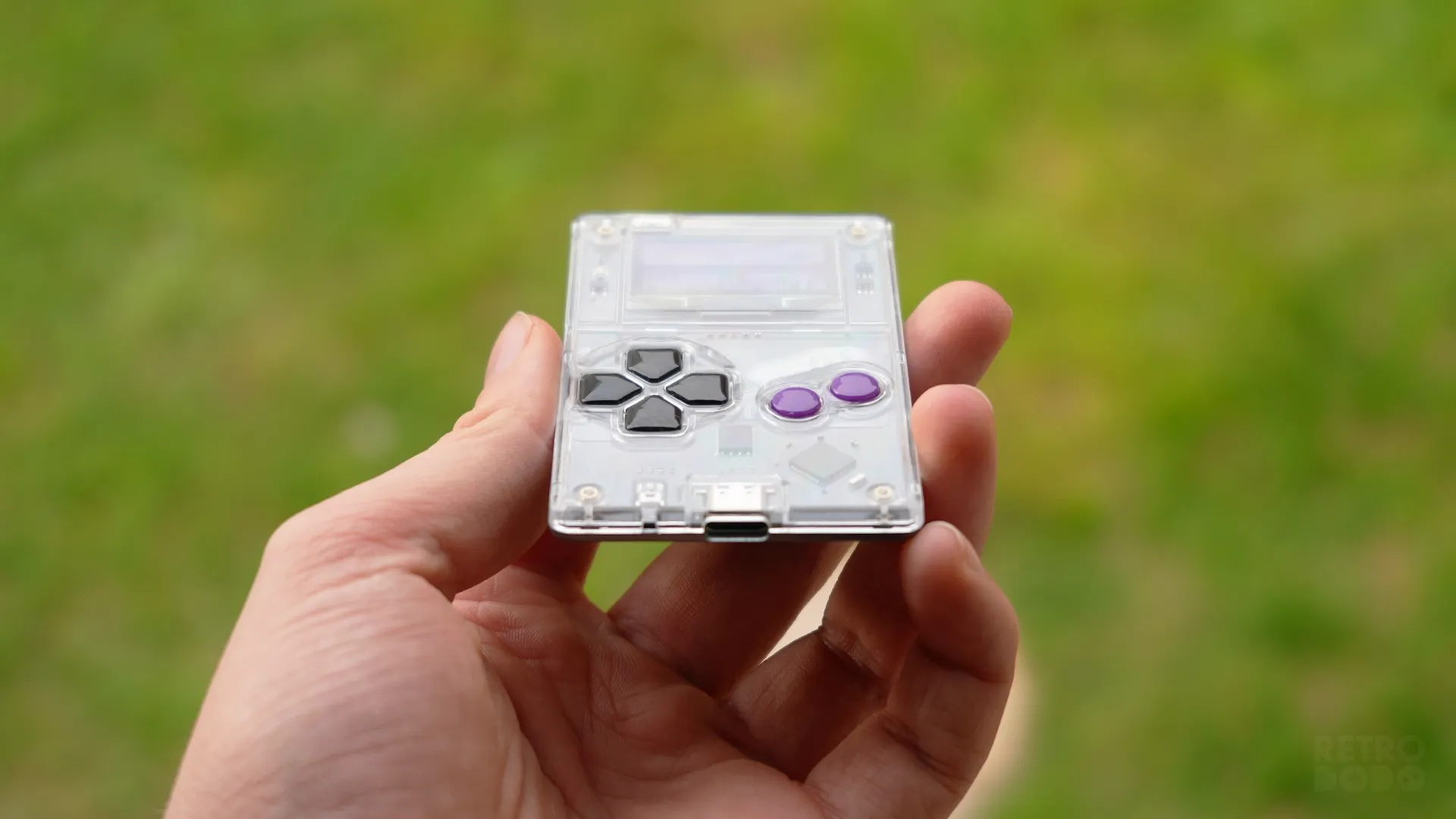
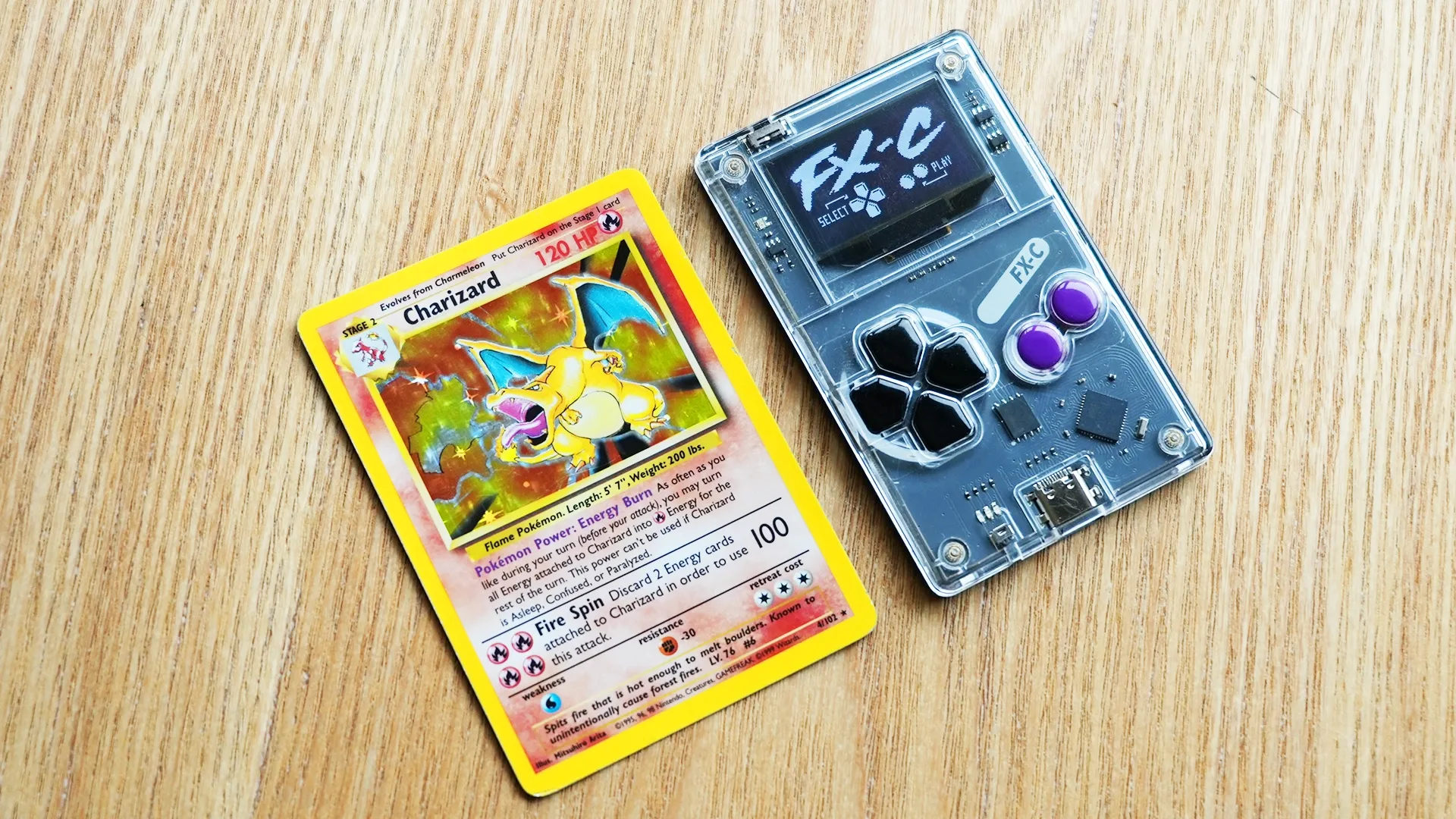
The FX-C keeps the tiny credit card-sized body, and keeps the same 3.4mm thickness, making it one of, if not the thinnest, handheld game consoles on the market, thinner than the GAMERCARD.
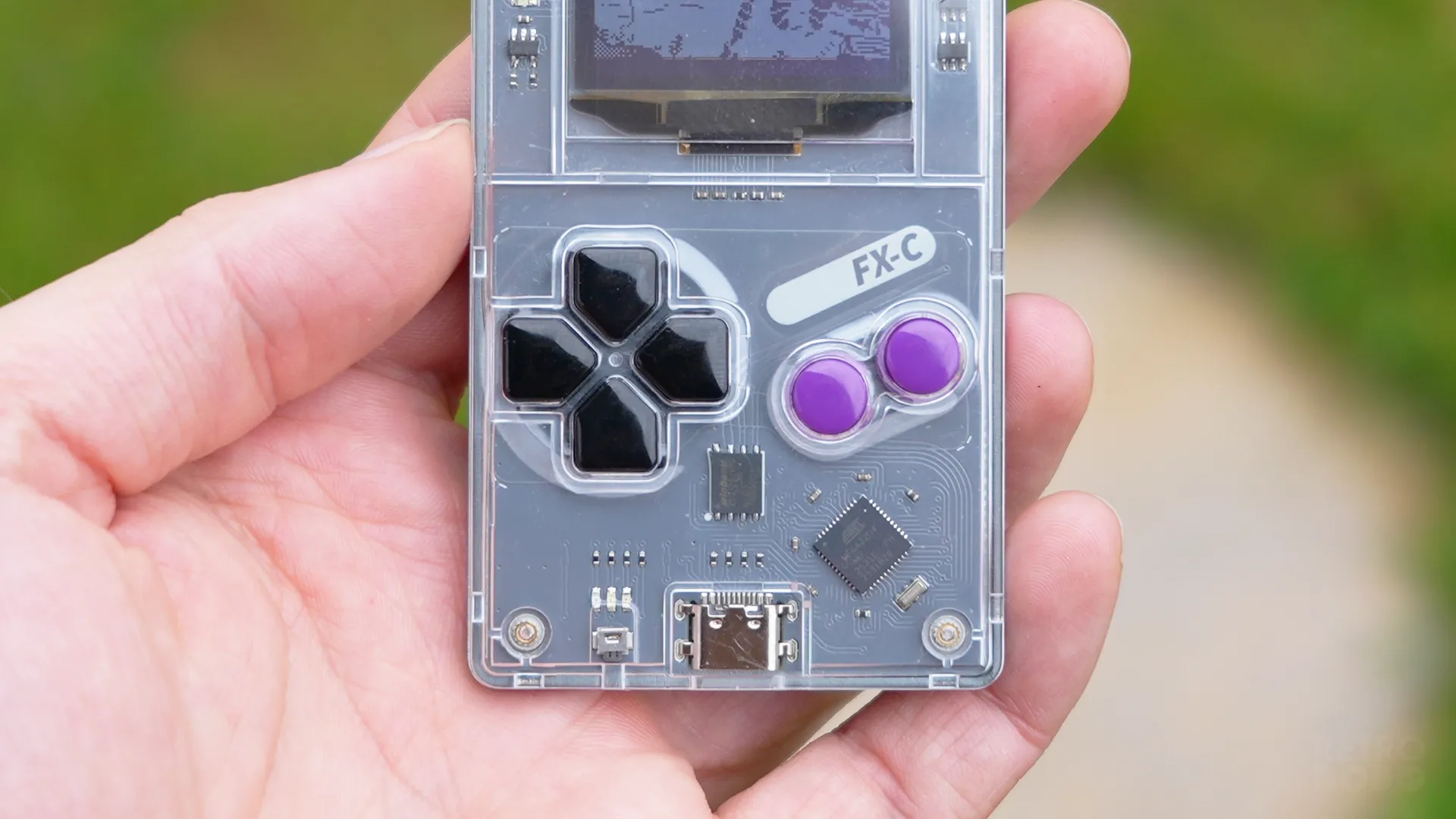
It no longer has the white body and red buttons that made the original FX iconic; instead, it now has a dark grey motherboard and a dark grey metal backplate to make it look slightly more sleek and more modern than its older brother.
How Thin Is Too Thin?
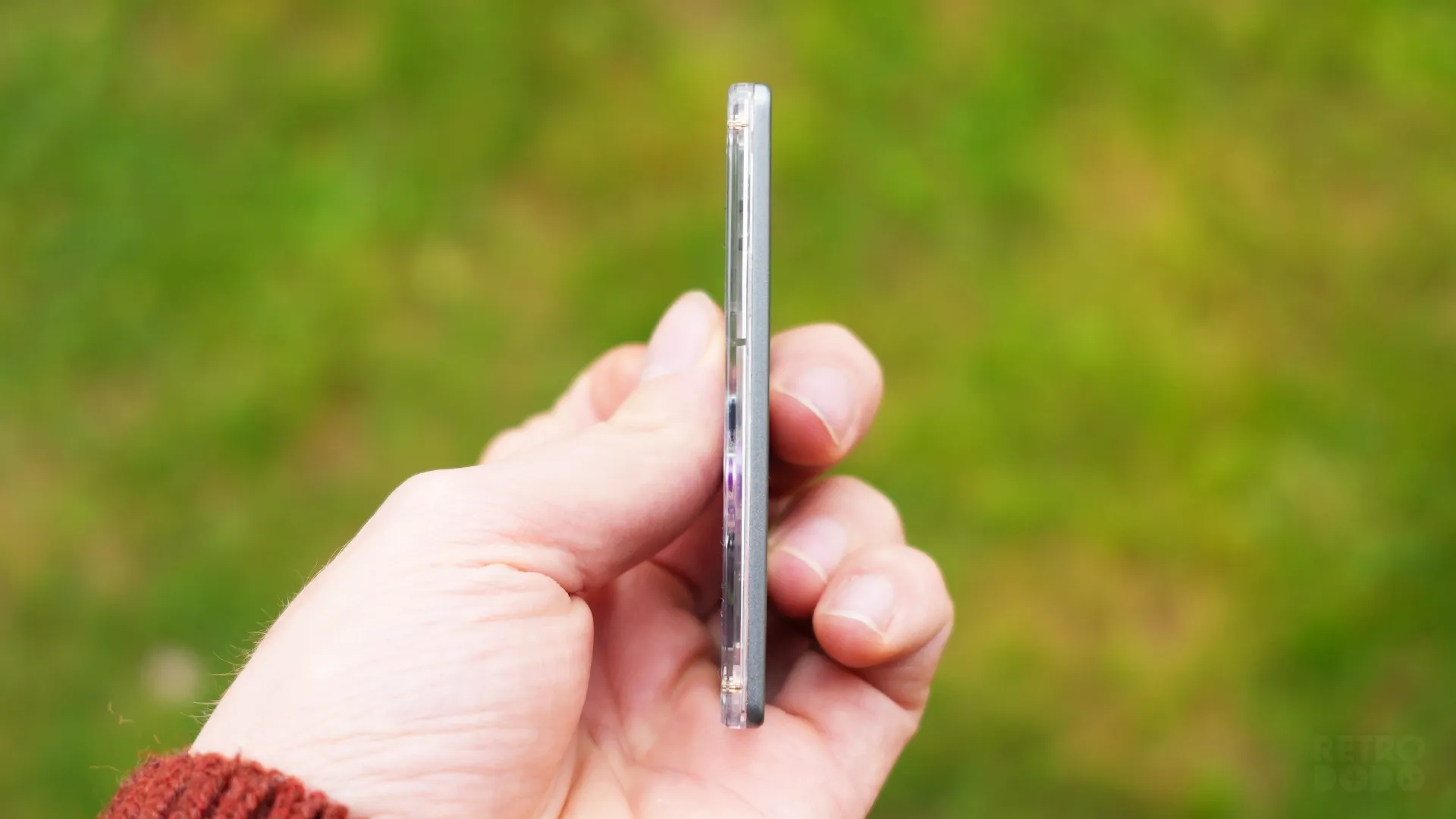
What makes this device so magical is its thickness, or rather, thinness. At just 3.4mm thin, this is unlike anything on the market. Small devices like the Thumby are much thicker, yet the FX-C still somehow feels like a legitimate handheld, and that's because it is.
Its weight makes it easy to carry in your pocket without it pulling down your pants, and the size means it's not going to stick out like a... you know what, and the thinness stops it from irritating you when you're walking around, it's like its not even in your pocket.
They've also somehow managed to stick a USB-C port in here, which is 2.6mm thick, a speaker, alongside a D-PAD and action buttons. Because of the thinness, you won't get much reaction from the buttons in terms of travel.
These have close to zero travel, are clicky yet tap hard when pressed, so I never find myself miss-pressing any of the buttons when playing fast-paced games on here.
My only issue with the thinness, and this is a very personal reason, is the fact that I have a habit of losing small handheld devices. The original Arduboy FX that I had back in 2018, yeah, I lost it.
It's nowhere to be found, and I've tried looking everywhere for it, but I just can't find it. It could be lost deep in my sofa somewhere, my kids could have slid it into a floorboard, or I could have even dropped it into the deep crevices of my belly button.
Who knows, but what I do know is that it's gone for good, and the fact that it can fit almost anywhere in my house doesn't help with finding it anytime soon.
My Unit Has An Annoying Scuff
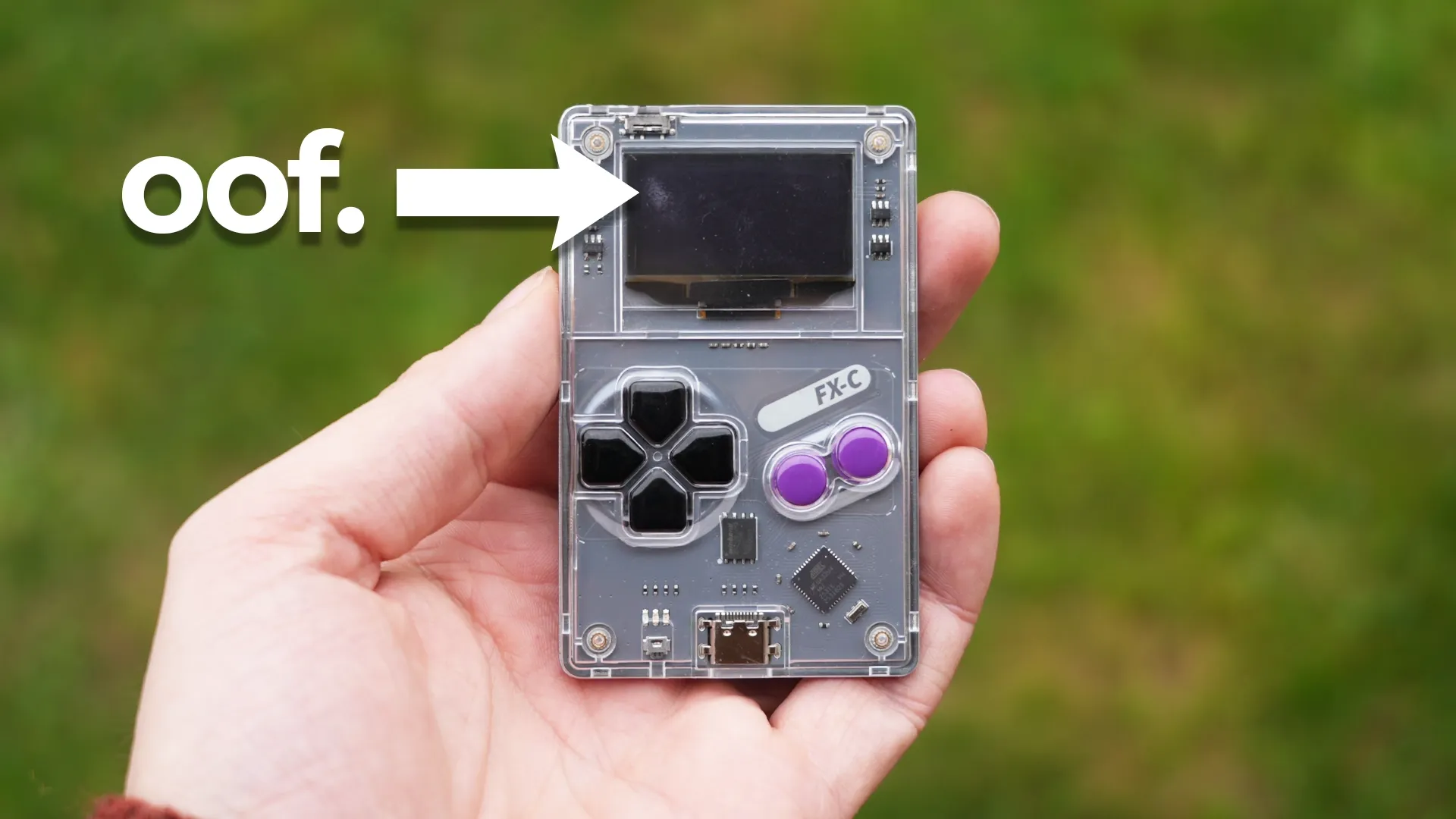
Let's talk about the build quality, because unfortunately for me, straight out of the box, I noticed what looked like a fingerprint on the screen.
When I attempted to clean it off, I quickly realised that it was not a fingerprint, instead it was a scuff on the plastic shell inside the console.
I couldn't clean it or remove it, so unfortunately I have a permanent mark on the worst place possible. When playing games, it's not so visible, but when the right light touches it, it's very obvious.
That said, the rest of the device is built very well. The polycarbonate plastic front is high gloss with rounded edges and is quite sturdy, so I didn't notice any bending in the shell when pressing buttons, which, for some reason, I was expecting.
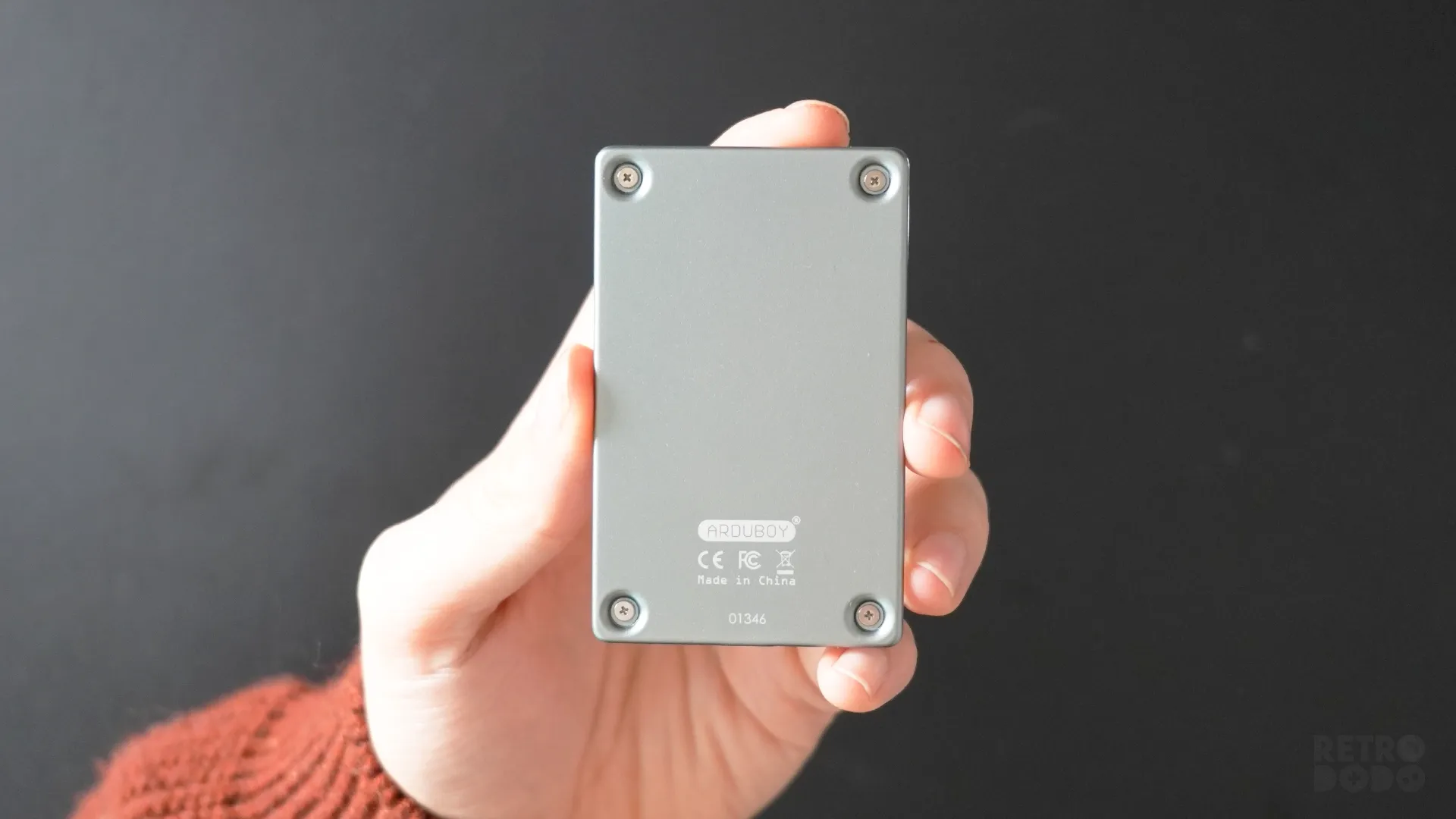
Combine that with a high-quality aluminium metal backplate it adds a hardy spine that gives it a premium feel when in the hands and removes the worry of damaging it when dropped. It's a sturdy little thing, this.
The only thing I would change here is the tiny on/off switch. It's incredibly small, and you really have to focus on aiming your fingernail at it when turning the device on/off.
I would have liked to have seen something unique here, like an oversized switch in the same colour as the buttons or a larger slider similar to that of the original GAME BOY.
Gaming Experience & The Display
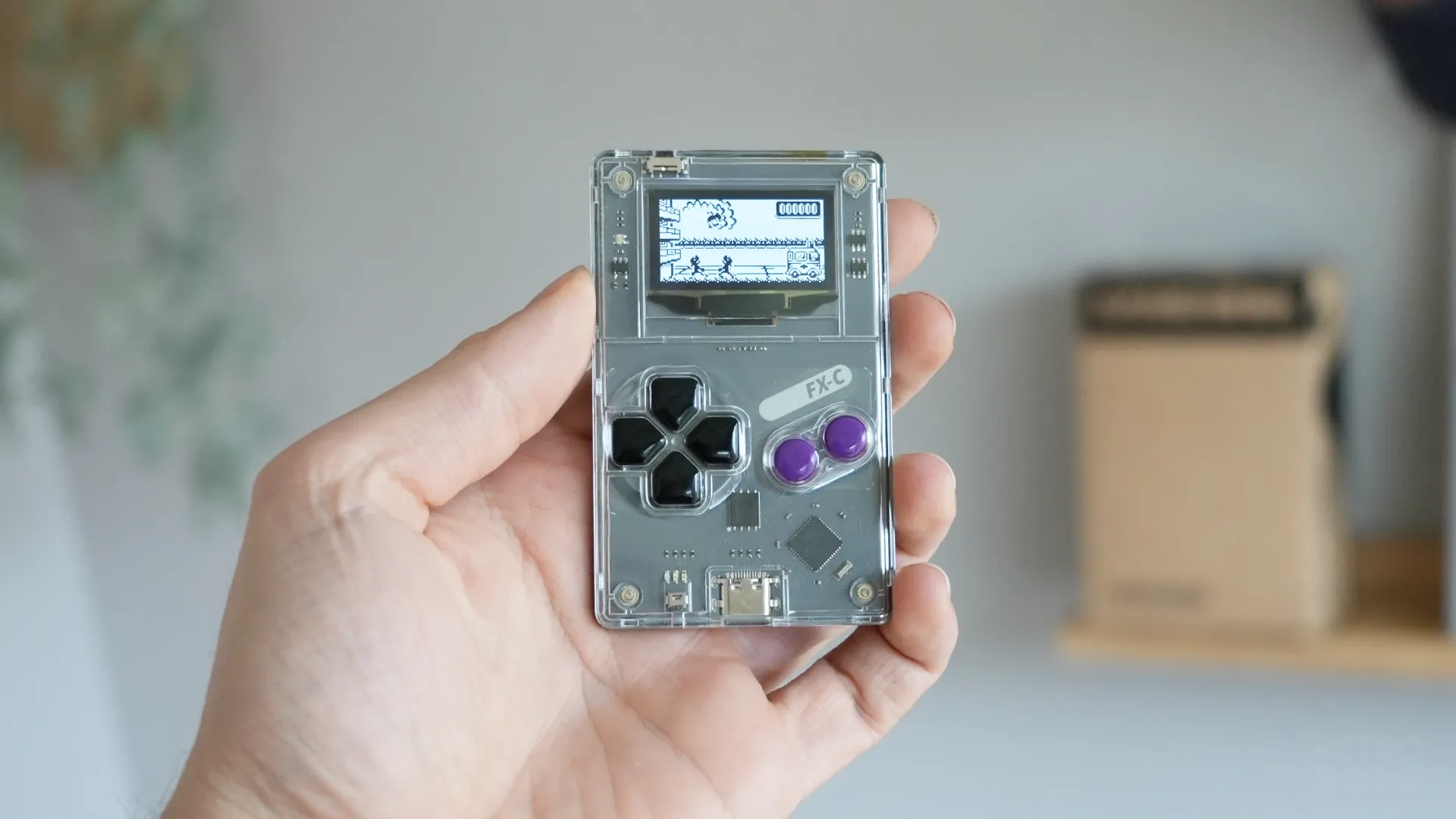
The FX-C has a tiny 1.5" Ultrawide 128×64 1Bit OLED display, which adds to the adorable tiny form factor of the device.
Suprisingly this black and white display is very bright, so bright that it's easily visible when using it outdoors. Arduboy picked a great display for this little fella, which is backlit and can be used in all situations.
They could have easily gone down the same route as PlayDate, making a display that requires external lighting and is near impossible to play on at night, but no, they chose a high-quality, itny, and very unique display that pairs well with the body and the games that this has to offer.
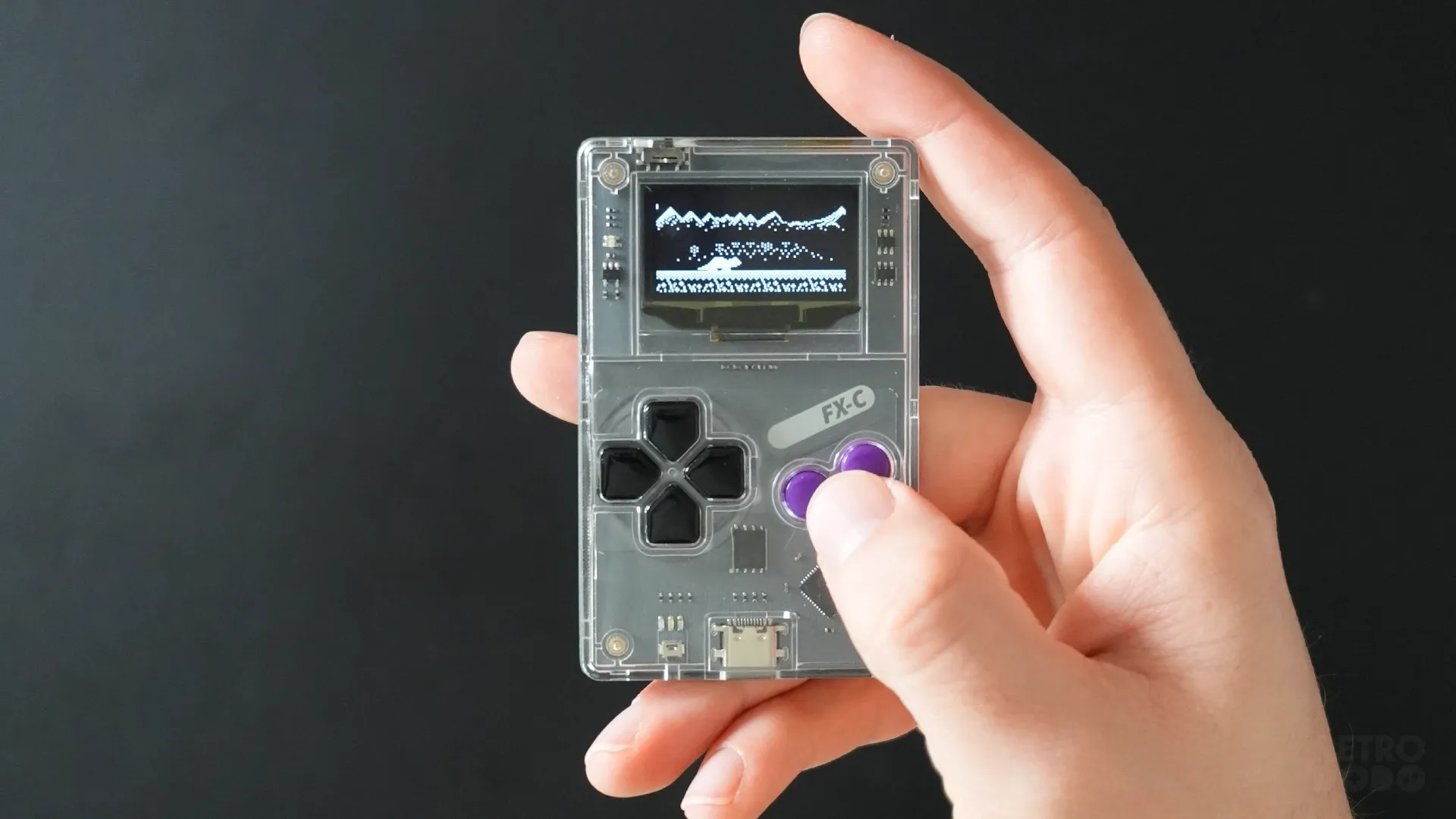
For those not familiar with Arduino games, to put it simply, Arduino is an open source platform that allows creators to build games, apps, tools and more, easily and affordably with a simple microcontroller that uses buttons, lights and a display.
It simplifies the creation of games, and over the years, this community has boomed, bringing along with it hundreds of incredible independent games to explore on this unique hardware.
And that's what makes this incredibly unique. It's a console with its own games and its own community. The FX-C has over 400 games, ranging from puzzle games to shoot 'em ups to some pretty darn impressive adventure titles.
There is something for everyone to explore, and every time I try a new game, I'm more impressed with this community; some of them, I believe, should be actual video game developers for a living, they're that good.
You'll find some duds for sure, for example, there's a fidget spinner app that literally spins a fidget spinner and a Checkers game that requires another player and doesn't have a bot to compete with.
I found many games that even go as far as using the tiny LED lights on the front, for example, one called Fire Panic uses the LED to flash red and blue when you're driving an ambulance!
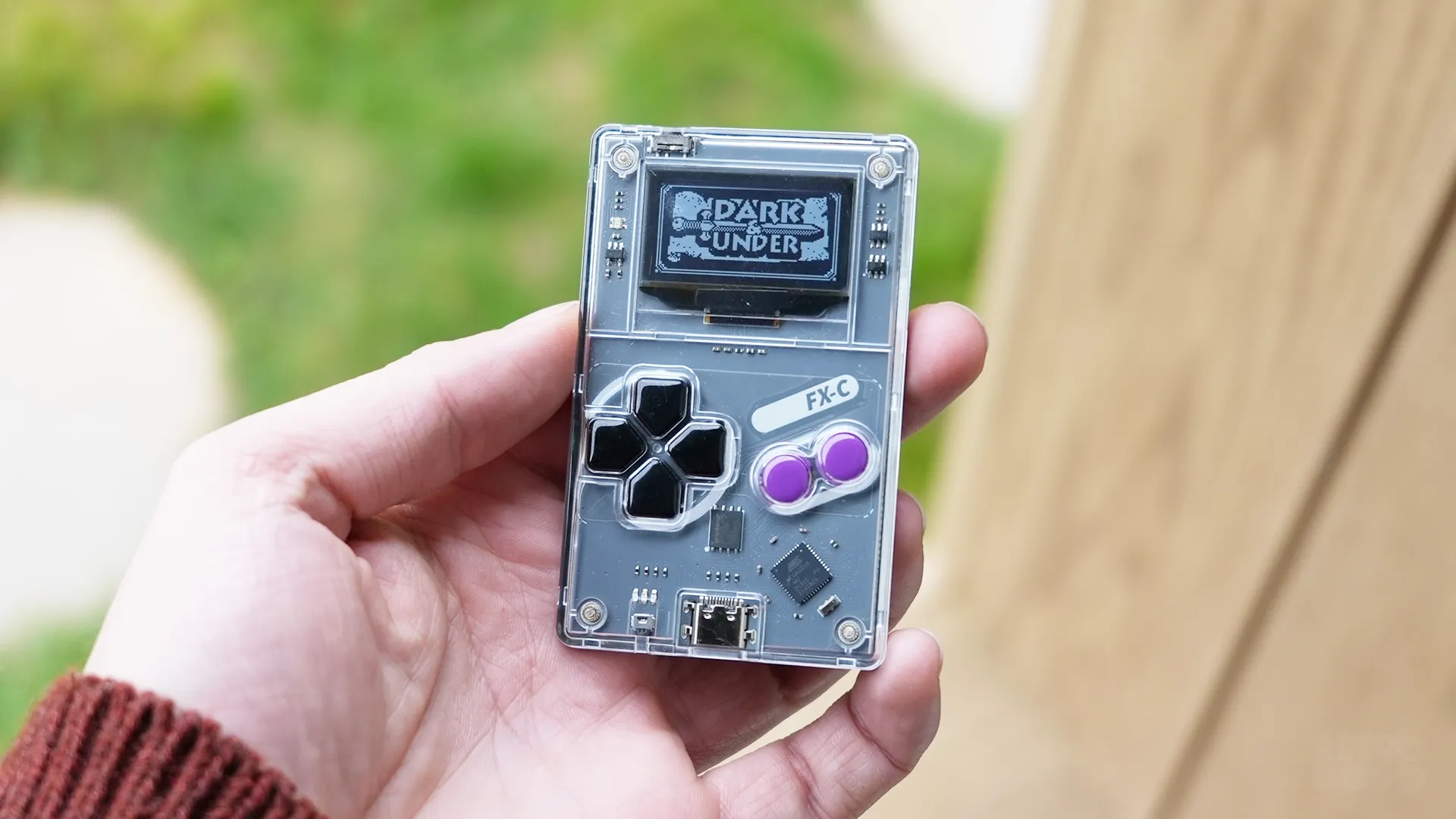
I've been using this for many days now, and I'm still coming across new and exciting games that I have not seen before.
To note a few of my favourites, there's a sports game called ArduTurf: Master, a very simple golf game that is highly addictive and calming to play. You simply use action buttons to increase or decrease power, and the air buttons to change distance.
There's the role-playing game Dino Virtual Pet, for those wanting to care for a dinosaur like a Tamagotchi. You have to feed it, clean it, discipline it, and entertain it by pressing jump over rocks, likely taking inspiration from Google's Dinosaur game.
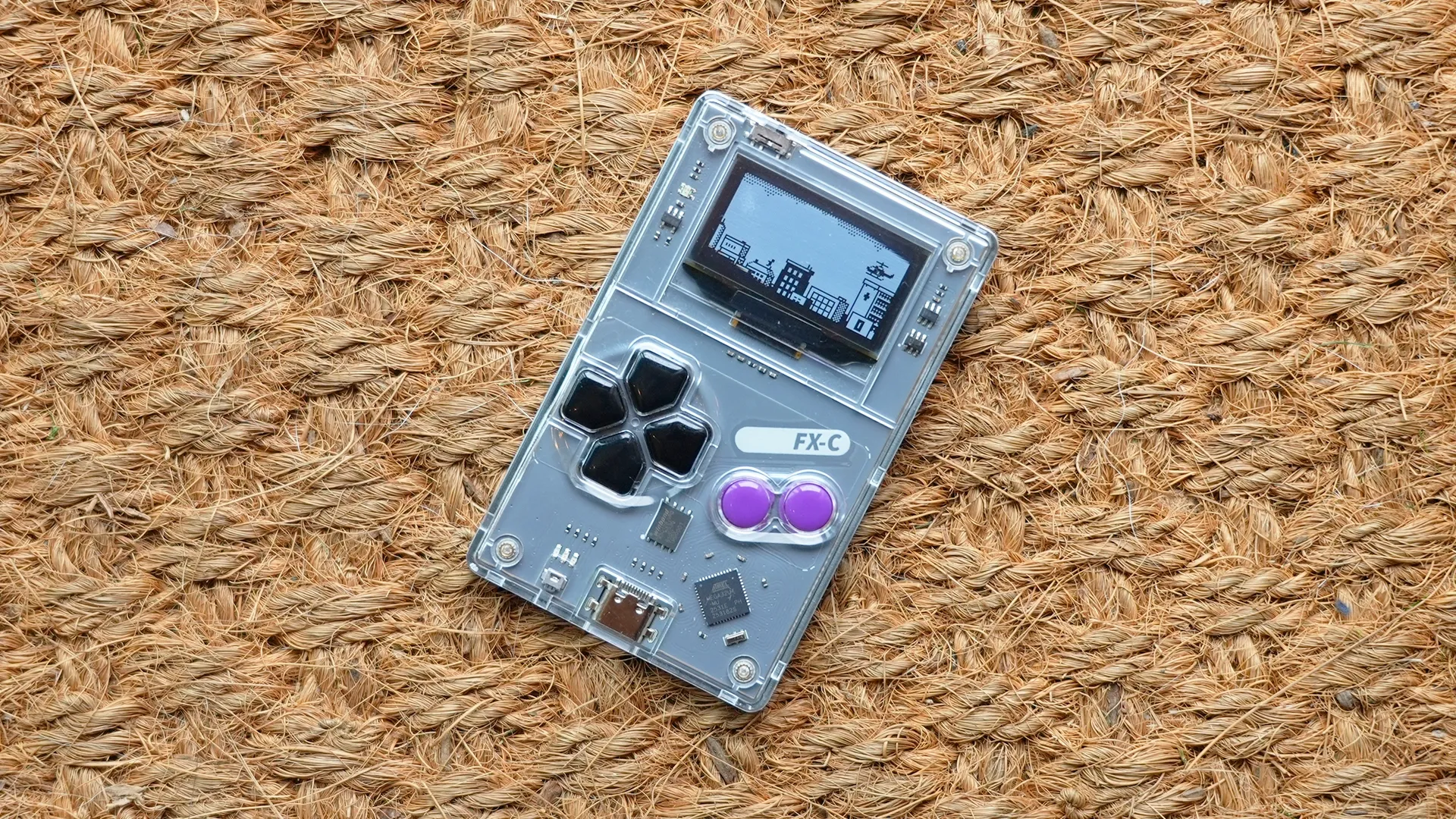
And finally a shoot' em up game called Micro Tank that gets you controlling a tank that has an array of different weapons, forcing you to survive through the ongoing waves of enemies.
It's games like this that push boundaries; they're limited to the small number of pixels on the screen yet feature so much detail and intricacy that it adds a ton of value to the handheld itself and experiencing games in an incredibly minimal, yet modern way.
I won't share too many games on here because part of the fun when purchasing this is exploring what the Arduino community have ready for you.
The one thing I couldn't figure out is how to mute the device entirely. There are no volume buttons or wheel on here, even jumping into the Arduboy's settings, I couldn't find a way of changing volume, so unfortunately, you have to go into each individual game's settings to turn it off, and that's if the developer has remembered to make that a feature.
Battery Life
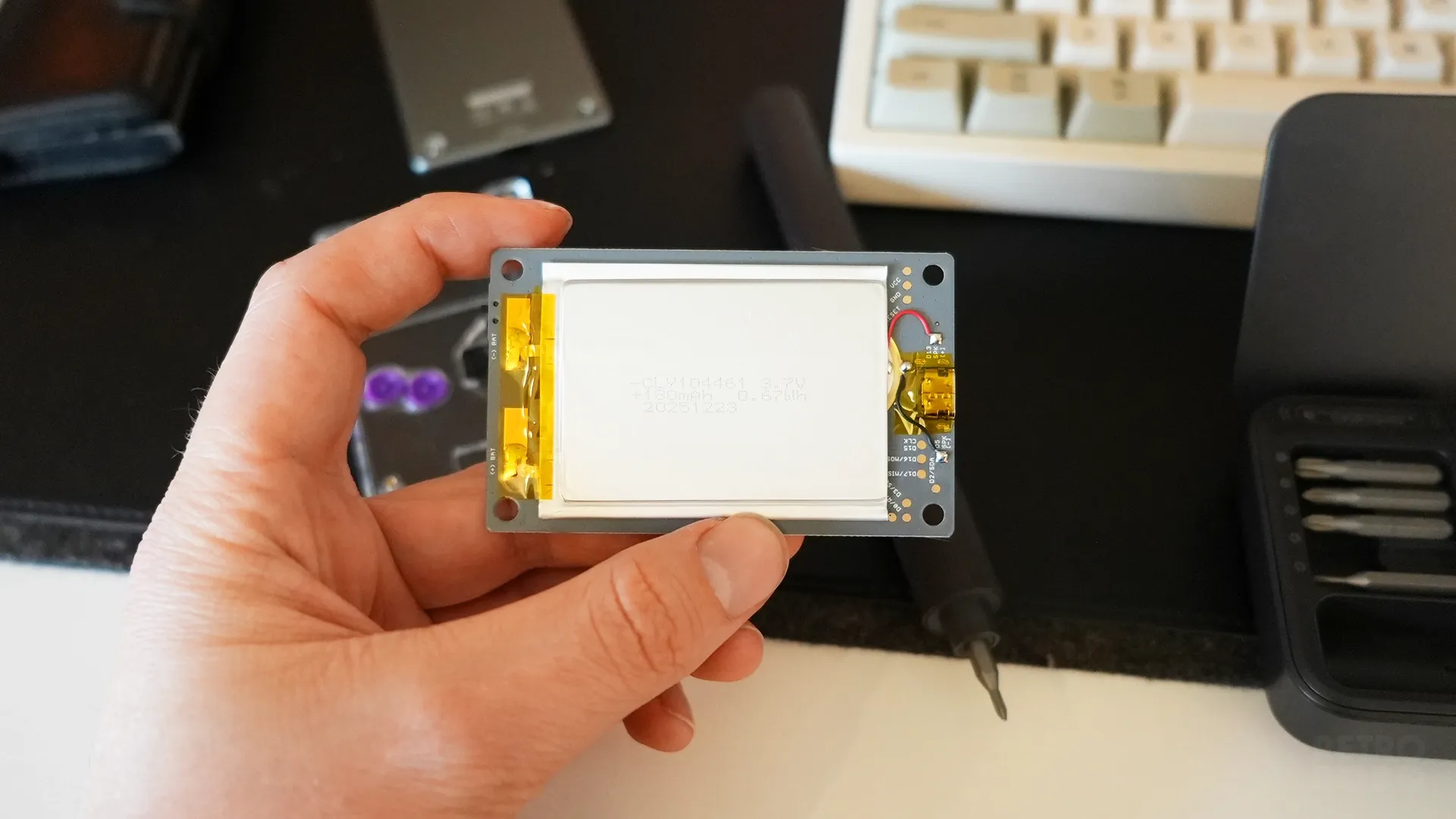
This is something that surprised me. The battery life on this thing lasted around 6 - 7 hours on a full charge, which is pretty darn good for a handheld of this size.
Yes, the games do not require much power, but it comes down the tiny screen size too, which doesn't consume much of the battery life at all.
Meaning I found myself using this more than anticipated because every time I pull it out of my pocket or form my sling, it's alive, ready to jump into games in seconds. It's a perfect grab-and-go device.
Overall Opinion
- Incredibly Thin & Lightweight
- Adorable 1.5" Bright Display
- Impressive Battery Life
- Remarkable Library Of Indie Games
- Sturdier Than Expected Beacuse Of Metal Backplate
- Poor Quality Control Checks
- Volume Changing Is Complicated
- Limited Stock/Availability
This is certainly a premium novelty device. For $79 - $99, there are far more handhelds I would recommend buying.
But if you're a handheld addict like myself and want to explore the Arduino platform, or just want a super thin, lightweight device, then this is one of the best on the market for that, but that's it... and that's if its in stock.
It's an incredibly niche device, but one that I find myself enjoying more than I expected, and because of the form factor and good battery life, it's always alive when I need it to.
It's the perfect pocket-friendly handheld for those who want to explore lesser-known, but still great games that they never knew existed.
But there's no denying it's expensive, it's niche, and units should not be shipping with damages and scuffs; that's inexcusable.


